
As Lao Dong Newspaper has reported, after site clearance for the Xuyen Tam canal project, many super-thin houses with an area of only 2 - 7m2 have appeared.
This is the remaining area after land acquisition, which is newly built or repaired by people to live in, or leased for business. These projects not only affect urban aesthetics but also pose a risk of not meeting construction regulations.
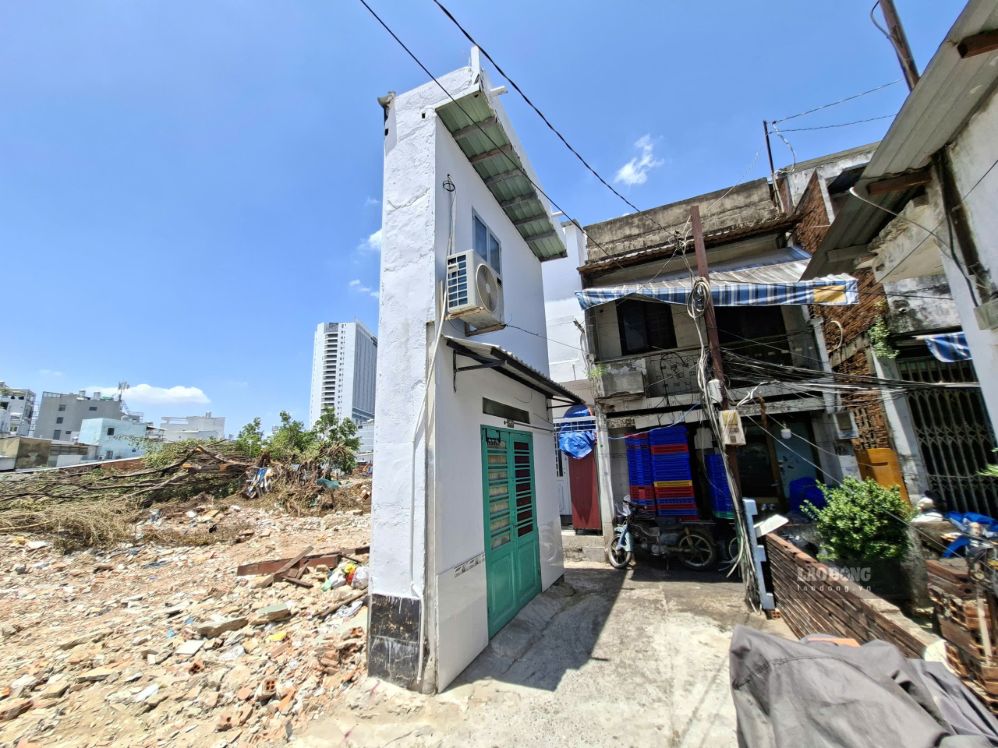
Talking to Lao Dong Newspaper, a representative of Gia Dinh Ward People's Committee said that during the site clearance process, the locality has mobilized households with remaining land that is too small to hand over the entire area to serve urban embellishment. If they agree to completely clear it, people will be arranged for resettlement; in case they do not receive resettlement, they will be supported an additional 5% of the value of the compensated land.
For the area outside the project boundary, the compensation level is applied equivalent to the land within the boundary. However, despite having support policies, the situation of super-thin houses has not been completely resolved.
According to Dr. Vo Kim Cuong - former Deputy Chief Architect of Ho Chi Minh City, the appearance of super-thin houses after the clearance of Xuyen Tam canal is not a new phenomenon but reflects loopholes in compensation, resettlement policies and handling of the remaining land after recovery.
According to him, the fact that people repair or build on land area of only a few square meters is first of all a matter of social security, not simply a violation of planning.
Many households are arranged for resettlement but do not have enough financial capacity to buy houses. In that situation, the remaining land, although very small, is still the only asset that helps them have a place to live or maintain livelihoods. Therefore, it is necessary to recognize this phenomenon with sharing, instead of just seeing it as a matter of construction order" - Mr. Cuong said.
However, in the long term, super-thin houses are not a sustainable urban development model. These projects reduce the aesthetics after the State has invested heavily in renovating canals and ditches, and at the same time do not ensure minimum conditions on lighting, ventilation, usability and quality of life.
In addition, the structure of works, electrical systems, water supply and drainage, and fire prevention and fighting also pose many risks, causing difficulties for urban infrastructure management.
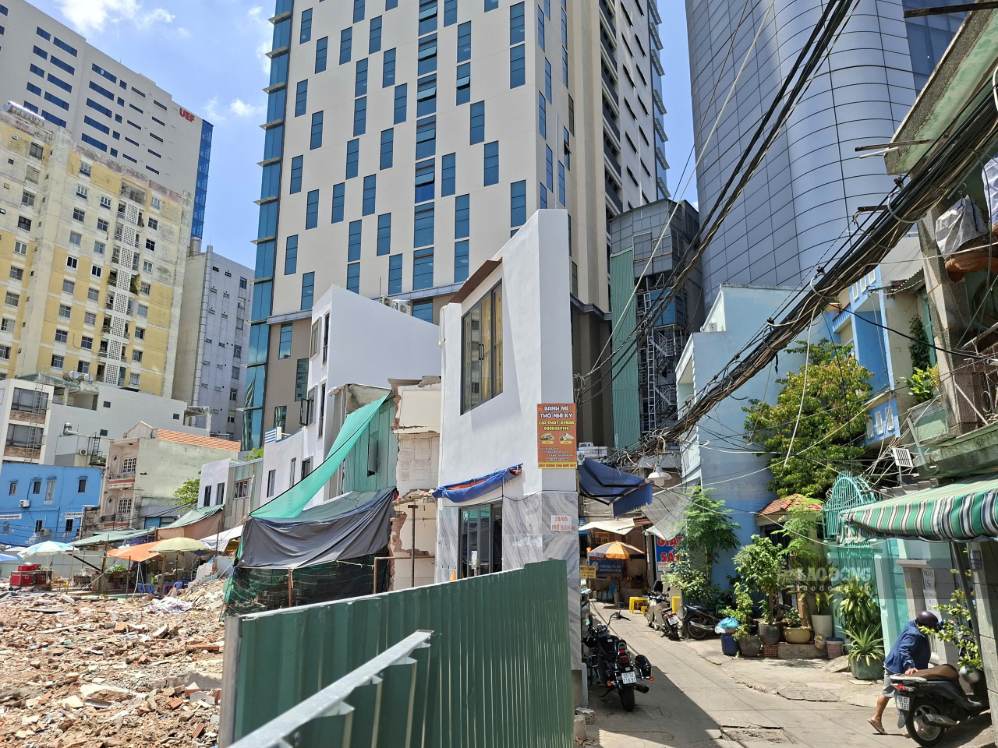
According to Dr. Vo Kim Cuong, to end the situation of super-thin houses, the solution must start from the stage of preparing compensation plans and site clearance.
First of all, it is necessary to clearly stipulate the minimum area threshold for the remaining land after recovery. If the area or size does not meet the construction conditions, the State should recover the entire area and provide adequate compensation, instead of letting people live in houses that do not meet standards.
In addition, it is necessary to promote the mechanism of land consolidation, block consolidation or land swap for adjacent small land plots to form land plots that meet construction standards.
Mr. Cuong also proposed diversifying resettlement policies with apartments with more suitable areas and selling prices, combined with installment support or preferential credit so that people have more choices, instead of being forced to keep a few square meters of land.
According to the expert, urban embellishment projects need to shift from the mindset of "land clearance" to "synchronous urban reconstruction". Planning, compensation, resettlement and construction management must be designed uniformly so as not to continue creating super-thin houses that exist for many years after the project is completed.


