
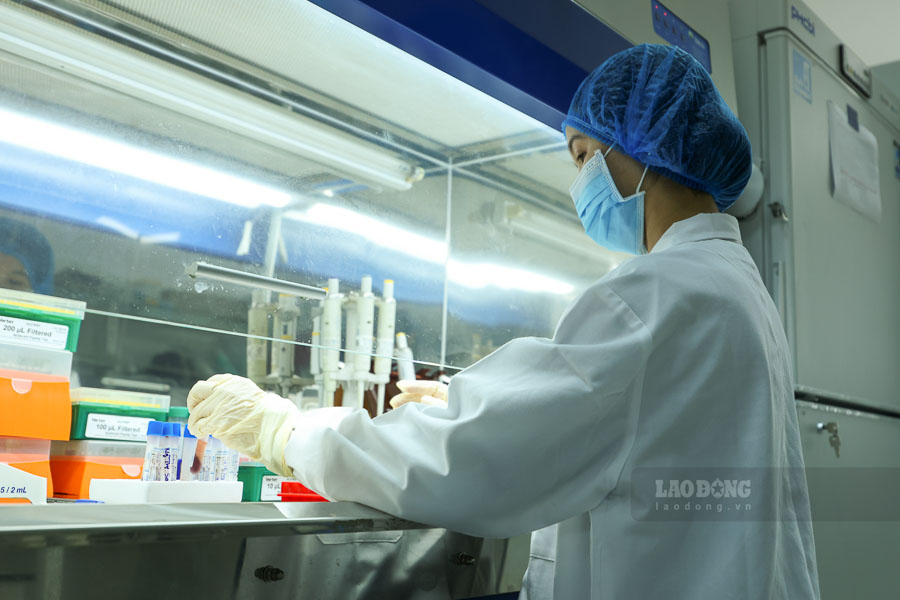
Thousands of bone samples are being strictly preserved in the sampling room of the DNA Examination Center (under the Institute of Biology, Vietnam Academy of Science and Technology). Each martyr's bone sample, after decades lying under the cold ground, is carefully processed by technicians through a process of nearly 10 steps to "return their names".
Gene sequencing systems are still running non-stop. Behind the laboratory door is the non-stop race of scientists in the 500-day-night Campaign to identify martyrs' remains.
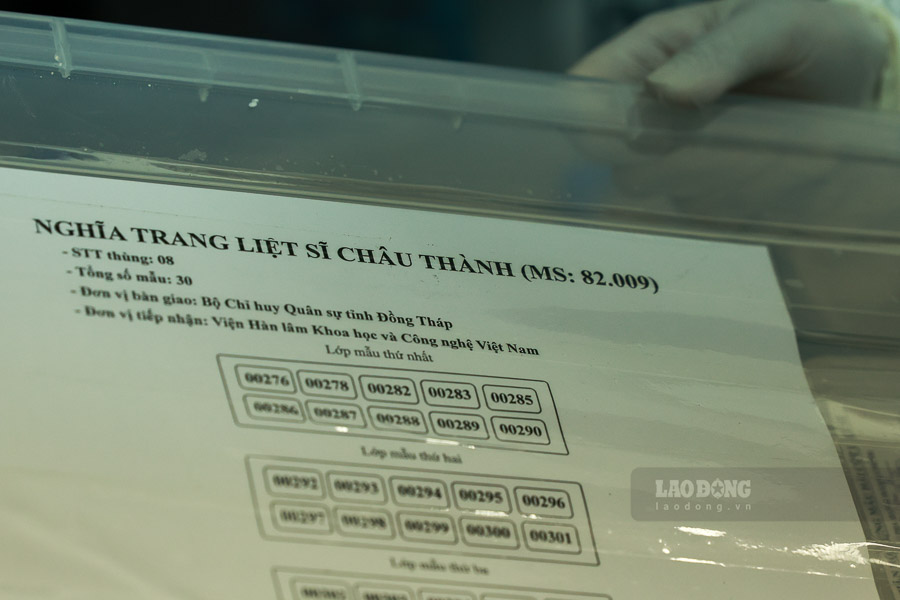
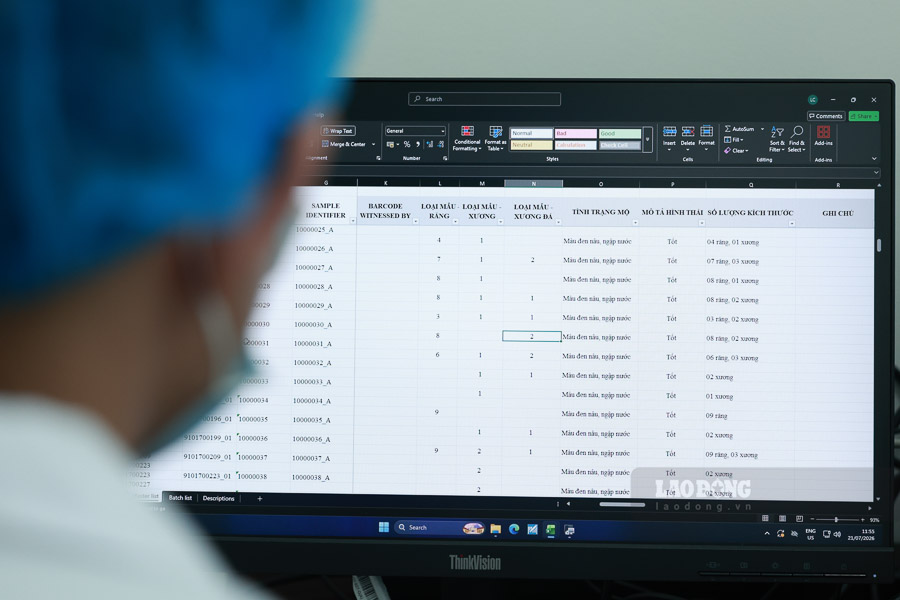
Talking to Lao Dong on July 21, Mr. Tran Trung Thanh - Director of the DNA Examination Center - said that DNA testing for martyrs' remains is a very difficult task. Up to this point, the center is storing 6,600 samples of martyrs' remains and will implement it by 2027, hoping to complete the set goals as soon as possible.
According to him, most of the samples have characteristics that have been heavily decomposed, the genetic information inside the remains is unknown, highly diverse due to rudimentary burial conditions. When buried in places with different climate conditions in the 3 regions of North - Central - South, the ability to recover DNA of the samples is very different.
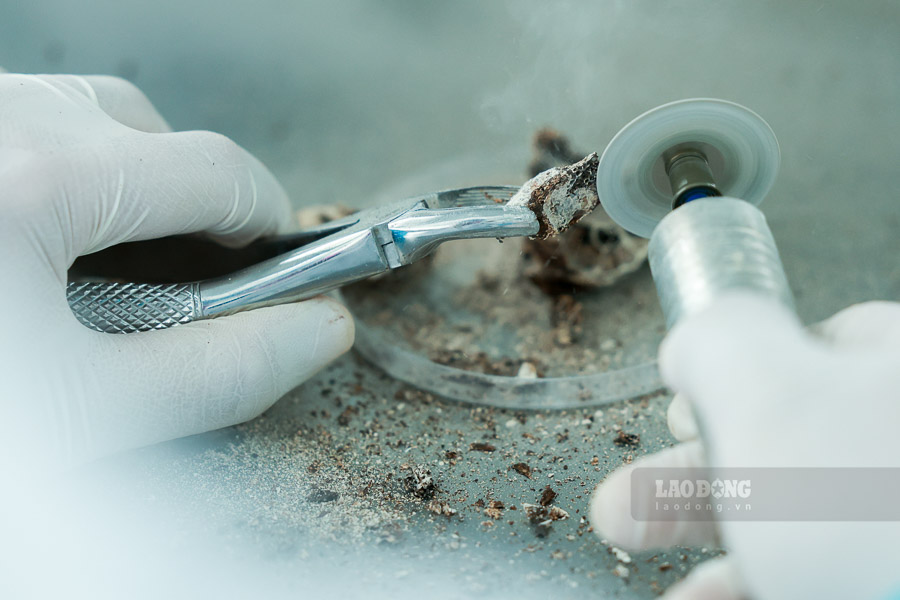
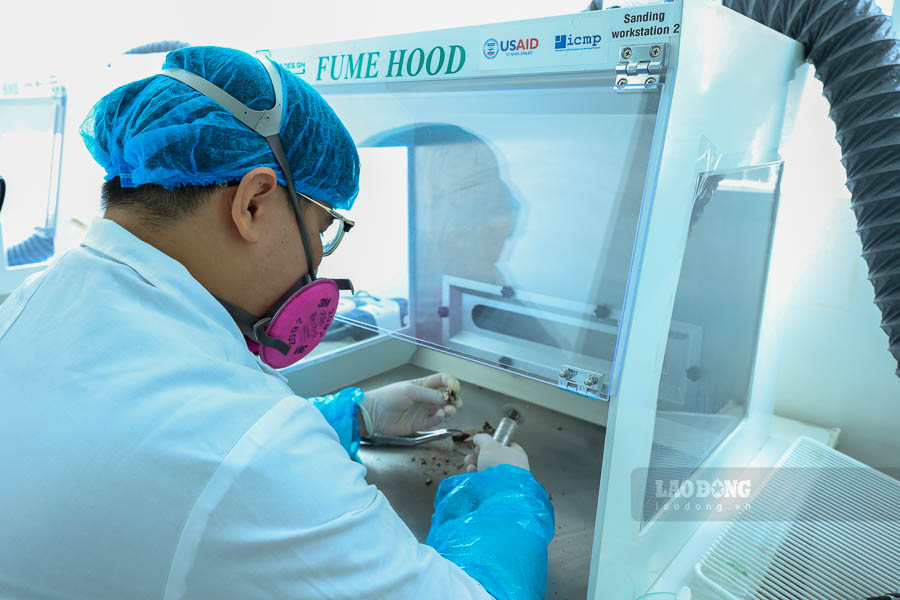
When receiving samples, the first step in the testing process is to remove components that are not DNA to get the best results. This is considered the most important stage of the process, deciding the success of the testing work.
According to Mr. Thanh, the unit is currently completing technological solutions to optimize the splitting process, going through other chains of activities to produce matched results.
The Institute of Biology is assigned to lead research and development of new generation DNA testing technology based on the combination of new generation gene sequencing technology (NGS) and analysis of single nucleotide polymorphism indices (SNP).
The Director of the DNA Examination Center assessed that this new technology solution is very suitable for the current conditions of Vietnam because the verified information of martyrs' remains samples is no longer abundant. Therefore, DNA is the final solution for identifying martyrs' remains.
The advantage of this technological solution is that it can solve the current problem of martyrs' remains lacking verified information. Previous technological solutions when applying mitochondrial DNA (mitochondrial DNA or mtDNA) required verified information combined with DNA information.
However, with the current new technology solution, we do not need verified information but completely conclude cases based on DNA information.
In particular, this technology helps not to be limited by relatives of the mother line but can expand the family file according to the father line, even allowing DNA testing of descendants to the 4th and 5th generations. This opens up many opportunities to test the DNA of martyrs' remains in Vietnam today.
According to Mr. Tran Trung Thanh, building a database bank of relatives of martyrs will be a very important turning point to accelerate the collection of genetic information of relatives of martyrs and martyrs' remains.
Also according to the Director of the DNA Examination Center, for many people, a remains sample is only the object of scientific examination, but for those who have been directly involved in this work for many years, each DNA sample is a story, a person and a family that has waited for many years. Therefore, any result obtained is very important information.
Mr. Tran Trung Thanh emphasized that DNA is the final solution when all verified information is missing. Each DNA test result is also a continuation of the morality of "drinking water, remembering the source".


