
In the context of housing, land plots, and resort segments constantly fluctuating cyclically, the demand for burial space has different characteristics. The emergence of cemetery parks, ashes storage areas and new resting models is posing issues about the rights of buyers and management mechanisms.
Speaking at the seminar "Spiritual Real Estate Market - Trends and Opportunities", Ms. Pham Thi Mien, Deputy Director of the Vietnam Real Estate Market Assessment Research Institute (VARS IRE), said that cemetery land funds are limited and under pressure from the urbanization process. This poses the requirement to restructure cemetery space, develop centralized and land-saving models.
However, according to Ms. Mien, the biggest bottleneck currently lies in the legal corridor.
The actual market has seen many large-scale products and projects, but the ecosystem is still incomplete. Services are still fragmented, long-term management and care have not been standardized, while planning and legal regulations related to land, construction, and environment are still not truly interconnected," Ms. Mien said.
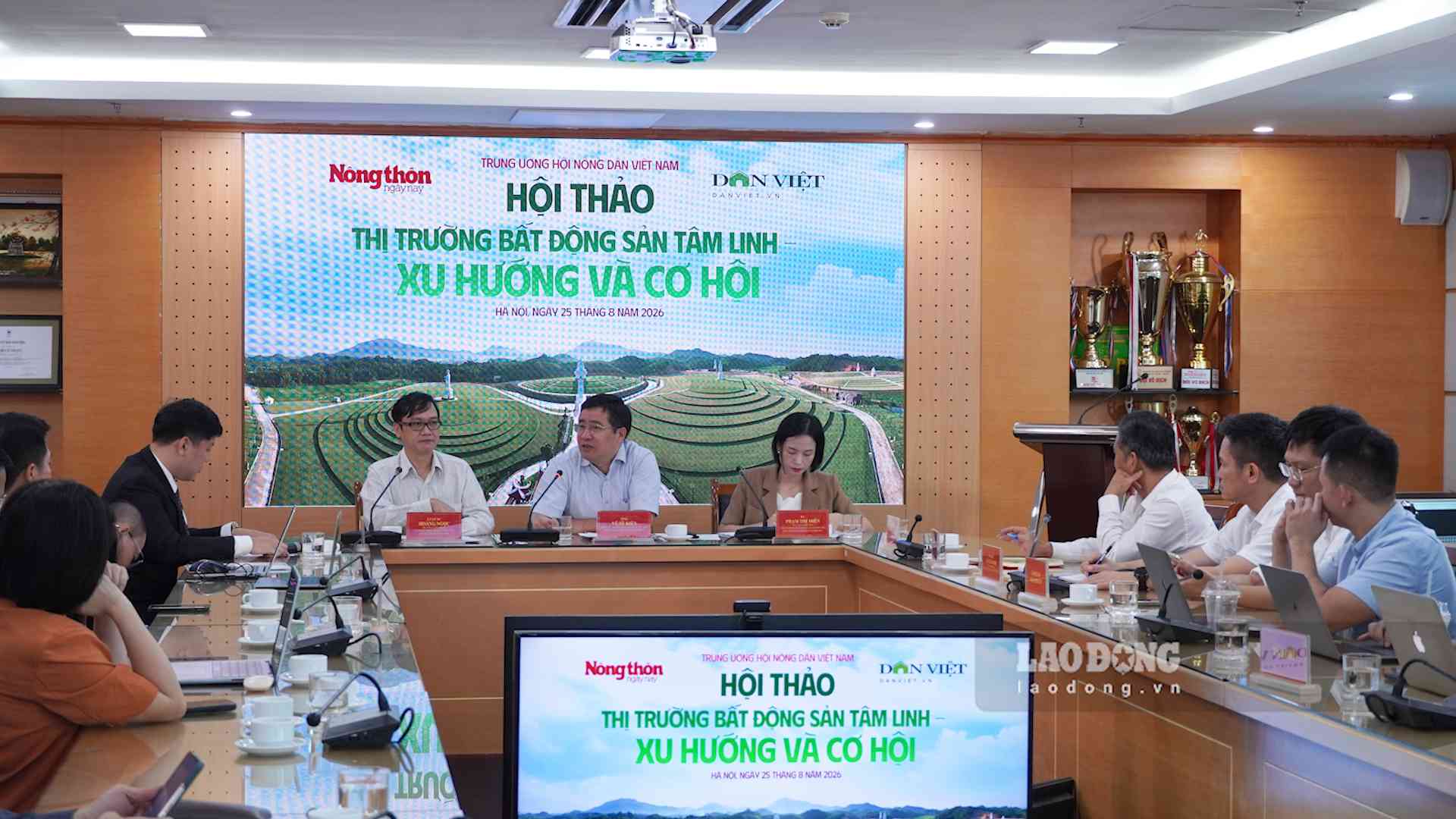
Lawyer Hoang Ngoc, Hanoi Bar Association, said that current Vietnamese law does not have the official legal term "spiritual real estate", nor does it have an independent real estate group with this name.
This is mainly a concept used in the market to refer to products, works or projects associated with spiritual needs, beliefs, worship, especially cemetery projects, cemeteries, cremation facilities or ashes storage areas.
According to lawyer Hoang Ngoc, the law needs to continue to have more specific regulations, clarifying the nature of products, the rights of buyers and the responsibilities of management units, which will contribute to protecting people's rights, limiting the situation of buying and selling under the name "spiritual real estate" but not clearly defining the legal nature.
Mr. Vu Sy Kien, Deputy Director of the Land Administration Department (Ministry of Agriculture and Environment) said that the allocation of land funds needs to be directed towards many different models, including forms of land use, non-use of land or partial use of land, in order to effectively exploit land funds and meet the needs of burial, cremation, and storage of ashes of people.
Planning cemetery land funds must also consider the need to relocate cemeteries to serve urban development, industrial parks and large transportation projects. This is an increasingly important factor in the urbanization process," Mr. Kien said.
At the workshop, experts said that this market will still have a lot of room for development in the coming time, but there needs to be a more professional, methodical and transparent management mechanism.


