
Secondary market enters a correction phase
According to Mr. Tran Minh Tien - Director of One Mount Group Market Research & Customer Understanding Center, the Hanoi transfer market in the first quarter of 2026 had a clear "deceleration" after a period of hot growth.
Data from One Mount Group Market Research & Customer Understanding Center shows that total market trading volume reached about 11,100 products, down 50% compared to the previous quarter and down 12% compared to the same period in 2025. Quarterly decreases reflect seasonal factors and cautious sentiment after Tet, while yearly decreases show that investment cash flow is becoming more cautious in the face of macroeconomic factors such as interest rates, inflation and geopolitical risks.
The market no longer operates according to the'quick buy - quick sell' mentality but is shifting to a more selective state. Short-term cash flow is weakening, giving way to buying decisions associated with real housing needs or long-term assets" - Mr. Tran Minh Tien shared.
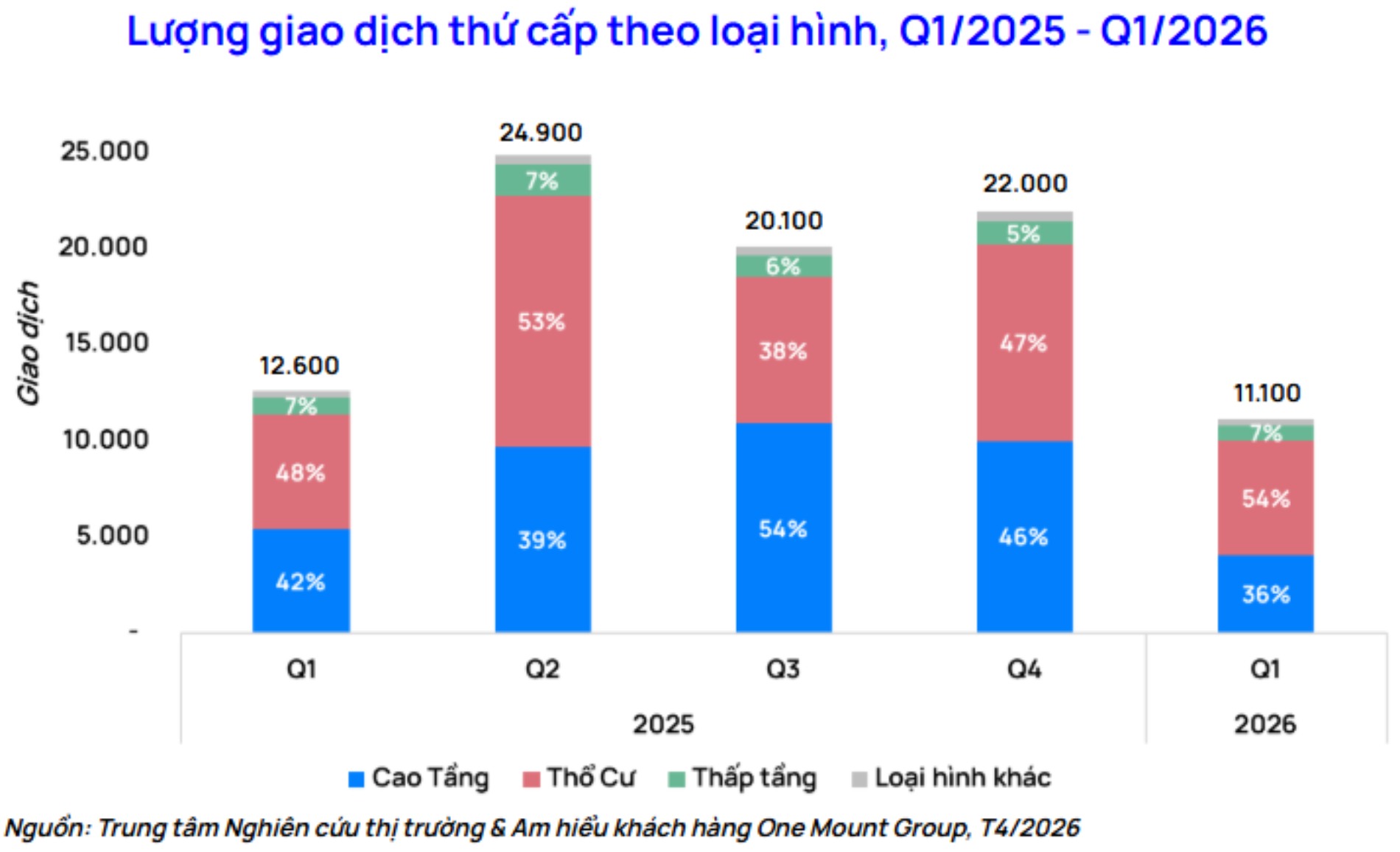
In the apartment segment, the market recorded about 4,000 transactions in Q1/2026, down 60% quarter-on-quarter and 26% year-on-year. This decrease mainly came from the withdrawal of investment capital, while the group of home buyers remained stable.
According to Mr. Tran Minh Tien, the secondary apartment market is entering the screening phase according to project quality. Buyers are increasingly emphasizing certainty instead of expecting short-term price increases.
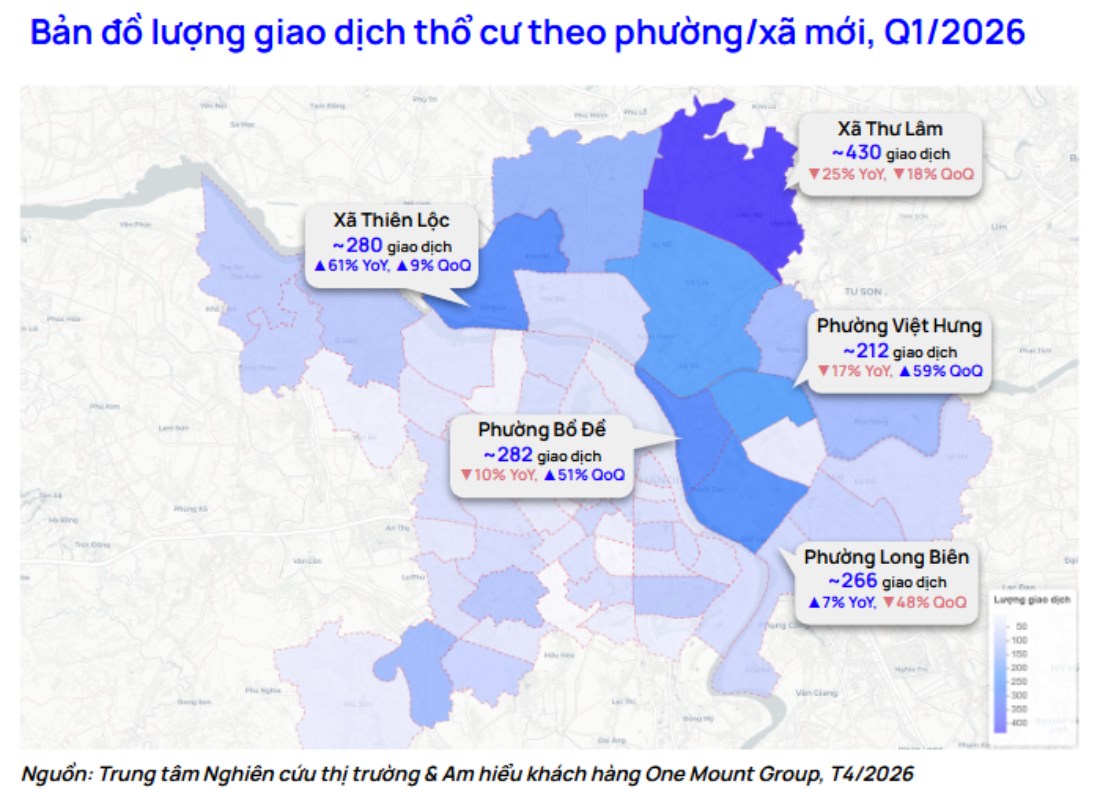
In the first quarter of 2026, the residential land segment recorded about 6,000 transactions, becoming the type with the highest liquidity in the market. Transactions are mainly concentrated in the north and east of Hanoi, showing that cash flow is trending out of the core area, where the price level is still suitable and infrastructure is gradually being completed.
However, according to experts, this development does not reflect the "heating up" of the market but mainly comes from the cash flow restructuring process. In the context of population expansion and urban planning being promoted, the demand for housing in downtown areas is increasingly clear, thereby contributing to maintaining liquidity for this segment.
Transfer market forecast for 2026
Commenting on the remaining quarters of 2026, Mr. Tran Minh Tien said that the market will continue to be led by real housing demand, in the context that capital costs have not decreased significantly and market sentiment is still cautious. Products with clear legal frameworks, that can be used immediately and are suitable for the affordability of the majority will continue to prevail.
Notably, the trend of shifting from residential land to apartments is forecast to continue, especially for young customers and families who need to settle down in large urban areas.
However, compared to residential land, transferred apartments currently still have a more suitable access price, are easier to use financial leverage and are less affected by variables related to future planning.
Overall, the slowdown of the Hanoi transfer market in early 2026 is not negative, but reflects a necessary adjustment phase to rebalance supply and demand and filter cash flow. As speculative factors gradually shrink, the market is returning to its core value of real housing demand and long-term exploitation and use. This is also an important foundation to establish a more sustainable growth cycle in the medium and long term, while opening up opportunities for buyers to access real estate more proactively and substantively.


