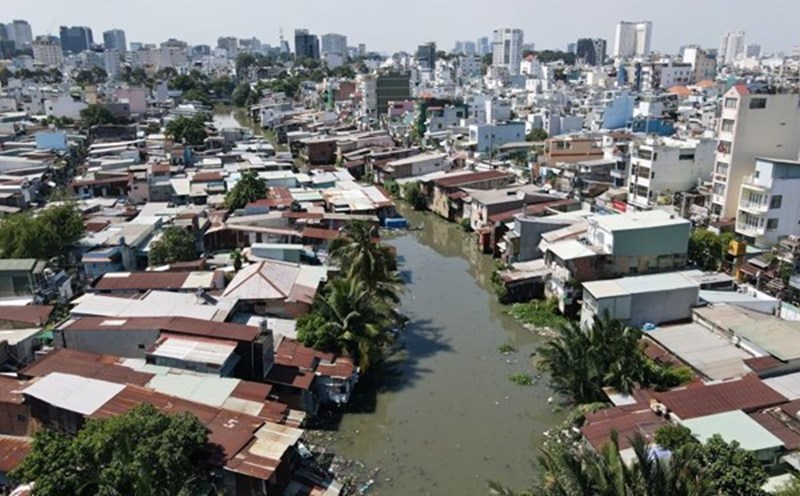
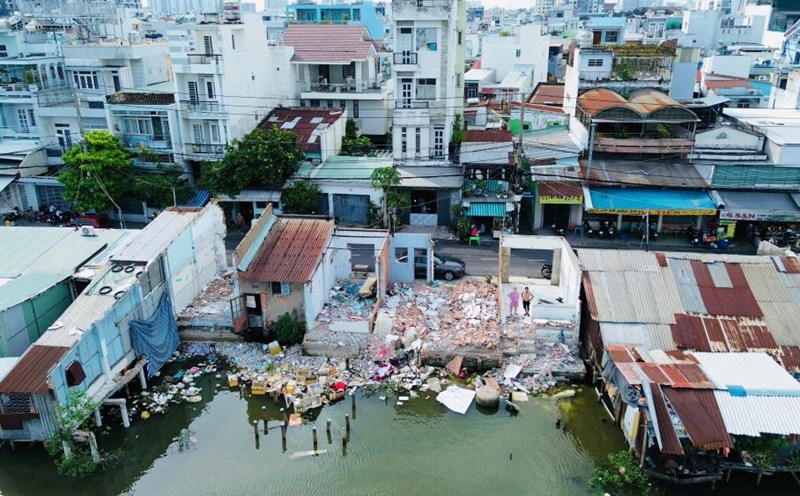
On December 27, the Ho Chi Minh City Department of Construction said that 7 projects have been approved for investment policies and are being focused on by relevant units to implement the next steps to ensure progress.
The Van Thanh canal renovation project (Thanh My Tay ward) has a total investment of more than 8,555 billion VND, including two component projects: compensation, support, resettlement of more than 6,812 billion VND and construction and installation costs of more than 1,743 billion VND.
The project recovered land from 1,077 cases, of which 749 households had to be completely relocated.
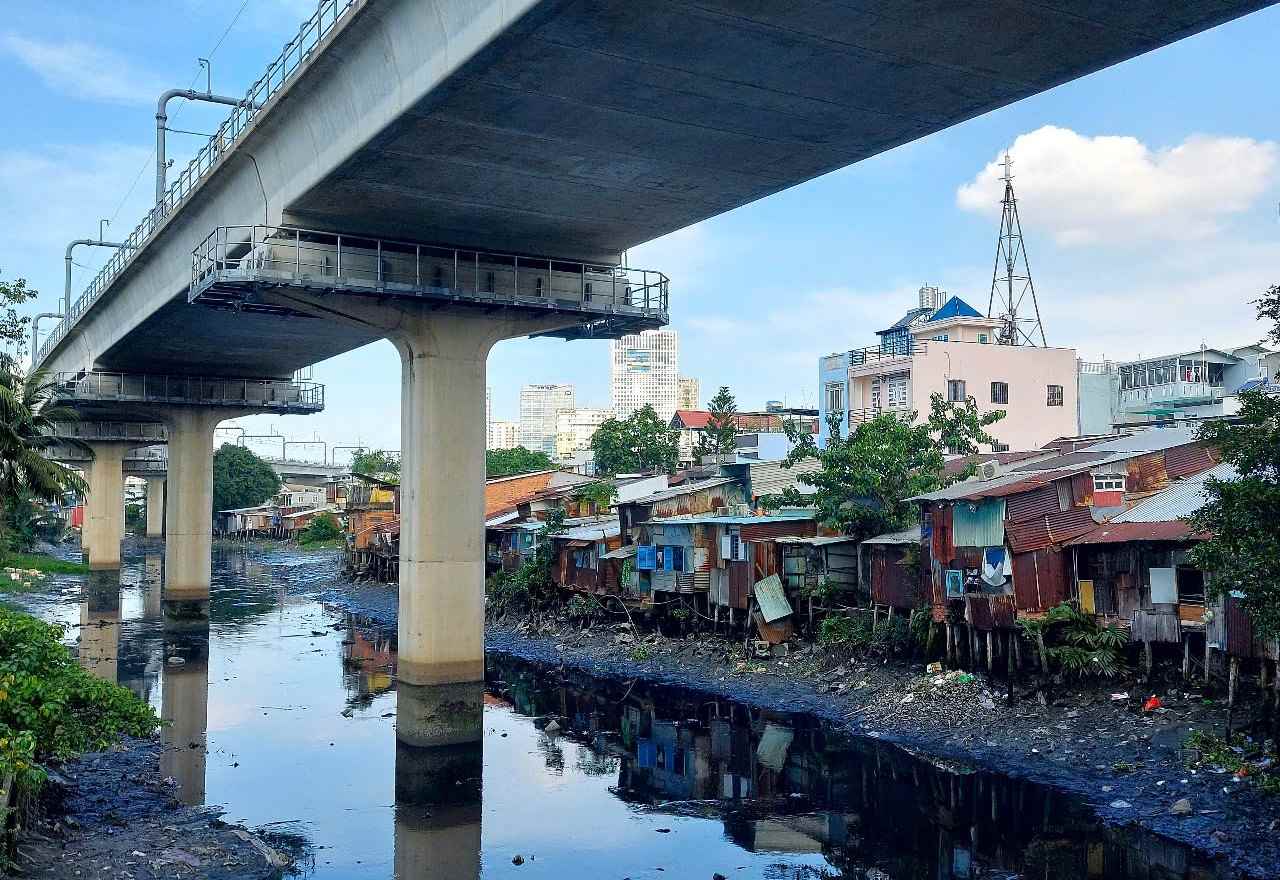
According to the plan, the payment and handover of land will be carried out in 2026; commencement in early 2027 and completion in 2029.
The Van Thanh canal renovation project is nearly 2 km long from Vo Oanh road to Nhieu Loc - Thi Nghe canal and a 275 m long canal branch. The canal bed is dredged 3 m deep, expanded 25 - 50 m, built concrete embankments on both sides; at the same time, build a road along the canal 6 - 20 m wide.
In addition, the project also builds a new Phu An bridge 17 m wide, expands Ngo Tat To road to a road boundary of 25 m, forms a parallel road connecting the Dien Bien Phu axis and plans more than 4.2 hectares of land along the canal as a park.
The project to dredge and renovate Ong Be canal (Chanh Hung ward and Binh Hung commune) has a total capital of more than 7,785 billion VND. About 1,636 houses along Ong Be canal will be cleared.
The project includes dredging a 4.2 km long canal, building a 4.5 km long bank protection embankment, building a new road 12 - 16 m wide, more than 2.4 km long and a synchronous technical infrastructure system.
The project completed site clearance in the third quarter of 2026, started construction in early 2027 and completed in the second quarter of 2029.
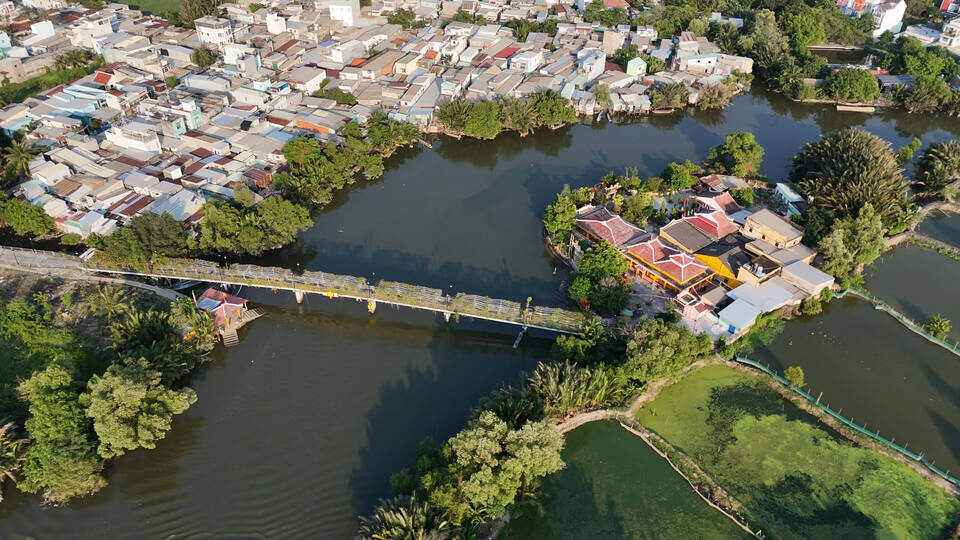
The project to renovate the drainage axis of Ba Lon canal (through Binh Dong ward and Binh Hung commune) has a total investment of more than 9,200 billion VND, clearing 475 houses.
Ba Lon canal, about 7.4 km long, will be dredged throughout the route, 9.9 km long embankment will be built, a new 12 - 18 m wide road will be opened and Ba Lon 2 bridge will be built across National Highway 50. The project will complete site clearance in the third quarter of 2026, start construction in early 2027 and complete in the second quarter of 2029.
The project to build, renovate, and expand Ton That Thuyet street and green park along Kenh Te bank has a total capital of more than 5,554 billion VND, of which the cost of site clearance and resettlement is more than 3,600 billion VND.
The project needs to recover land for 598 households, including 461 households completely cleared and 137 households partially cleared.
In Khanh Hoi ward, about 28 households; Xom Chieu ward, about 126 households (100 households completely cleared, 26 households partially cleared); Vinh Hoi ward, about 444 households (333 households completely cleared, 111 households partially cleared).
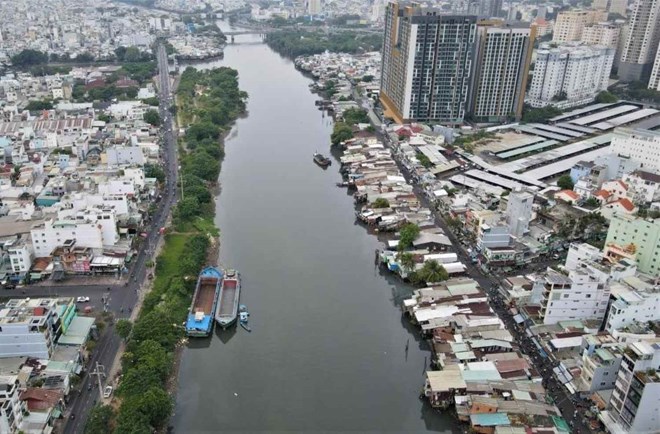
The project will upgrade 3.4 km of Ton That Thuyet road, the section from Ben Van Don to the Ton That Thuyet - Truong Dinh Hoi intersection, expanding the road surface from 7 - 8 m to 27 m.
At the same time, the project builds a new bridge across Nguyen Kieu canal, builds new road No. 1 185 m long, expands Nguyen Kieu bridge, arranges piers, canal embankments and forms a landscape park along Te canal.
Site clearance work will be carried out in 2026, the project will be started in 2027 and completed in 2028.
The remaining three projects include: Kinh River renovation (Tan Tao ward) with a total capital of more than 1,494 billion VND, clearing 353 houses; canal T10 renovation (Tan Tao ward) with an investment capital of 1,000 billion VND, clearing 152 houses; and Duoi Trau canal renovation (Tan Binh ward) with a total capital of 400 billion VND, clearing 65 houses.
Currently, Ho Chi Minh City has 398 rivers, canals, and ditches that have not been renovated, with about 39,600 houses that need to be relocated.
The city aims to relocate 50% of houses on and along canals and ditches by the end of 2030, equivalent to about 20,000 houses. In which, District 8 alone (formerly) accounted for more than 15,000 houses.