
1. Applying the new land price list
According to the provisions of the 2024 Land Law, the old land price list system under the 2013 Land Law will officially expire on December 31, 2025.
From 2026, the new land valuation mechanism will be operated with fundamental changes in the method of building and updating data. The most important point is that the land price list will be built and updated annually, instead of periodically every 5 years as before.
Accordingly, land prices will be determined in detail to each location and each land plot based on market principles. This approach aims to overcome the situation of difference between state and actual prices, and at the same time eliminate the "two-price" mechanism that has existed for many years.
Specifically, According to Clause 3, Article 159 of the 2024 Land Law and Clause 2, Article 8 of Decree 151/2025/ND-CP, the Provincial People's Committee shall develop a decision on the first land price list to be announced and applied from January 1, 2026. Specifically:
- Every year, the Provincial People's Committee is responsible for adjusting, amending, and supplementing the land price list to announce and apply from January 1 of the following year.
- In case it is necessary to adjust, amend, or supplement the land price list during the year, the provincial-level People's Committee will decide...
2. 70% reduction in the fee for converting agricultural land to residential land
According to point c, clause 2, Article 10 of Resolution 254/2025/QH15, which stipulates cases where garden, pond, agricultural land in the same land plot with residential land is determined when land use rights are recognized and the land use purpose is changed to residential land; converted from land originating from garden, pond land attached to residential land but the land user separates it to transfer land use rights or is measured by the unit when measuring and drawing the cadastral map before July 1, 2014 and has self-measured and separated into separate plots into residential land, land use fees are calculated according to the collection level of:
- 30% of the difference between land use fees calculated according to residential land prices and land use fees calculated according to agricultural land prices at the time of the decision allowing land use purpose conversion (hereinafter referred to as the difference) for the area of land converted for use within the residential land allocation limit in the locality
- 50% difference for land area exceeding the limit but not exceeding 1 time the residential land allocation limit in the locality
- 100% difference for land area exceeding the limit but exceeding 1 time the residential land allocation limit in the locality. The above-mentioned land use fee level is only calculated once for one household or individual (calculated per land plot).
Thus, from January 1, 2026, people will only pay 30% of the difference when converting agricultural land to residential land within the limit, instead of 100% as before.
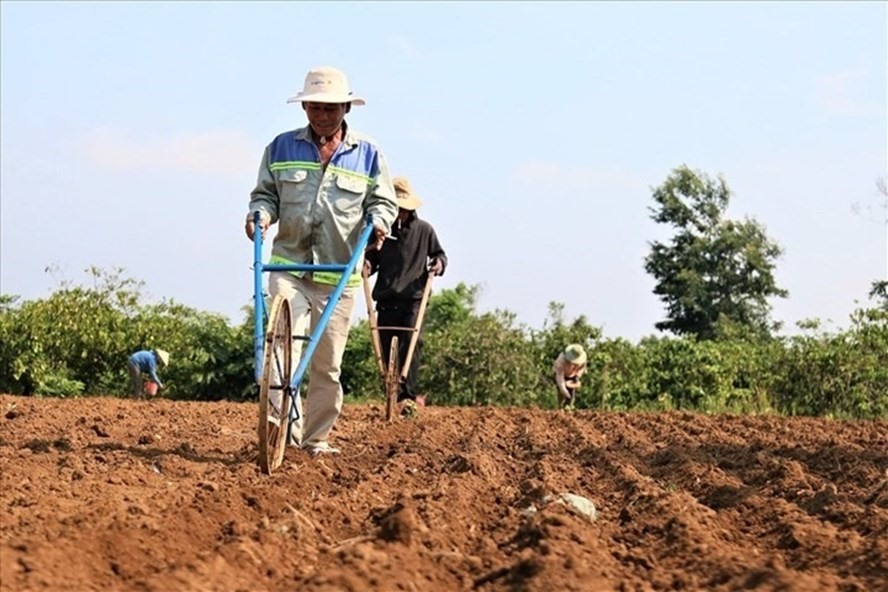
3. Cases of exemption from agricultural land use tax from January 1, 2026
The Government issued Decree No. 292/2025/ND-CP dated November 6, 2025 detailing and guiding the implementation of Resolution No. 216/2025/QH15 dated June 26, 2025 of the National Assembly on extending the period of tax exemption for agricultural land use.
According to the Decree, the subjects eligible for exemption from agricultural land use tax are implemented according to the provisions of Article 1 of Resolution No. 55/2010/QH12 dated November 24, 2010 of the National Assembly on exemption and reduction of agricultural land use tax (which has been amended and supplemented by a number of articles according to Resolution No. 28/2016/QH14 dated November 11, 2016 of the National Assembly), specifically as follows:
1. Exemption from agricultural land use tax for the entire area of agricultural land serving research and experimental production; annual crop land area according to the provisions of land law; salt-making land area.
2. Exemption from agricultural land use tax for the entire area of agricultural land allocated or recognized by the State for land use rights for poor households.
3. Exemption from agricultural land use tax for the entire area of agricultural land for the following subjects:
a) Households and individuals who are assigned and recognized land use rights by the State for agricultural production, receive transfer of agricultural land use rights (including inheritance and donation of agricultural land use rights).
b) Households and individuals who are members of cooperatives, agricultural production cooperative unions; households, individuals, residential communities who have received stable contracted land from cooperatives, cooperative unions, state-owned farms, state-owned forestry farms and households, individuals, residential communities who have received stable contracted land from agricultural and forestry companies for agricultural production in accordance with the law.
c) Households and individuals engaged in agricultural production contribute their agricultural land use rights to establish cooperatives and agricultural production cooperative unions in accordance with the Law on Cooperatives.
4. Exemption from agricultural land use tax for agricultural land areas allocated by the State to economic organizations, political organizations, socio-political organizations, socio-professional organizations, public service units and other units directly using land for agricultural production.
For agricultural land areas that the State assigns to economic organizations, political organizations, socio-political organizations, socio-professional organizations, public service units and other units that are managing but do not directly use land for agricultural production but assign to other organizations and individuals to contract according to contracts for agricultural production, land recovery shall be carried out according to the provisions of the Land Law; during the time when the State has not yet recovered land, 100% of agricultural land use tax must be paid.
The above regulation is implemented from January 1, 2026 to the end of December 31, 2030.


