
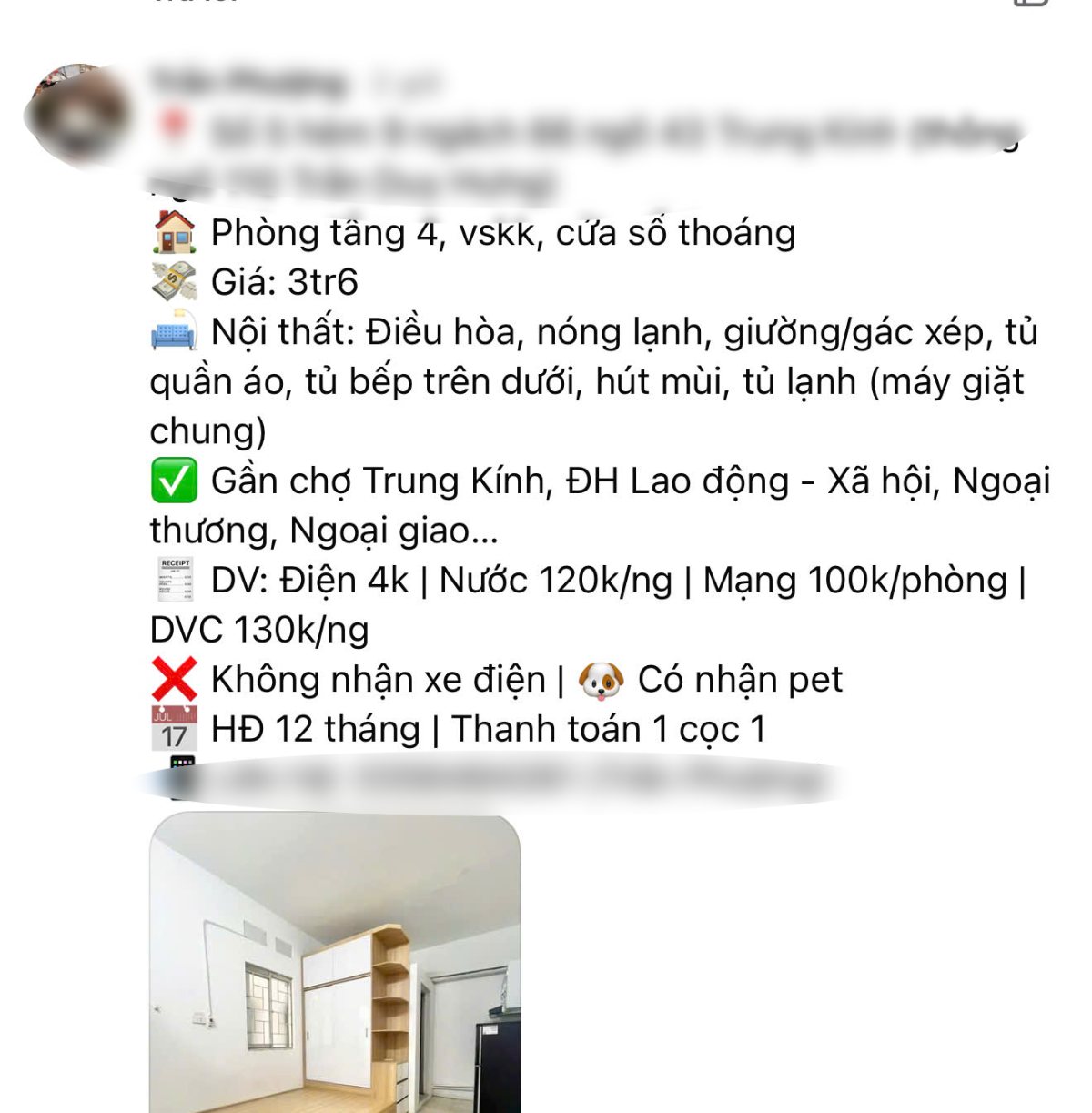
According to a survey by Lao Dong Newspaper, currently many rented houses and mini-apartments in Hanoi do not allow tenants to use or charge electric vehicles.
Just by browsing rental posts on social networks, it is not difficult to encounter announcements such as: "no electric vehicle acceptance", "electric vehicle charging ban".
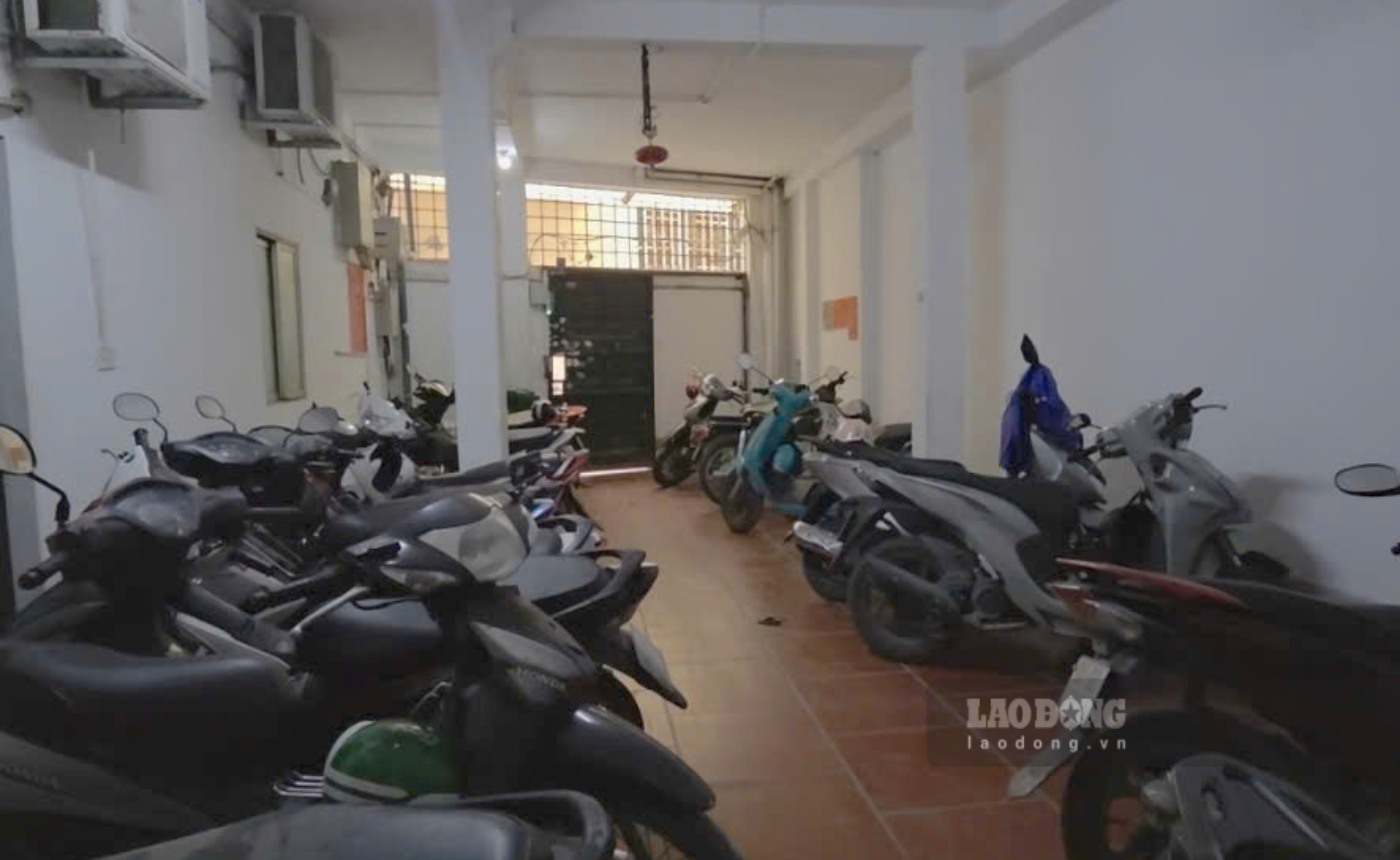
Contacting a landlord in Cau Giay ward, Mr. Tuan (character name has been changed) said that the building currently does not allow tenants to park electric vehicles underground as well as charge electric vehicles due to concerns about the risk of fire and explosion.
Similarly, another landlord in Cau Giay ward also said that they do not allow charging electric vehicles in the parking basement. According to this person, if electric vehicle batteries have problems, it is very difficult to extinguish them, which may affect the entire building. Therefore, tenants who need to charge their vehicles should find another facility with a suitable area.
This landlord added that currently very few buildings allow electric vehicle charging because it is necessary to invest in a separate fire prevention and fighting system with costs up to several hundred million VND, while the room rental is only a few million VND per month, so it is not commensurate.
In fact, the fact that many landlords and apartment building management boards do not allow electric vehicle charging stems from concerns about the risk of fire and explosion, while there are still no synchronous solutions to control risks and ensure fire prevention and fighting safety in the charging area.
Ms. Cat Nhu Ngoc (a student in Hanoi) shared that the fact that many landlords ban electric vehicles causes students no small inconvenience. Many people have to bring their vehicles to a location about 1 km from the landlord to park and charge, then walk back to their place of residence. This not only causes time and costs but also makes the goal of green conversion difficult.
Meanwhile, Dinh Manh Hai (a student in Hanoi) said that he has only bought an electric vehicle for about a month. However, because the boarding house does not allow parking and charging electric vehicles, he often has to go to many different apartments to park the vehicle and charge the battery.
I hope that landlords will soon have plans and arrange suitable car charging places, ensuring safety so that tenants can feel secure using green vehicles," shared Hai.
Faced with the increasing demand for electric vehicles, many opinions suggest that functional agencies and local authorities should soon issue regulations and specific guidance on arranging safe charging areas, meeting fire prevention and fighting requirements, and creating conditions for people to use green vehicles.
Talking to Lao Dong Newspaper, Mr. Dinh Quoc Dan - Deputy Director of the Institute of Construction Science and Technology (Ministry of Construction) - said that currently many facilities do not allow electric vehicle charging because there are no technical solutions as well as safe charging systems. The Ministry of Construction has recognized this issue and started assigning research tasks, but the development of regulations will take more time due to its complexity.
According to Mr. Dinh Quoc Dan, the management of individual houses and boarding houses is very different from apartment buildings. These are mainly works of personal ownership, built in many different forms, some works are standardized, some are not. Therefore, not all are under the management and appraisal process like construction projects according to the regulations of the Ministry of Construction.
In the immediate future, individual houses and boarding houses are being inspected and reviewed by functional agencies on fire prevention and fighting safety. However, due to the lack of specific technical regulations for arranging electric vehicle charging areas, there is a phenomenon of facility owners refusing to charge electric vehicles" - Mr. Dinh Quoc Dan said.
Mr. Dinh Quoc Dan added that the Ministry of Construction is developing a draft guidelines and seeking opinions for completion.


