
Cabo Verde National Team
The rise of the Cabo Verde team is one of the most inspiring stories in African football history. With a population of just over half a million people, the team nicknamed "The Blue Sharks" has continuously progressed over the past decade, reaching the quarter-finals of two African Cups before finally winning their first World Cup spot. They topped the CAF qualifying group with 7 wins in 10 matches, conceding only 8 goals throughout the campaign.
Much of their success is built on defensive organization and discipline under the guidance of coach Bubista. Striker Dailon Livramento is their key attacking threat in the qualifiers, while experienced defender Pico Lopes brings leadership and calmness in defense. Cape Verde also possesses dangerous technical players in midfield, capable of making it difficult for stronger nations in counter-attacks.
At the World Cup, they are in a challenging Group H with Spain, Uruguay and Saudi Arabia. Although they are newcomers, the tight playing style of the Cabo Verde team can cause many difficulties for opponents.
Curacao National Team
Curaçao winning a ticket to the World Cup is perhaps the most notable thing. With a population of about 150,000 people, they became the smallest country ever qualified to participate in the World Cup. Their rise was driven by the smart recruitment of Dutch-Curacabe dual-nationality players and the influence of veteran coach Dick Advocaat.
The Caribbean team topped the final qualifying group and created momentum with fearless attacking play. Gervane Kastaneer shone in the qualifiers with five goals, while former Man United winger Tahith Chong, added speed and creativity in transitions.
Midfielders Leandro Bacuna and Juninho Bacuna brought experience from European football and helped the team maintain composure when controlling the ball.
At the 2026 World Cup, Curacao is in Group E with Germany, Ecuador and Ivory Coast. This is an extremely difficult group, but Curacao's confidence in attack means that they can hardly play passive defense.
Jordan National Team
Jordan's winning ticket to the World Cup marked a momentous moment for Middle Eastern football. After finishing second at the 2023 Asian Cup, confidence in the national team increased rapidly and was maintained in the World Cup qualifiers. Despite an unstable start, Jordan recovered excellently to win a ticket to the World Cup thanks to the combination of beautiful attacking play and resilient fighting spirit.
Their attack is led by Mousa Al-Tamari, who is considered the greatest player in the country's football history. The speed, dribbling ability and direct breakthroughs of this winger make him always a constant threat in counter-attacks.
Besides him, Yazan Al-Naimat and Ali Olwan have created one of the most effective attacks in Asia in the qualifiers. Jordan's strong attacking style can turn them into one of the most surprising teams at this year's World Cup.
At the 2026 World Cup, the Jordanian team is in Group J with Argentina, Austria and Algeria. Facing the reigning world champion will be a historic moment for the Jordanian team.
Uzbekistan national team
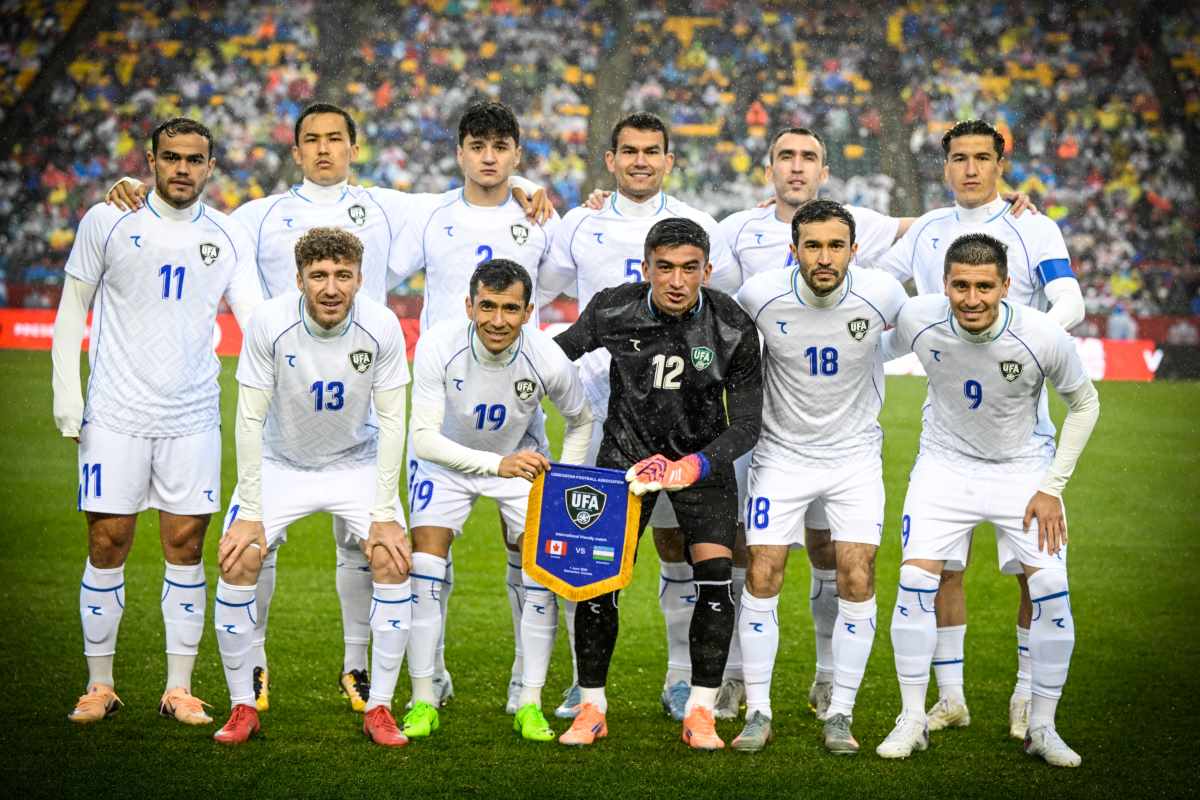
Uzbekistan has spent many years trying to win a ticket to the World Cup and finally succeeded in 2026, becoming the first Central Asian country in history to participate in this tournament. They continuously caused difficulties for the strongest Asian teams in the qualifiers and finally won a ticket thanks to disciplined and methodical performances.
Captain Eldor Shomurodov is still the team's strongest attacking weapon thanks to his intelligent movement and excellent finishing ability. However, great expectations are poured on Man City defender Abdukodir Khusanov, who possesses physique and composure that have helped him become one of the most promising young defenders in the world. Under the guidance of Fabio Cannavaro, the Uzbekistan team has become more disciplined in tactics while maintaining attacking quality.
They are in a difficult group with Portugal, Colombia and the Democratic Republic of Congo, but expectations for the team are increasing rapidly after many years of progress.


