
Liverpool is currently fifth in the Premier League, still has a chance to win a Champions League spot and is one of the teams that has accumulated the most points since the beginning of last season, only behind Arsenal. But in the opposite direction, they are also facing the risk of being eliminated from the Champions League and may be 22 points behind last season.
So how much of this decline belongs to coach Arne Slot? And in the end, what is his role?
The short answer is that no one really knows. It is impossible to accurately quantify Slot's responsibility in Mohamed Salah or Alexis Mac Allister's decline in form, instability in the transfer market, injuries, or the team's continuous poor handling in favorable counter-attack situations.
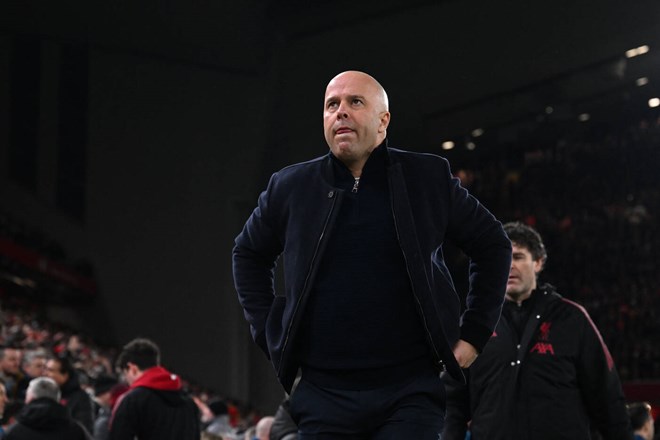
Clearly, Slot is not related to the mental shock from Diogo Jota's departure, but the extent of the impact of this incident on the match result is also incalculable.
There is a common opinion that the team Slot took over in 2024 and the team he is currently leading are two completely different entities. This view is often simplified into the fact that last season's championship was "Klopp's merit" with "Klopp's squad".
In fact, this story reflects the paradox of modern football. Power is no longer concentrated on the head coach. Transfer work is decided by many parties, strategy belongs to the upper echelons, and tactics is a mixture of the legacy of the predecessor, the adaptability of the player and what the coach can implement in reality.
In that context, the role of the coach is sometimes just "atmosphere", an emotional factor. And when a team that has just won the championship with a large gap declines rapidly, the most common reaction is always to find a simple solution.
There are many reasons given such as lack of additions in midfield and center-back, the use of Dominik Szoboszlai in the wrong position, lack of leader, or controversial tactical decisions. There are even opinions that Slot's ball control and pressing philosophy is not suitable for a Premier League environment rich in physical strength and directness.
However, what cannot be confirmed is how many of them are real causes, and how many are just emotional reactions to results that are not as expected.
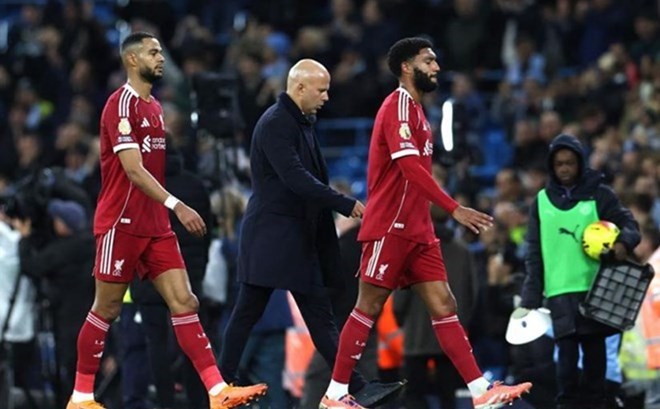
From another perspective, coaches at big clubs sometimes only play the role of "storytelling tools" - people put in to create a sense of change when things go wrong. When it is impossible to change owners or the entire squad, changing coaches becomes the easiest solution.
If viewed pessimistically, Slot may have completed his mission. He helped Liverpool avoid a crisis right after Klopp left. But in the top football environment, that is not enough.
Because in the end, the coach is still the one who has to take responsibility. Not necessarily because he caused the problem, but because he is the easiest link to replace in a complex system.


