
Ms. Ha Thi Nga, Member of the Party Central Committee, Vice President - Secretary General of the Central Committee of the Vietnam Fatherland Front and Mr. Nguyen Van Sinh, Deputy Minister of Construction chaired the Conference.
Supplementing policies for housing development for rent
Speaking at the opening of the Conference, Vice President - Secretary General Ha Thi Nga said that housing is one of the essential needs of every citizen, and also a major social security policy of the Party and the State. The 2013 Constitution affirmed: "The State has a policy to develop housing, creating conditions for all people to have housing".
In recent years, the system of housing policies and laws has been gradually improved, creating an important legal basis for real estate market development, improving the quality of life of the people, contributing to ensuring social security and promoting socio-economic development of the country," said Vice President - Secretary General Ha Thi Nga.
However, Vice Chairman - Secretary General Ha Thi Nga said that after nearly 2 years of implementation, the 2023 Housing Law has revealed some limitations and inadequacies in the face of new development requirements of the country. Especially in the context of continuing to improve the socialist-oriented market economy institution, promoting decentralization and delegation of power, streamlining the organizational structure, reforming administrative procedures, promoting digital transformation; at the same time as implementing major policies of the Party and State on social housing development. Therefore, the development of the draft Housing Law (amended) is extremely necessary in the current context to fully institutionalize the Party's policies and especially to overcome difficulties and obstacles in practice, creating a synchronous, stable, and feasible legal corridor for housing development, management and use in the current new period.
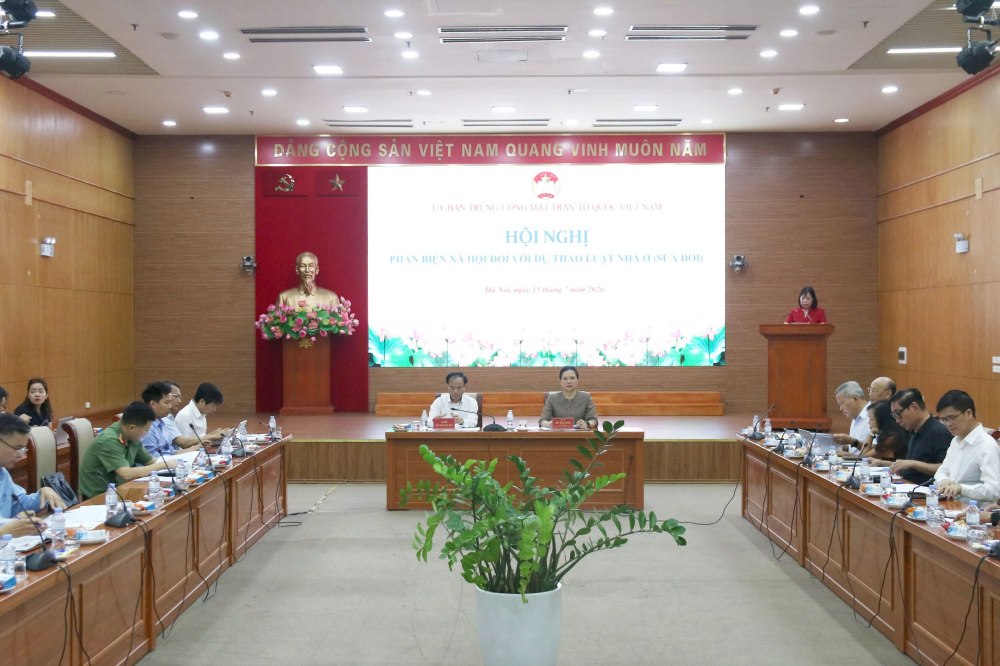
Presenting the new points of the Draft Housing Law (amended), Deputy Minister of Construction Nguyen Van Sinh clearly stated that the Draft is built in the direction of a framework law, promoting the constructive role of the State, promoting decentralization, delegation of power and simplifying investment and business procedures. The Draft consists of 13 chapters, 149 articles, reducing 49 articles compared to the current law, and at the same time supplementing and perfecting policies for four groups of housing including commercial housing, rental housing, public housing and policy housing to institutionalize the views of the General Secretary and President.
Expanding opportunities for renting and renting houses for workers
Assessing that the Draft Law on Housing (amended) has many new regulations and thinking, closely following the policies of the Party and State, Standing Vice President of the Vietnam General Confederation of Labor Ngo Duy Hieu proposed that the content of the draft law must truly promote faster and more diverse housing development but still ensure quality, planning, living space and traffic connection; at the same time, there should be priority policies for the needs of workers and laborers to rent and rent-purchase and create conditions for disadvantaged groups to access social housing more conveniently.
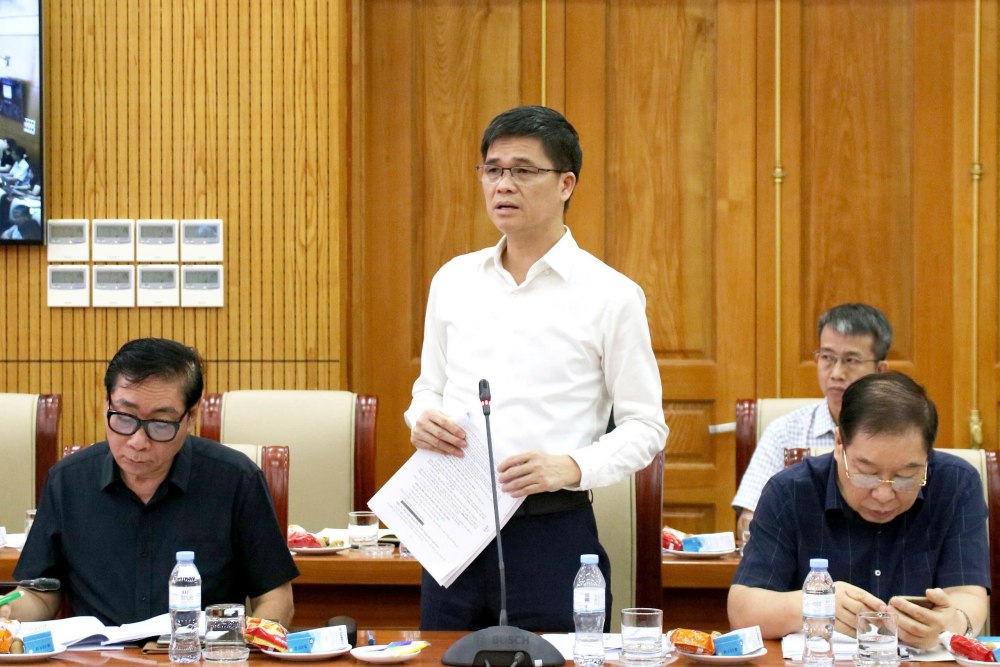
Regarding specific content, Standing Vice President of the Vietnam General Confederation of Labor Ngo Duy Hieu proposed to re-examine the name "suitable priced commercial housing" in the direction of clearly reflecting the nature of being supported and regulated by the State. Poor and near-poor household groups should be regulated uniformly, avoiding duplication; the scope of beneficiaries needs to be expanded to workers at agencies, organizations, units and freelancers, and at the same time not limiting workers and laborers inside or outside industrial parks.
Regarding trade union financial resources, Standing Vice President of the Vietnam General Confederation of Labor Ngo Duy Hieu suggested that it is necessary to clearly define the Vietnam General Confederation of Labor as the managing agency of rental housing projects; having the right to decide rental prices, select management and operating units and research to participate in housing development in the form of lease-purchase. Regulations on worker accommodation should also not be mandatory to be built only in industrial parks, but should be allowed to be arranged outside industrial parks when meeting management conditions.
Regarding official housing, Standing Vice President of the Vietnam General Confederation of Labor Ngo Duy Hieu proposed to expand the beneficiaries to some equivalent positions such as people working in difficult areas and special zones; and prioritize officers, doctors, and teachers working in these areas. In addition, there needs to be a mechanism to handle, convert or sell small, abandoned or ineffective official houses, in order to avoid wasting state assets.


