
Ruben Amorim of Manchester United seems to have "turned around" Enzo Maresca's tactical handbook, reading carefully from beginning to end and then choosing the most controversial details to turn into a direct challenge to the "Red Devils" leadership.
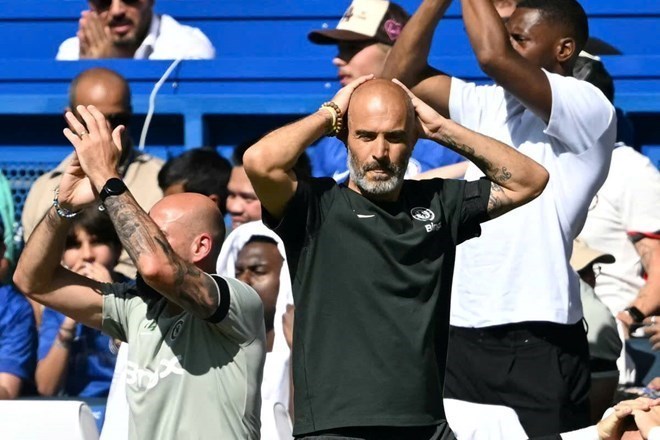
Whether intentionally or unintentionally, Amorim is pushing himself closer to the scenario that the former Chelsea coach once experienced. Maresca ended 18 months in power on New Year's Day, after too many public criticisms of the management system at Stamford Bridge.
Maresca, who last season brought Chelsea to win a ticket to the UEFA Champions League and the UEFA Conference League, before winning the FIFA Club World Cup in July, did not name any individuals when mentioning "the worst 48 hours".
Although Maresca's disagreements with the complex power structure at Chelsea - where there are two bosses, 5 Sporting Directors and a near-independent operating medical department - are not new, the former Leicester City coach still tries to avoid targeting a specific target.
Amorim is not like that. In a tense press conference after the 1-1 draw with Leeds United, he publicly called on Football Director Jason Wilcox and the scout team to "do their job", and requested to be given the role of "manager, not coach".
In essence, Amorim was appointed coach by Man United when he came to Old Trafford from Sporting CP in November 2024. Therefore, his emphasis on his desire to become a "manager" himself is already a statement of power.
More dangerously, by specifically naming the transfer managers, Amorim almost sparked an internal battle for control at the club. And there is hardly any other interpretation than that. Amorim certainly understands the consequences.
The 40-year-old captain wants the Man United leadership, including Wilcox, CEO Omar Berrada and minority shareholder Sir Jim Ratcliffe, to give the green light to replenish forces this month, in order to increase chances of winning tickets to the Champions League next season.
However, after missing out on striker Antoine Semenyo of Bournemouth - who is said to be about to complete a 65 million pound transfer to Manchester City this week - Amorim declared that there will be no further efforts to sign a new player.
That message reflects a paradox. Money can be for Semenyo, but not enough for other goals, which Amorim seems unwilling to accept. And when asked to clarify that statement, he further emphasized his frustration.
What is noteworthy is not only the content, but the very words Amorim chose. When asked about previous statements, he replied: "I realize that you (the media) only receive selected information about everything".
Saying that reporters following Man United are receiving "selective information" means Amorim suspects that there is a directional campaign to distort the message he sends out. This is a disadvantageous signal for any head coach in a sensitive environment like Man United.
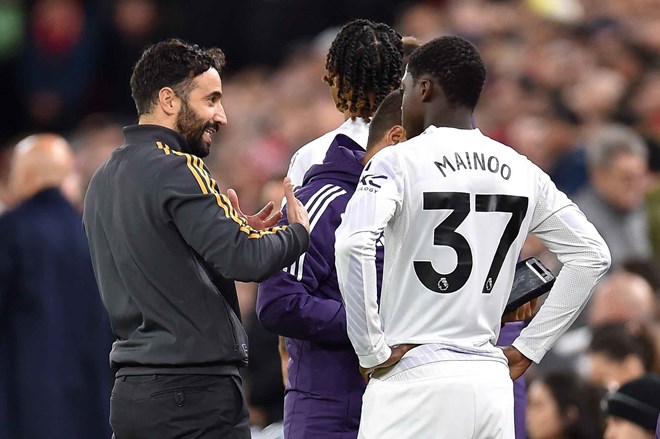
In parallel, by repeating the argument "I am a manager, not a coach" (with examples of colleagues such as Thomas Tuchel, Antonio Conte and Jose Mourinho), Amorim is demanding the level of control that his current job title does not guarantee for him.
This situation recalls what happened at Chelsea under Maresca. From the limited right to intervene in medical decisions, to the inability to strongly influence the transfer department to bring in experienced players - something Maresca believes is necessary to raise the team's level.
Amorim is now in a similar position. For any head coach, the combination of declining results and tension with the executives is always a dangerous "mixture". Amorim, by speaking frankly like that, has put himself in a serious risk zone at Old Trafford.


