
The 7-point gap with Manchester City narrowed to just 2 points in 4 matches is a concern for any team.
But for Arsenal - who are still haunted by three consecutive failed seasons in the Premier League title race - that worry is getting worse. The old wounds are being re-un furthering. Uncertainty spreads, along with the increasingly obvious feeling that Man City are getting closer.
However, the problem is that Man City is no longer the invincible machine that has been around for most of Pep Guardiola's reign. They lost to Newcastle last month, and then almost lost the 2-0 and 5-1 lead in the matches against Leeds and Fulham.
The recent 3-0 win over Crystal Palace was not too convincing, as City created just 0.4 xG (excluding penalties) - the second-lowest tally in a Premier League game under Guardiola, and the lowest since 0.26 xG at Liverpool in October 2018.
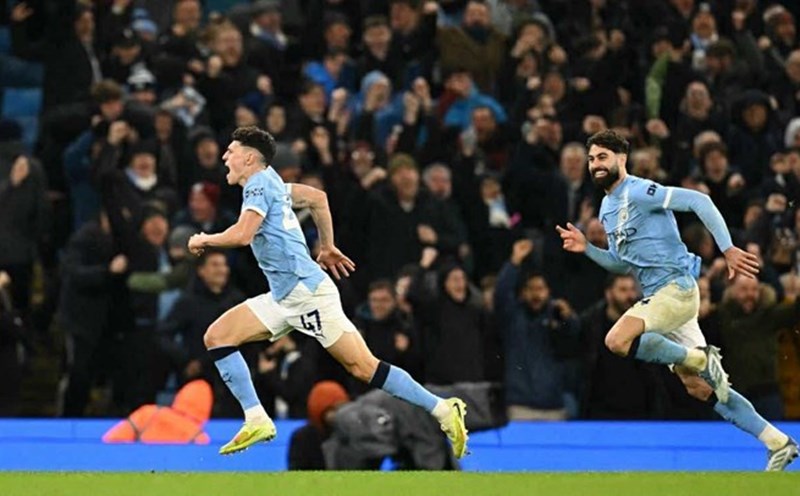
More importantly, Arsenal are still strong, resilient and are the best version of themselves in many years. The "Gunners" are still leading the rankings and continue to be rated by the supercomputer Opta as the number one candidate for the championship.
There are many reasons to be optimistic that this could be the season The Gunners end their long-standing title drought, which they have shown for most of their journey.
However, it is undeniable that the worried atmosphere is covering the Emirates as Man City approaches behind.
That two-point gap became even more fragile after Arsenal's thrilling win over bottom-placed Wolves last weekend. In what was expected to be an easy win, Arsenal had to rely on an own goal in the 90+4 minute to defeat the team with the worst start in Premier League history.
The tension in the stands is easily noticed. Fans are eager for this season to be the time when Arsenal overcome Man City and Liverpool to win the championship. There is no doubt that the Emirates team is capable of doing that.
But after a period of sublimation at the beginning of the season - when Arsenal won 10 consecutive matches in all competitions and only conceded 1 goal - they have not been able to maintain the same stability. Since that run, Arsenal have conceded eight goals in eight games.
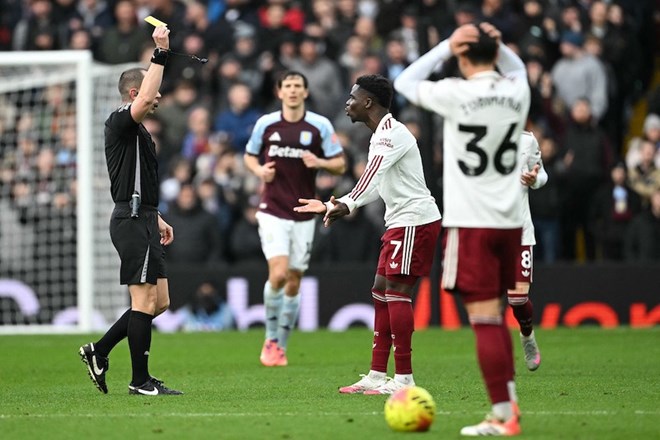
The wave of injuries where the defense plays a key role, if not the whole reason. First-choice centre-backs Gabriel Magalhaes and William Saliba are both out for a long time, while the Cristhian Mosquera back-up option is also injured.
Without these pillars, Arsenal's defense becomes more fragile, while putting great pressure on the remaining positions. "A lack of players means the burden is on others. It was a real dangerous vicious cycle" - Mikel Arteta shared earlier this month.
The high intensity of competition could also be a factor in Arsenal's decline. Arteta demanded maximum determination, and when at his best, Arsenal defended as if each challenge was vital. That style of play has helped them go through 4 Premier League games in October and November when they only had to face one shot on target.
But that intensity is not easy to maintain. Mental fatigue is more difficult to identify than physical fatigue, because muscle can be tested through pain, while concentration is difficult to measure.
It is not possible to confirm, but mental fatigue may have contributed to Arsenal's loss to Wolves. Mateus Mane had too much time and space in the edge of the box to make a pass, and just a few seconds later, Tolu Arokodare headed the ball to equalize.
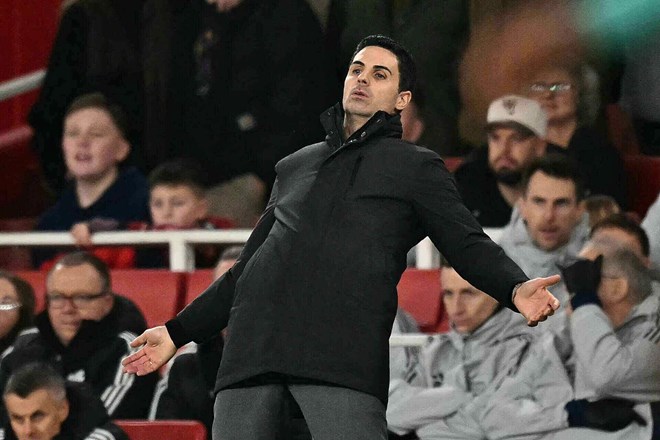
That is not a familiar image of Arsenal. They have put less pressure on their opponents (261 pressing situations) than any other Premier League game this season, and their pressing touch rate (60.5%) is also their lowest. These figures show that an Arsenal are starting to struggle ahead of a tight schedule.
"After scoring, we had a very passive two minutes and conceded that goal. It was a very bad goal. We look too passive and not at the level we need to be" - Arteta shared.
The Citizens are gradually narrowing the gap, and with Arsenal - who have experienced many bitterness in previous title races with Guardiola's team - the concerns that this decline could become more serious are completely well-founded. Overcoming the upcoming busy holiday period could play a key role in Arteta's team preventing that scenario from happening.


