
Coach Arne Slot does not seem to have any luck. Just 3 days after their best performance of the season at Marseille in the Champions League, Liverpool succumbed again to Bournemouth at Vitality. Their imbalance continues to drag on in an unexplained way.
Slot's team has not yet won any Premier League titles this year, scoring only 5 goals after 5 matches. As a result, Liverpool is facing a difficult battle to stay in the Champions League qualifying group, after being surpassed by Manchester United and Chelsea in the standings.
Both Brentford and Fulham have the same number of wins as Liverpool (10). Slot's excuses for the series of disappointing results - most recently blaming the wind in the match against Bournemouth - only quickly eroded the prestige he built from the previous championship season. The Dutch coach is therefore suffering an increasing wave of criticism.
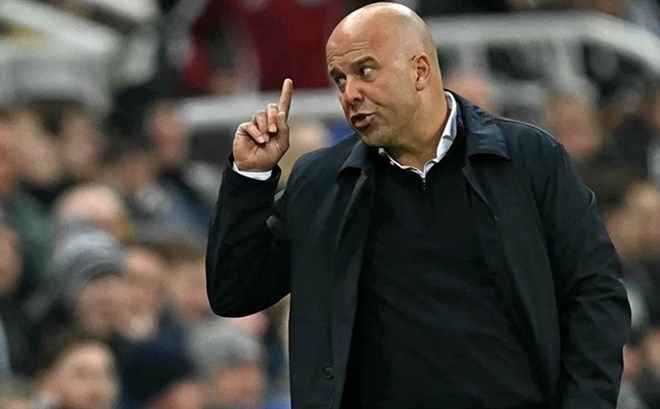
If The Kop cannot beat Newcastle this weekend, after hosting Qarabag at Anfield, they will face the risk of experiencing their worst start in a calendar year since 1954 - the last season Liverpool had to be relegated.
Deadlock in attack
The attack, once the most fearsome threat in the league, has now become one of the most readily learned teams. The ball control style that Slot pursues makes Liverpool deploy slower, more easily restrained and also much more predictable.
When the attacking tempo was reduced, the ability to create opportunities and the quality of shots clearly decreased.
Deploying the ball from their own half is only really effective when the top has enough strong movement to "break" the opponent's formation. Liverpool currently lacks drills that can disrupt the defense system, making the game beautiful but lacking in damage.
Previously, names like Luis Diaz or Diogo Jota often had direct breakthroughs, stretching the defense and creating space for teammates to rush in and exploit. That dynamism forced the opponent to retreat deep and be swept away.
The current Liverpool version is more organized, but lacks the attractive energy source as before. From being the most effective attacking team last season, they have now become one of the teams that does it the worst. The decline of Mohamed Salah is also a regrettable consequence of this situation, and the result is that Liverpool's number of goals has decreased significantly.
The pain at Anfield
Anfield used to be a fortress that brought almost certain victories for Liverpool. Special history, the breathtaking atmosphere and the weight of each match all contribute to creating an advantage. Of course, those factors are still there, but at this time they seem to be overshadowed by a feeling of uncertainty.
Since the 4-2 victory over Bournemouth in the Premier League opening round, Liverpool has not scored more than 2 goals in any of their last 10 home matches.
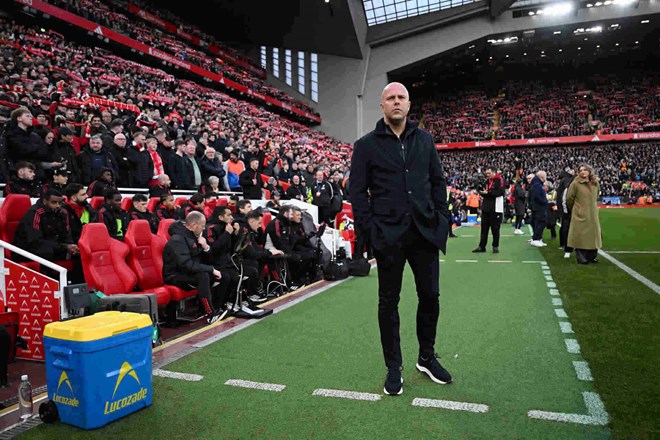
This season, they only averaged 1.45 goals/match at Anfield - the lowest level since the 2011-2012 season (1.26). The average score per home match also only ranks Liverpool in 10th place if considering the performance at Anfield alone.
From now until the end of February, Liverpool has 5 home matches left, including the encounters with Newcastle and Manchester City. With such a schedule, reality may become even more difficult before everything gets back on track for the "Reds".


