Manchester City fans must have been very happy to witness the prolonged decline of Manchester United over the past 13 years. Each new generation of coaches who fail at Old Trafford brings The Citizens countless more "materials" to mock in the stands.
They once mocked David Moyes as a "football genius" during his time succeeding Sir Alex Ferguson. They laughed at Jose Mourinho with a song about the defensive "bus" when Man City overwhelmed Man United at Old Trafford. They joyfully sang "Ole's at the wheel" in the last days of the Ole Gunnar Solskjaer era.
By Erik ten Hag's time, he was called a "clown", and when Ruben Amorim appeared, City fans even modified the lyrics of the opponent's familiar songs to mock them: "They will never win again, the "Red Devils" will be relegated".
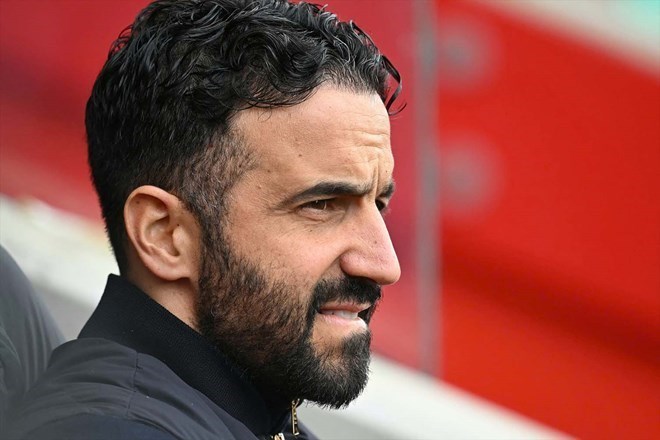
It is not difficult to imagine that before the Manchester derby this weekend at Old Trafford, the blue shirt fans have begun to compose a new satirical song for Michael Carrick - who has just been appointed interim coach of Man United until the end of the season.
They hope their team will continue to instill more difficulties for a new successor, right in the first derby since Carrick replaced Amorim.
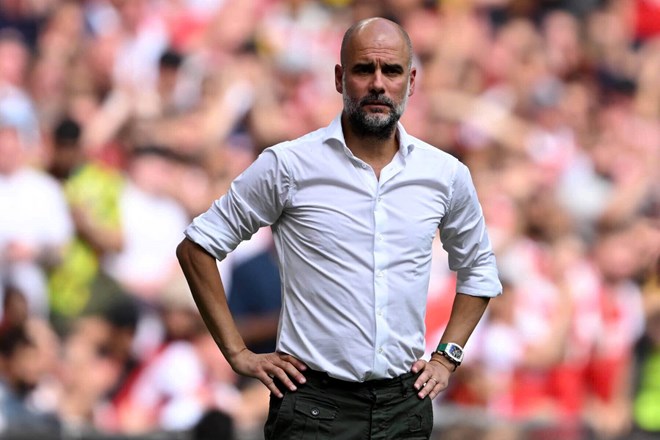
However, amidst the laughter and familiar complacency, Man City will sooner or later have to face an equally important question: What will be the plan to replace Pep Guardiola in the near future?
Although still in contract with Man City until June 2027, more and more predictions are emerging that Guardiola may end his nearly ten-year reign at the Etihad right after the end of the current season.
According to sources, Man City has begun to prepare for that scenario and has contacted Enzo Maresca twice - who later left Chelsea. Guardiola himself also declined to confirm whether he would continue to lead the team until the end of his contract, but has directly told the board of directors that they should be ready for the day he leaves.
If they decide to part ways this summer, Guardiola's successor will inherit a Man City team with a stable foundation and a brighter future than the Man United squad that Ferguson left to David Moyes. At that time, most of M.U's key players have passed their peak and cannot adapt to the new coach's philosophy.
The difference also lies in the power structure behind the scenes. Moyes took over Old Trafford in the context of a serious leadership gap, when legendary CEO David Gill also left the club at the same time as Ferguson retired.
Conversely, Guardiola is likely to leave Etihad as Man City still operates in a solid football ecosystem. They continue to be run by their long-time partner Ferran Soriano as CEO, while Hugo Viana - the new Sporting Director - is highly appreciated for his strategic recruitment decisions and consistency.
More importantly, Man City is still the core in Abu Dhabi's "soft power" strategy and possesses an extremely solid financial foundation. This is completely opposite to Man United, a club that has been mired in debt since 2013 and has not yet escaped the consequences of many years of being neglected by the Glazer family.
Since Ferguson retired, Man United has tried almost every possible coach model and all have failed.
A noteworthy common point is that except for Moyes, most of Man United's coach appointment decisions have been warmly welcomed by fans. However, each person has fallen in a different way, for different reasons. From vague power structure, inconsistent transfer policies to the huge pressure of history.
Therefore, in preparation for the post-Guariolina era, Man City needs to seriously look to their neighbor in the city as a clear warning. Replacing a great coach is never a simple problem.