
Overview
Nigeria is one of the most notable stories of the tournament. They far exceeded expectations after failing to win a ticket to the 2026 World Cup due to collapsing in the play-off against Congo in November last year.
Under the guidance of Malian coach Eric Chelle, the Super Eagles still have to bear the burden of expectations accompanied by the three-time African championship title. However, that pressure does not weaken Nigerian fans' belief that the "African giant" is brave enough to overcome all challenges, regardless of who the opponent is.
Entering the group stage with quite modest expectations, Nigeria immediately responded with a vibrant attacking football and a perfect journey to advance straight to the semi-finals. They have won all matches played, and also performed one of the most impressive attacks of the tournament.
They started with a 2-1 victory over Tanzania, then created a breathtaking chase to defeat Tunisia 3-2, soon winning a ticket to the next round. In the last round of the group stage, Nigeria rotated the squad but still defeated Uganda 3-1, before deciphering Mozambique in the round of 16. Nigeria extended their momentum with a convincing 2-0 victory over a championship contender, Algeria, in the quarterfinals.
After 5 matches, Chelle's army is the team that scored the most goals in the tournament with 14 goals, only conceded 4 goals and kept a clean sheet in 2 matches. The attacking power comes from the trio Victor Osimhen, Ademola Lookman and Alex Iwobi, supported by Akor Adams. Meanwhile, the balanced foundation and organizational ability are created from Wilfred Ndidi, Frank Onyeka, Calvin Bassey, Semi Ajayi and goalkeeper Stanley Nwabali.
In head-to-head matches, Nigeria and Morocco have met 11 times since 1969 in major tournaments. Morocco is slightly better in terms of total wins with 6 times, compared to Super Eagles' 4 wins and 1 draw. This is a match that is often associated with the World Cup and AFCON qualifiers, in which Nigeria once had memorable milestones in the 1980s and 2000.
However, the balance in recent years has clearly leaned towards Morocco. The "Atlas lions" dominated in the last six encounters, while Nigeria only had one victory - a 2-0 victory at AFCON 2000. Notably, the most recent encounter also witnessed Nigeria's heaviest defeat in head-to-head history - losing 0-4 in 2018.
In the opposite direction, host Morocco topped Group A with 7 points thanks to victories against Comoros (2-0), Zambia (3-0) and a draw against Mali (1-1). Walid Regragui's team took advantage of the enthusiastic fire from the stands, combining disciplined defense with sharp counter-attacks.
Entering the knockout round, Morocco defeated Cameroon 2-0. Real Madrid star Brahim Diaz continued to maintain high form, in a match where "Atlas lions" controlled the ball methodically, effectively utilized set pieces and maintained a tight formation distance.
The key moments were Diaz's opening goal and Ismael Saibari's second goal, thereby helping Morocco extend their unbeaten streak in official matches.
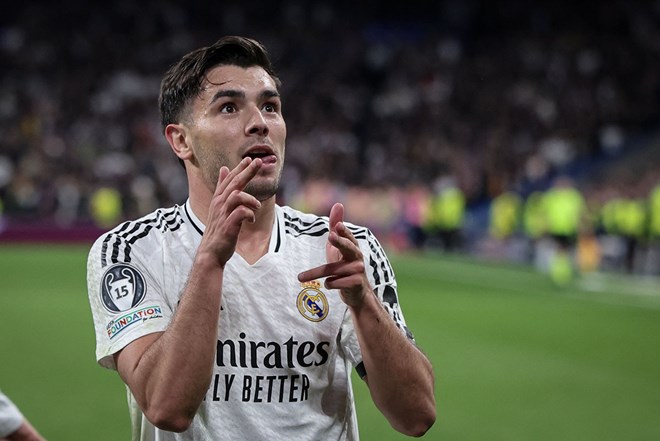
This is Morocco's fifth appearance in the AFCON semi-finals and is considered their most important campaign since 2004. Previously, the "Atlas Lions" only reached the final at home in 1988.
The highlight is Diaz's explosive form when scoring in 5 consecutive matches, becoming the first player in 15 years to score in all 5 first appearances at AFCON. Along with that is Regragui's tactical mark when building a team that switches states flexibly, defends firmly but is still sharp enough when attacking.
Contrary to Nigeria's explosion, Morocco's strength is based on solid defense. They have only conceded exactly 1 goal throughout the tournament and have not conceded from live ball situations.
Expected lineup:
Nwabali, Osayi-Samuel, Ajayi, Bassey, Onyemaechi, Onyeka, Onyedika, Iwobi, Lookman, Adams, Osimhen.
Bono, Hakimi, Aguerd, Masina, Mazraoui, El Khannouss, El Aynaoui, Saibari, Diaz, Ezzalzouli, El Kaabi.
The match between Nigeria and Morocco takes place at 3:00 AM on January 15 (Vietnam time).


