
The Premier League has long been the stage for expensive transfer deals, but the summer of 2026 makes this trend move to a different level. Huge numbers appear so densely that assessing a good or bad transfer window sometimes becomes difficult.
Chelsea is a typical example. 4 years after the Clearlake era began, the London team has gone through a period of turmoil with a series of big deals, many changes on the coaching bench and huge spending. However, they can still earn a significant amount of money from selling Enzo Fernandez to Manchester City.
That is the paradox of the current market. A player can be bought at a very high price, going through a period that is not really convincing, but still retains value in the market thanks to age, contract and potential. Mykhailo Mudryk is also a similar case when outside-field issues have not completely caused value to disappear.
Looking at the entire Premier League, the difference in cash flow becomes even clearer. Man City spent about 457.5 million pounds, while Crystal Palace only spent about 50 million pounds. Liverpool achieved a net profit of about 216.8 million pounds. Aston Villa also had a notable transfer window when both strengthening forces and achieving a net profit of 56.7 million pounds.
These numbers partly show that each club is pursuing a different strategy. However, they also raise a bigger question: do these amounts of money really reflect the value of the player or are they just the result of a market that is increasingly losing connection with traditional concepts of value?
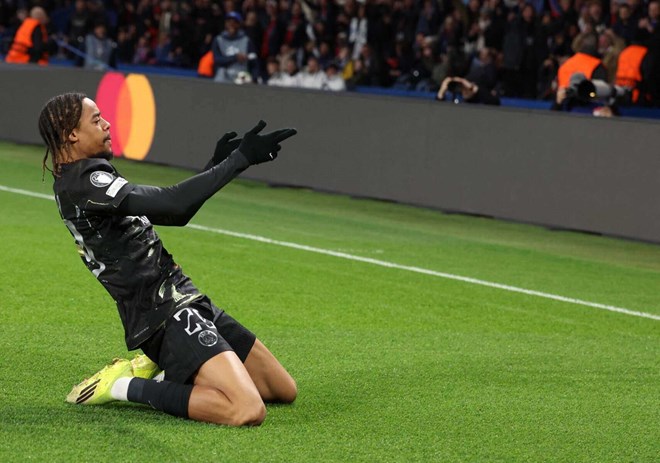
Bradley Barcola joining Liverpool for £123 million is an example. The young French player possesses ability and development potential, but the fee still makes people question the limits of the market. Similarly, Man City continues to invest heavily in midfield with a series of quality players.
Newcastle also had a highly rated transfer window thanks to contracts suitable for Matthias Jaissle's philosophy. Arsenal, although not recruiting a world-class striker, can still be satisfied with the current squad, while Manchester United chooses to invest more scatteredly.
Tottenham is going in a different direction. This team continues to add many players but has not yet solved the problems of identity and stability. Everton also made changes when saying goodbye to some players who scored many goals last season to open a new chapter with Thierno Barry and Brennan Johnson.
It is worth mentioning that such deals are increasingly making players more like assets that can be bought, sold and circulated rather than pieces of a team. Clubs not only look for a player suitable for tactics but also calculate financial value, resale ability and the impact of the contract on books.
That development makes the Premier League transfer market unpredictable. Fees that were once considered unreasonable can now quickly become a new standard. A £100 million deal no longer creates the same shock as before, while figures exceeding £120 or £150 million appear more and more frequently.
Behind all of this is still huge cash flow from television rights, private investment and other financial sources. Money is constantly transferred from one club to another, creating a system where the real value of each deal is sometimes very difficult to determine.


