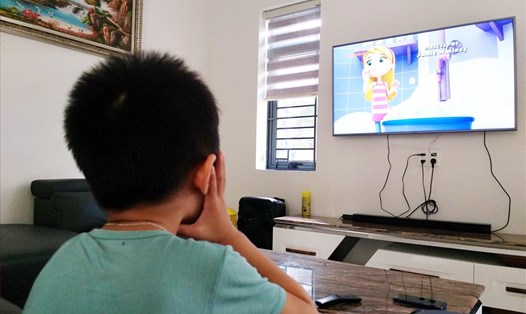
In the modern pace of life, many parents admit that showing their children their phones is a way to help children sit still, eat faster or be less fussy.
However, for many grandparents, this is a habit that potentially has many consequences for children's development.
Mr. Nguyen Anh Tuan (78 years old, Hai Phong) said that he often encounters scenes where parents have to give their phones to their children to eat. According to him, this is a habit that needs to be changed soon.
I think the phone is becoming a barrier to the development of young children. Children are too focused on the screen, so they no longer pay attention to meals or those around them. In the long run, this not only affects vision but also makes children develop unhealthy eating habits," Mr. Tuan shared.

According to him, meals are not simply time to supplement nutrition but also an opportunity for family members to chat and connect with each other. When children only focus on looking at their phones, those values gradually fade away.
I understand many parents want their children to eat quickly, however, using the phone as a'reward' or condition for children to eat is not a long-term solution," he added.
Sharing the same view, Ms. Le Thi Tuyen (68 years old, Hanoi) is currently taking care of her niece with her husband while her parents are working.
According to her, young children can completely use electronic devices for learning or entertainment, but there need to be clear limits.
I stipulate that my child should only use the phone for about two hours after completing the exercise and absolutely not use it during meals. Initially, my child also demanded it, but when he persistently guided me, it gradually formed a better habit," Ms. Tuyen said.

According to her, if adults comply with all children's requests, especially giving their phones whenever children are fussy or refuse to eat, they will easily develop a psychology of dependence.
This not only affects eating but also affects concentration, communication and daily activities.
According to clinical nutritionist at Aster RV Hospital (Bangalore, India) - Aditi Prasad Apte, the use of electronic devices in meals can distract people from eating. When paying attention to the screen, many people tend to eat faster, chew poorly and find it difficult to recognize when the body is full.
This can lead to overeating, causing bloating, indigestion, heartburn and discomfort after meals. According to experts, conscious eating is an important factor in helping the digestive system function effectively, but distractions from the screen reduce this ability.
In addition, the connection between the brain and the digestive system can also be affected when people are too focused on electronic devices. Under normal conditions, the brain and intestines coordinate to control hunger, fullness and food digestion. However, when eating is not focused, the body may react worse to these natural signals.
Not only that, content that causes stress or strong emotional stimulation when watching while eating can also increase stress hormones in the body. This disrupts the digestive process and can affect intestinal function in the long term.