Increased risk of heatstroke, heatstroke and heat shock
According to data from the National Center for Hydro-Meteorological Forecasting, these days, the highest temperature in Hanoi reaches 35 degrees Celsius. Prolonged hot weather increases the risk of heatstroke, heatstroke and heat shock, especially for people who have to work outdoors for a long time.
At a park in Cau Giay ward (Hanoi), Ms. Nguyen Thi Thanh Tam still started her work of taking care of green trees from early morning. The early summer heat caused the temperature to increase rapidly, the concrete surface absorbed heat strongly, making the feeling of stuffiness clear.
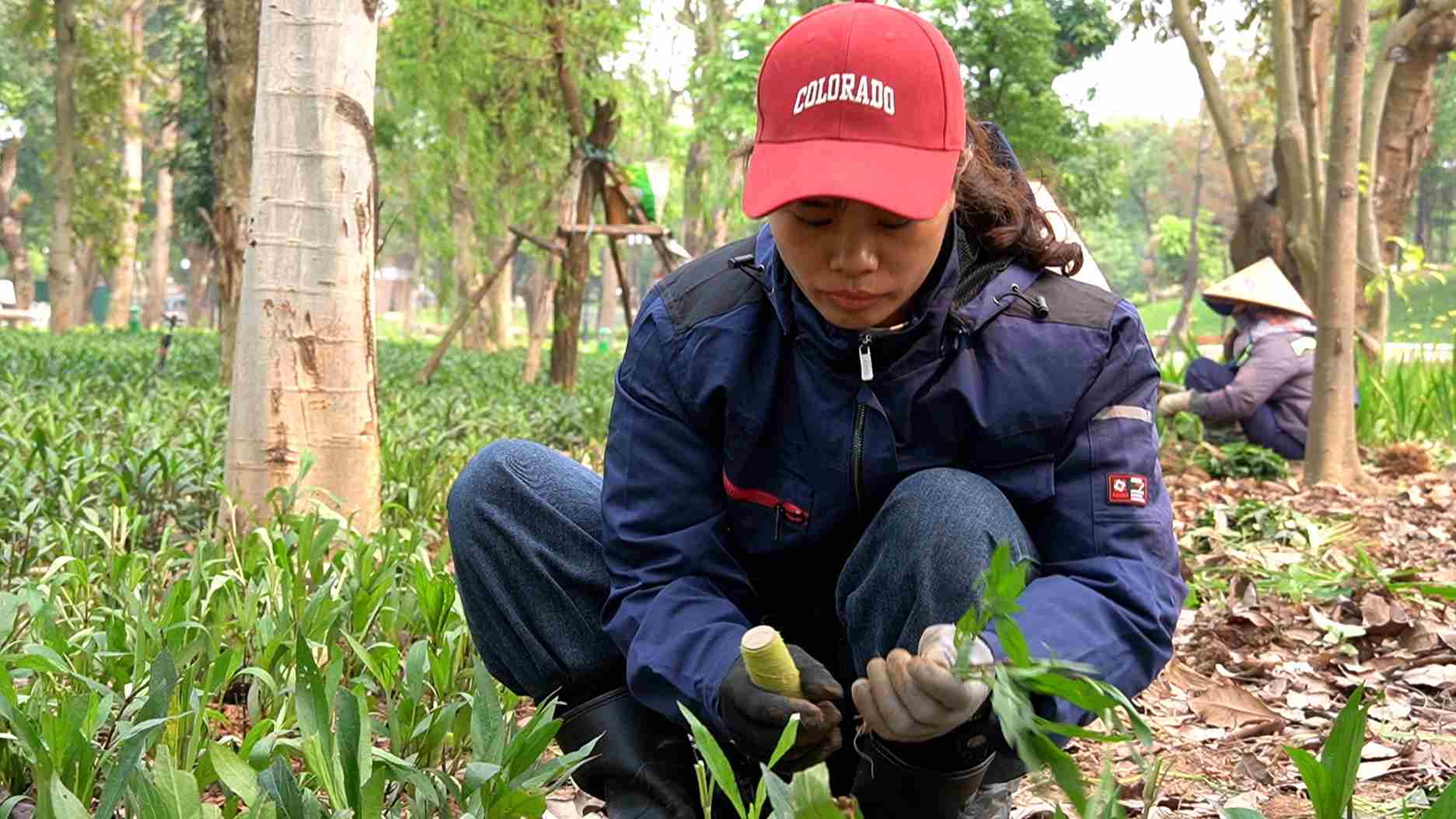
Ms. Tam said that working outdoors for a long time, plus the long distance traveled, caused many days of headaches, dizziness, and fatigue when returning home. To adapt, she uses air conditioning clothes, brings water, proactively works hard when the weather is still mild and arranges intermittent rest during shifts.
Doctors recommend workers
Talking to Lao Dong Newspaper, Dr. Ta Quang Thanh, Deputy Director of Nam Thang Long Hospital (Hanoi) said that heatstroke, sunstroke and heat shock often occur in the summer, of which heat shock is the most severe and can be life-threatening.
Initial manifestations are fatigue, headache, dizziness, nausea; when severe, the patient may have a fever above 40°C and central nervous system disorders.

Heat shock occurs when the body loses balance between heat generation and heat dissipation, causing the central body temperature to rise. Patients may be confused, delirious, convulse or fall into a coma. This is a condition that can be life-threatening if not treated promptly," Dr. Thanh emphasized.
Not only affecting the nervous system, heat shock also causes many serious cardiovascular complications. When body temperature rises too high, the body will have dilated blood vessels, dehydration and electrolyte loss. Patients may experience symptoms such as palpitations, rapid heartbeat, dizziness, and low blood pressure.
If not treated promptly, this condition can lead to blood clots, blood clotting disorders, vascular collapse, and acute coronary diseases.
High-risk groups for heat shock include the elderly, young children, obese people, people with underlying cardiovascular diseases, diabetes or using diuretics, sedatives. In particular, outdoor workers in airtight, high-temperature environments are the most at risk.
From the perspective of nutrition and health care, Dr. Truong Hong Son, Director of the Vietnam Institute of Applied Medicine, noted that in addition to the risk of heat shock, hot weather can also increase the risk of skin and eye diseases, kidney stones due to dehydration and many other health problems. For outdoor workers, dehydration is a very common condition and can become serious if not adequately hydrated.
Regarding the drinking water regime, Dr. Son recommends that the average amount of water for adults can be calculated according to the formula of weight multiplied by 40 ml/kg. In hot sunny conditions or outdoor work, it is necessary to supplement at least 300-500 ml of water because the amount of sweat lost is more.
People also need to drink correctly, divided into many times a day, drinking small sips instead of drinking too much at the same time when they are too thirsty.
In addition to filtered water, people can also supplement water from fruits, soup or berries rich in vitamins and nutrients.
For outdoor workers, Dr. Son recommends wearing long-sleeved but revealing clothes, wearing wide-brimmed hats, wearing glasses to limit eye effects, and using sunscreen if you have to work in the sun for a long time.