
Unexpectedly... unemployed
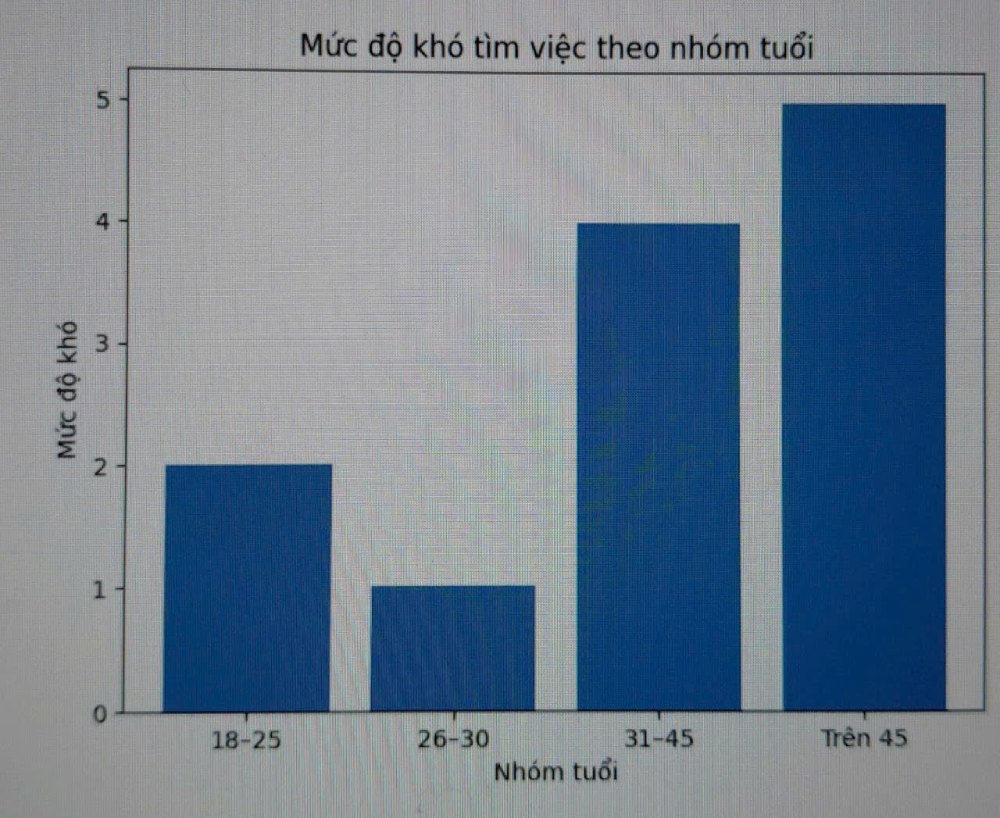
Beyond 30 years old - an age that should be a stable period in their careers - many workers suddenly fall into unemployment or struggle to find jobs. No longer young graduates, but also not strong enough to compete in a rapidly changing labor market, many people are stuck between old standards and new requirements of businesses.
Ms. Nguyen Thi Thuy Anh (32 years old), an employee of the human resources department of an information technology group in Cua Nam ward (Hanoi), said that she had just received a notice of termination of her labor contract from January 10, 2026. The reason given is that the enterprise has automated some stages and added new requirements for personnel.
I am not surprised when the group cuts personnel, but very surprised when the person who loses their job is me. I always think that if there are cuts, the first group will be newly recruited young workers or at least those who have not been attached for long. I am confident in age, attachment and "familiarity" but it turns out, in the current context, what I think are advantages are no longer very valuable," Ms. Thuy Anh shared.
Many years of working in the human resources field have helped Ms. Thuy Anh understand the trends of the labor market. However, that confidence made her unable to prepare for a sudden turning point. When human resource management and artificial intelligence software were put into operation, some positions no longer needed as much personnel as before.
Ms. Thuy Anh's story is not isolated. Mr. Nguyen Duc Phuc (43 years old), a game programmer working in Cau Giay ward (Hanoi), said that workers over 30 years old were once considered the core force in businesses thanks to seniority and stability. However, that is changing very quickly.
Businesses today prioritize young workers, capable of multitasking, proficient in new technologies, ready to withstand high pressure and accept flexible salaries. Meanwhile, many workers over 30 years old are used to a fixed position, a fixed process for many years, and are rarely retrained. When the operating model changes, they quickly become "disaligned", even though their basic working capacity is still there," Mr. Phuc said.
Experience is no longer a safety factor
Not only office workers or technology, this situation also occurs in many other fields.
Ms. Doan Thi Mai is a garment worker in Viet Hung ward (Hanoi). Sitting at the factory for 15 years, at the age of 33, Ms. Mai is in the group of more than 22 workers who lost their jobs after the 2026 Lunar New Year.
My company has just announced that a group of 22 workers, scattered in departments, will lose their jobs on the last day of the first quarter of 2026. We are still receiving Tet bonuses, but perhaps this is my saddest Tet. I don't know how to start applying for another job because I am too used to my current job. I have discussed with the human resources department, all those who resign this time are carefully considered by the company and the reason is very legitimate. For example, the accounting department resigned because the company no longer needs employees to enter data and grade work after using automatic software; garment lines are replaced by some types of machines that provide high productivity and accuracy," Ms. Mai said.

Not only Ms. Mai, in industrial parks, many workers aged 35-45 are forced to quit their jobs when businesses invest in automation lines and modern machinery. In the fields of services, retail, and logistics, older workers face disadvantages in terms of health, shift balancing ability, and work pressure.
For unskilled workers, age becomes an even greater barrier. When health declines, while job requirements become increasingly heavy, many people are eliminated from the formal labor market, having to switch to seasonal, freelance work with unstable incomes.
The common point of these workers is that they do not lose their jobs because of laziness or irresponsibility, but because the labor market has changed the rules of the game. Old experience – once a "safety" for stability – is no longer enough to ensure occupational safety.
This reality poses a paradox: many workers have worked for decades but are still assessed as "inexperienced", because the experience they have is no longer suitable for new requirements. This is also the reason why the group of workers over 30 years old has become one of the most vulnerable groups in the current labor market.


