Most affected
In the context of strong labor market fluctuations, many workers over 30 years old are facing the risk of unemployment or difficulty finding suitable jobs. However, according to experts, this age does not mean running out of opportunities. The core issue lies in the adaptability of workers and the synchronous involvement of businesses, management agencies and trade union organizations.
Reality shows that middle-aged workers are the group most clearly affected by the digital transformation process, streamlining the apparatus and changing the management model of enterprises. When many intermediate positions are cut, and skills requirements are increased, the group of workers over 30 years old can easily fall into a passive position if they do not upgrade their capacity in time. However, this is not the "fin" but a turning point forcing all parties to review how to use and develop human resources.
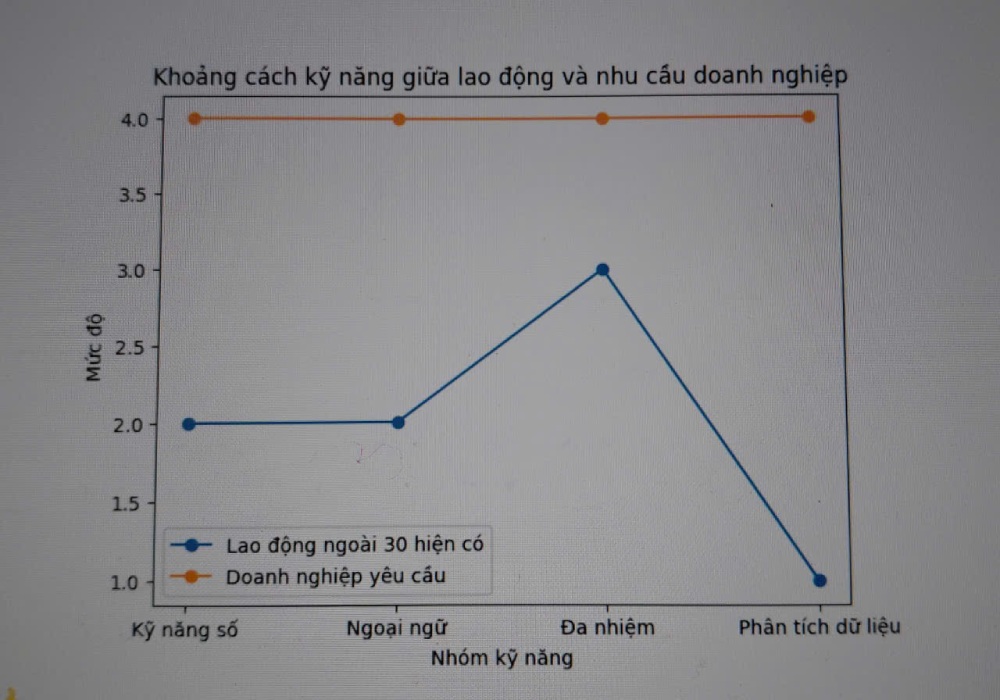
Mr. Vu Quang Thanh - Deputy Director of Hanoi Employment Service Center said that, besides the role of businesses and policies, the employee himself is also a decisive factor. Being over 30 years old is no longer a "absolutely safe" period, when just doing a fixed job well is enough. In the new context, proactively learning, updating digital skills, foreign languages and being ready to change career thinking are vital conditions.
Middle-aged workers need to accept going slowly or sideways in a period to learn new skills, instead of trying to maintain old expectations and fall into a passive position. Flexibility in job choice, willingness to change positions or fields more suitable to market capacity and trends will help workers extend their "vocational age". In a constantly fluctuating labor market, over 30 years old is not the end, but a turning point. Workers need to be aware, opportunities are not lost, but only changed in form. Whoever adapts in time will stay in the game," Mr. Thanh said.
Businesses need to review the value of experienced labor
Mr. Le Quang Trung - former Deputy Director in charge of the Department of Employment proposed that, to limit the risk of unemployment in the group of workers over 30 years old, businesses need to change their thinking on personnel use. Instead of just focusing on recruiting young workers, businesses need to correctly recognize the value of experienced workers - those who understand processes, have discipline, sense of responsibility and long-term commitment.
Investing in retraining and updating skills for existing personnel not only helps retain workers but also saves costs compared to recruitment and new training. In many cases, the cost to retraining a middle-aged worker is significantly lower than recruiting a new worker but lacking practical experience. In addition, a stable labor force also helps businesses maintain organizational culture and reduce personnel fluctuation risks," Mr. Trung affirmed.
Mr. Nguyen Doan Tung - Director of Anh Duc Import-Export & Handicraft Production Company (Dong Da ward, Hanoi) said that if businesses consider retraining as a long-term investment, instead of short-term costs, middle-aged workers can completely become "transitional pillars", helping businesses adapt to new operating models. According to Mr. Tung, "retraining programs need to be designed in a short-term, flexible direction, associated with the actual needs of the labor market and businesses. Workers need to learn "right and right" skills that can be applied immediately to new jobs, instead of theoretical programs.
On the side of management agencies, Mr. Tung proposed that it is necessary to soon complete the policy system to support retraining and vocational conversion for workers over 30 years old. Currently, most training programs still focus on young workers or long-term training, which is not suitable for middle-aged workers who need quick solutions to maintain livelihoods. In addition, there should be credit and financial support policies so that workers over 30 years old can feel secure in vocational training and improve their skills because many people are under family economic pressure, making them not dare to quit their jobs or spend time retraining, even though they are clearly aware of the risk of being fired.