
Sharing and developing union members
On August 19, the Labor Federation (LĐLĐ) of Quang Tri province held talks with the delegation of the Confederation of Trade Unions of Savannakhet province, Lao People's Democratic Republic, to exchange information on activities and cooperation orientations between trade union organizations of the two provinces.
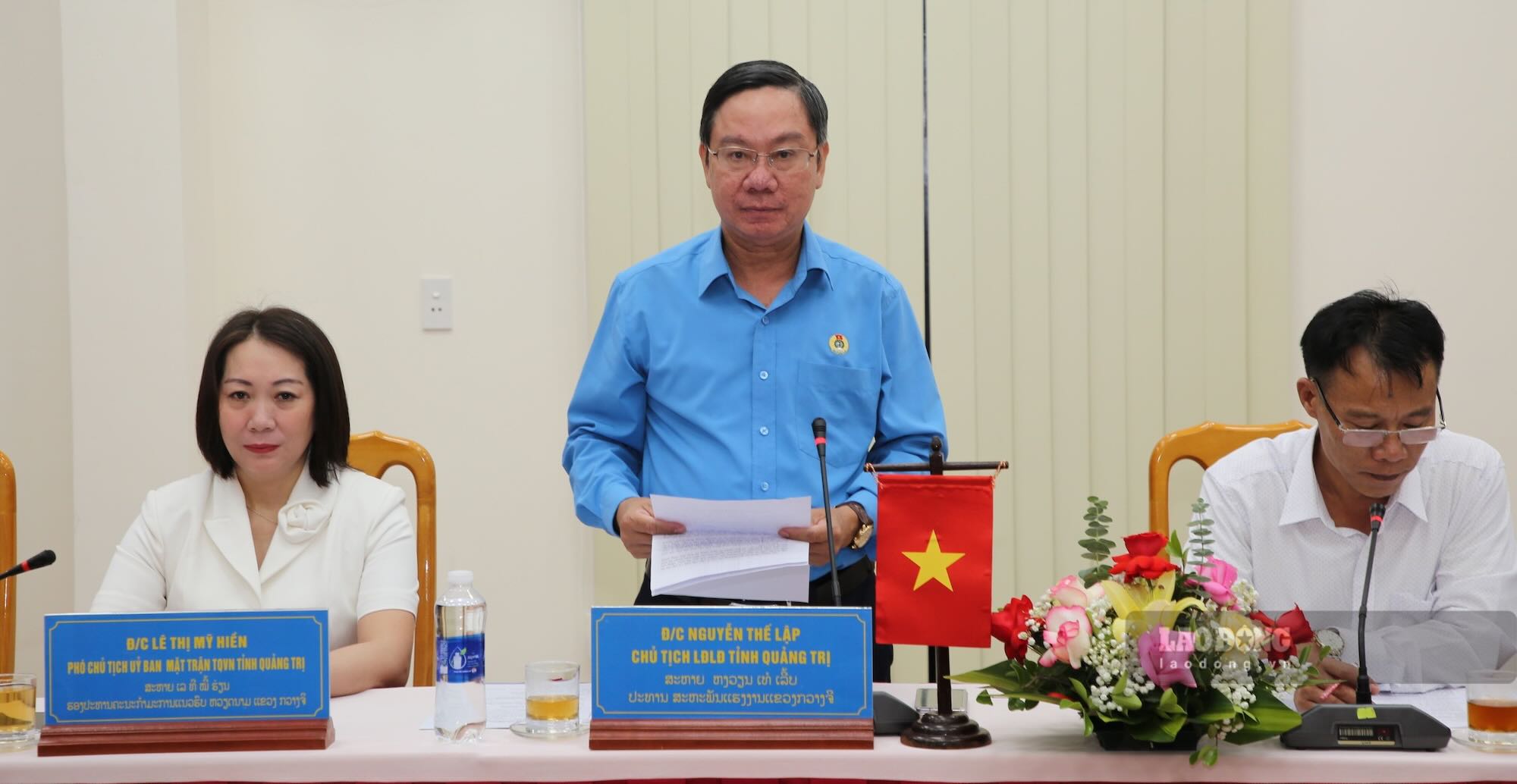
Mr. Nguyen The Lap - Member of the Executive Committee of the Vietnam General Confederation of Labor, Provincial Party Committee Member, Vice Chairman of the Vietnam Fatherland Front Committee of the province, Chairman of the Quang Tri Provincial Labor Federation said that the whole province currently has more than 10,000 operating businesses, with a labor force of about 773,500 people aged 15 and over.
According to Mr. Nguyen The Lap, the operation of the 2-level local government model raises the requirement to rearrange the Trade Union organization. From the previous 4-level model, the Trade Union system currently has 3 levels including the Vietnam General Confederation of Labour, the Provincial Confederation of Labour and grassroots trade unions; there are no longer district-level trade unions or local sectors.
The subjects gathered into the Trade Union organization also changed. Officials, civil servants, and public employees receiving 100% salary from the state budget are no longer union members.
After the merger, Quang Tri province has more than 711 grassroots trade unions, gathering more than 46,000 union members in all economic sectors.
Over the past time, Quang Tri Trade Union has focused on participating in building policies related to housing, employment, wages, income, and insurance; implementing grassroots democracy regulations, dialogue and participating in inspecting the implementation of labor laws, trade unions, social insurance, safety, and occupational health.
The rate of enterprises in the province with collective labor agreements reached 81%. Tet Sum vay, Workers' Month, Trade Union Meal, Trade Union Warm House programs are maintained to care for union members and workers.
In the past 7 months, Trade Union levels have established nearly 60 grassroots trade unions, developing more than 5,000 union members. The Provincial Trade Union also focused on training in negotiation skills, labor dispute resolution, legal advice, digital skills and promoting digital transformation in management and connecting union members.
Deep cooperation
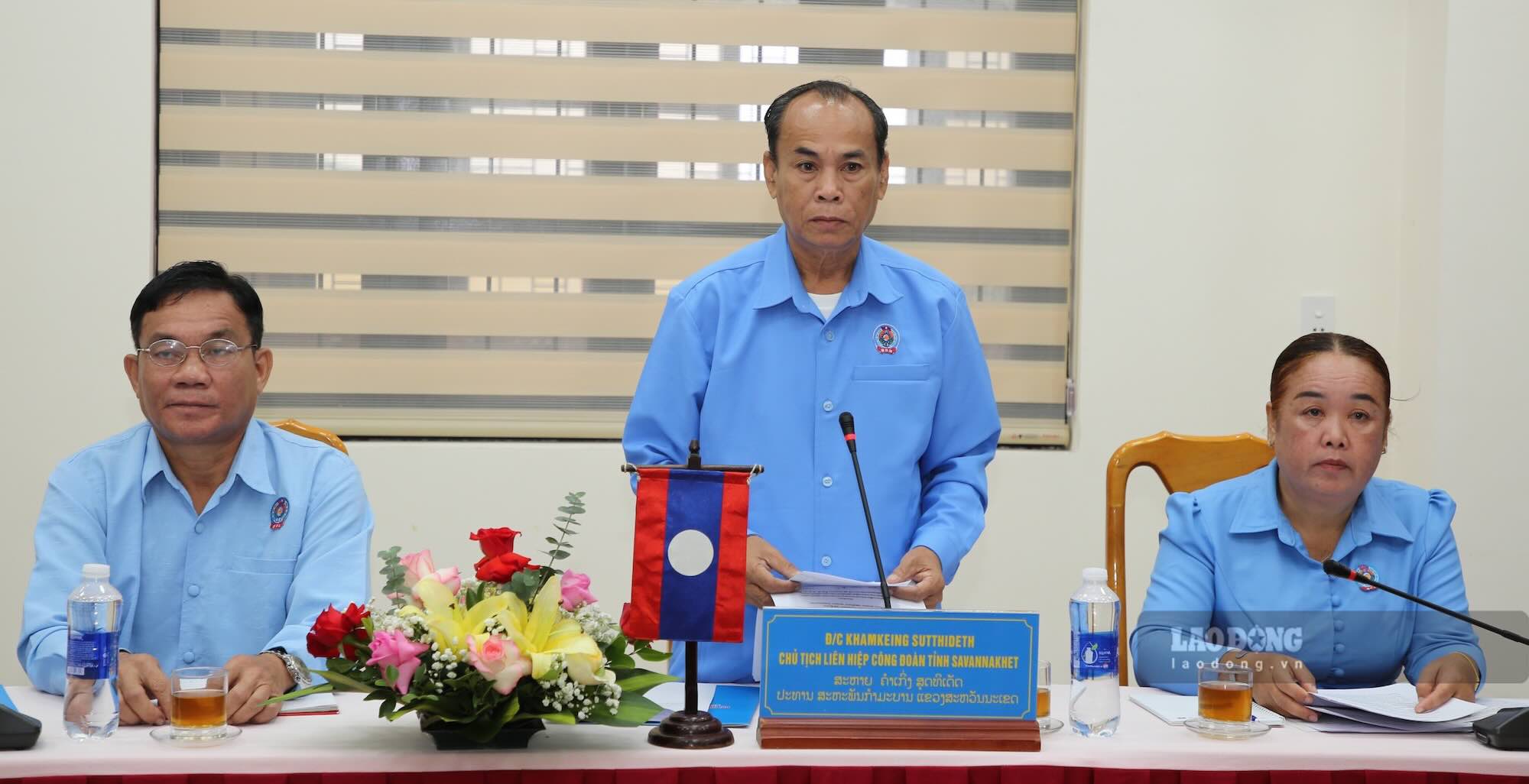
At the talks, Mr. Khamkeing Sutthideth - Chairman of the Savannakhet Provincial Trade Union Federation said that Savannakhet has an area of 21,774km2, a population of about 1.101 million people, of which more than 600,000 people are of working age from 15-60.
The province has 2,145 labor units with 129,109 workers, of which 83 units belong to special economic zones. Savannakhet Provincial Trade Union Federation currently has 15,357 union members, of which 7,340 are women.
Over the past time, trade union levels in Savannakhet have focused on education and training; developing organizations and union members; protecting the rights and interests of workers; supporting informal workers, migrant workers and strengthening foreign relations.
According to Mr. Khamkeing Sutthideth, the expansion of trade union organizations and the development of union members in units in the private business sector still face many difficulties. Savannakhet side hopes that Quang Tri Trade Union will share experiences, methods of developing organizations and gathering workers in this area.
Regarding the direction of cooperation, the Quang Tri Provincial Labor Federation proposed that the two sides continue to propagate to trade union officials, union members and workers about the tradition of solidarity and friendship between Vietnam and Laos, contributing to preserving relations between the two provinces and the two countries.
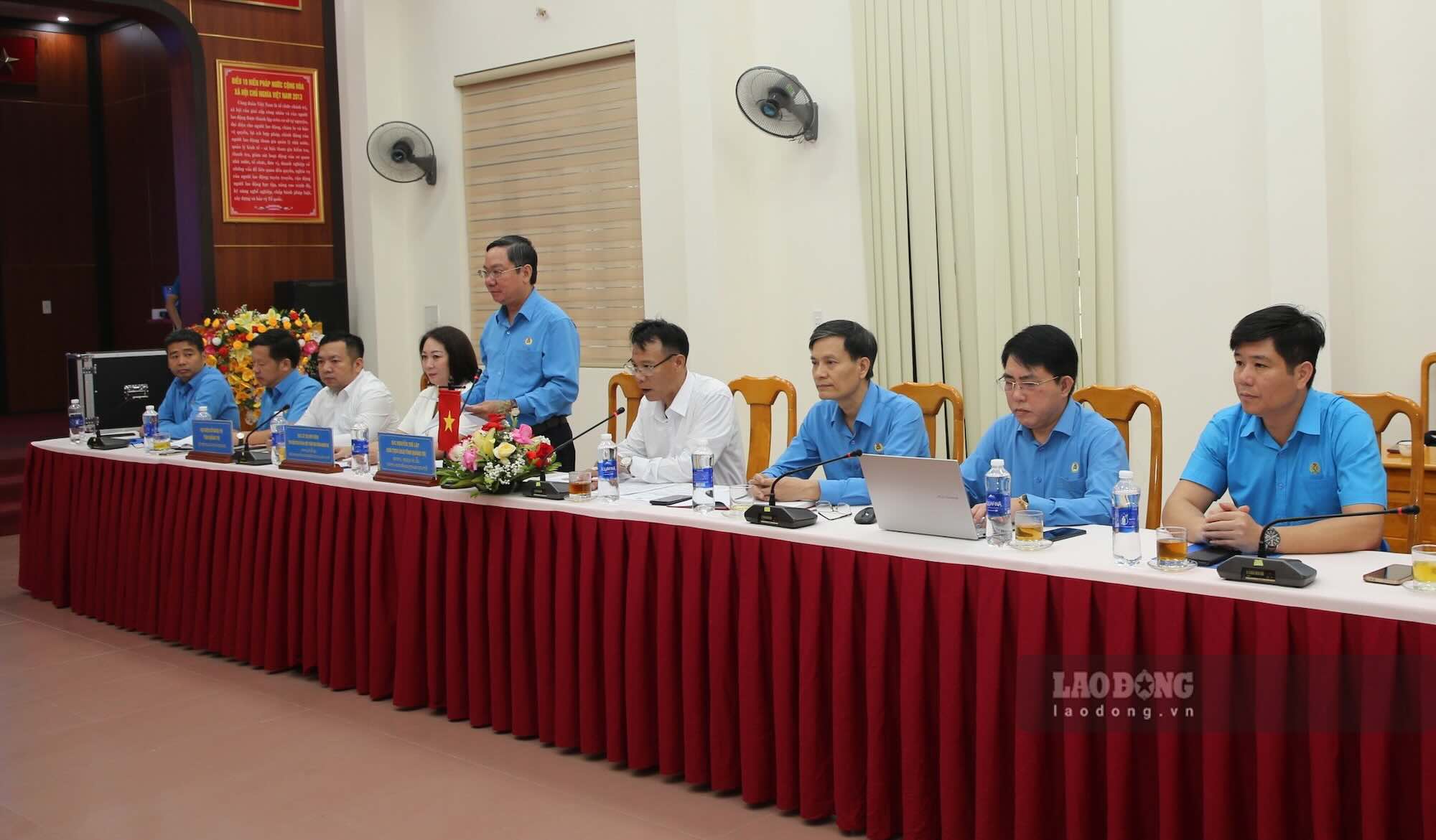
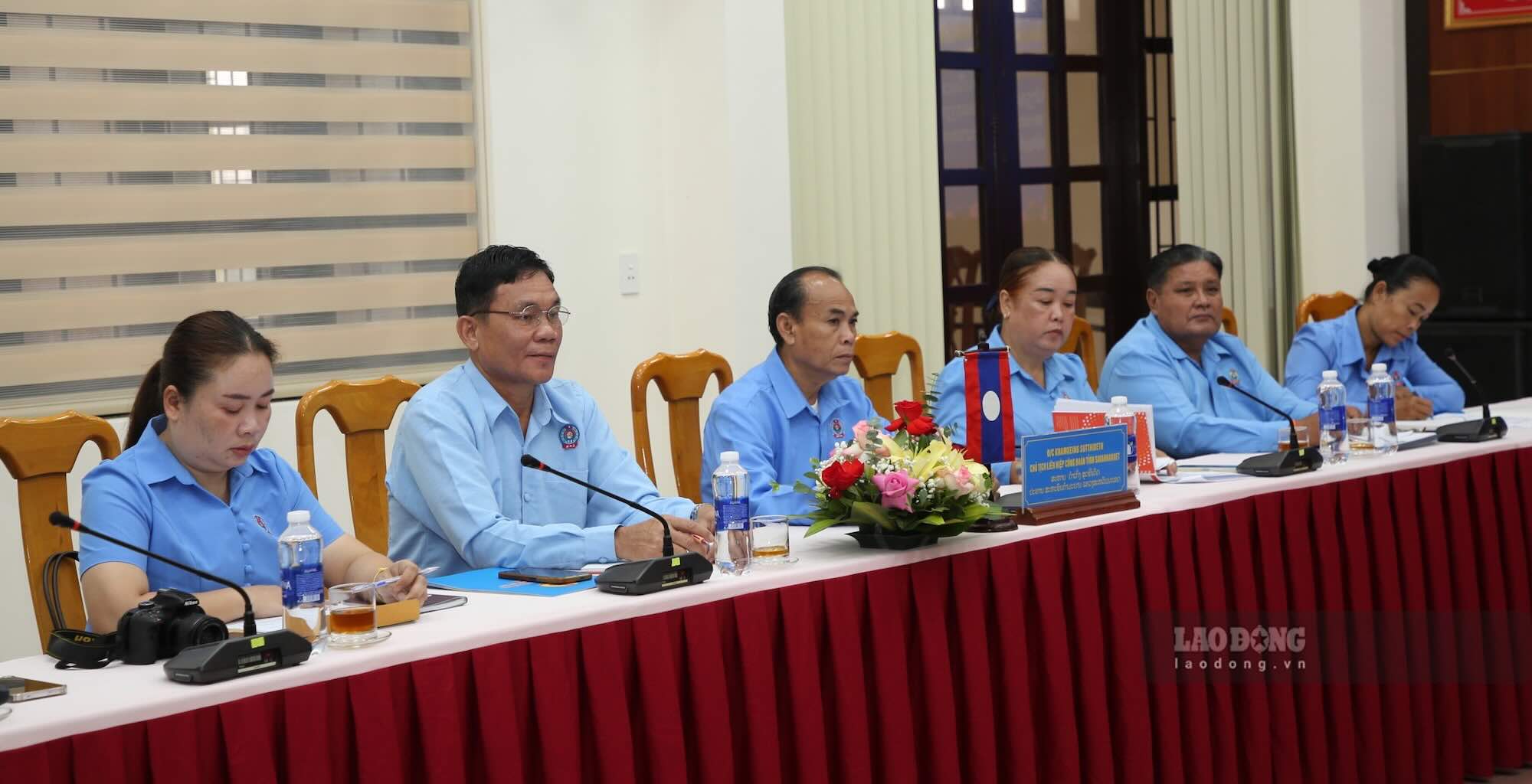
The two Trade Union organizations will strengthen the exchange of experiences on organizational and operational innovation; developing union members, establishing grassroots trade unions, gathering workers; caring for and protecting workers' rights; collective bargaining, building labor relations and digital transformation in trade union activities.
These are contents of concern to both sides in the context of the labor market and the integration process having many changes.


