Struggling to find a place to send the child
Leaving Tay Ninh to Ho Chi Minh City to start a business at the age of 15, Ms. Doan Thi Tuyen Chi (born in 1996, residing in Tay Thanh ward) went through all kinds of jobs from garment worker to saleswoman. Getting married and having children, the spending problem became even more difficult. When her son was 3 years old when he had to go to school, finding a place to send him to daycare also became a pressure. Irregular overtime, children often get sick, causing her to have to move to many places to work. Large businesses require strict progress, unable to ask to go home early, she had to work for a small private workshop with a salary of 9 million VND per month to proactively pick up and drop off her children. Unable to work overtime, she took on manual weaving at home in the evening to earn a few hundred thousand VND extra to buy milk.
Sending children to public schools is the top priority to reduce financial burden, but barriers to enrollment routes and childcare hours make many families choose private facilities. The average tuition fee for private preschools is from 3 to 3.5 million VND per month. Although reduced to 2.5 million VND thanks to acquaintances, this amount still accounts for nearly one-third of Ms. Tuyen Chi's income. This is the only solution to help the couple manage their schedule, because her husband has to work from 8 am to 8 pm to bear the rent and living expenses.

Entering the new school year, expenses for diapers, milk, and childcare are heavily burdened on the shoulders of parents. Ms. Tuyen Chi confided: "The income earned, we cover it all, husband and wife manage to tighten our belts, not daring to bother parents in the countryside who are also just hard-working farmers.
The problem of semi-boarding classes and rampant costs
Sharing the same situation, Ms. Tran Thi Thu Thao (born in 1991, from Quang Tri) works at a production workshop with a salary of 6.5 million VND per month. Ms. Thao's income is just enough to pay for rent and tuition for her son born in 2018. All other living expenses depend on income from her husband's machine repair work. After the COVID-19 epidemic, the company reduced working days, and her husband often had late payments, making the family's finances even more difficult.
The biggest pressure for Ms. Thao every time her child enters the new school year is the problem of sending children to semi-boarding school. To have a semi-boarding school slot, parents have to quit their jobs to wait to submit applications early because the number is limited. To pick up her child in time at 4:20 pm, Ms. Thao cannot work overtime or transfer to another business. The time difference forces her to rely on relatives or send her child to private classes outside of school hours. In the past summer alone, the money for sending her child to supplementary school and asking the teacher to take care of her cost 3.5 million VND per month, accounting for more than half of her monthly salary.
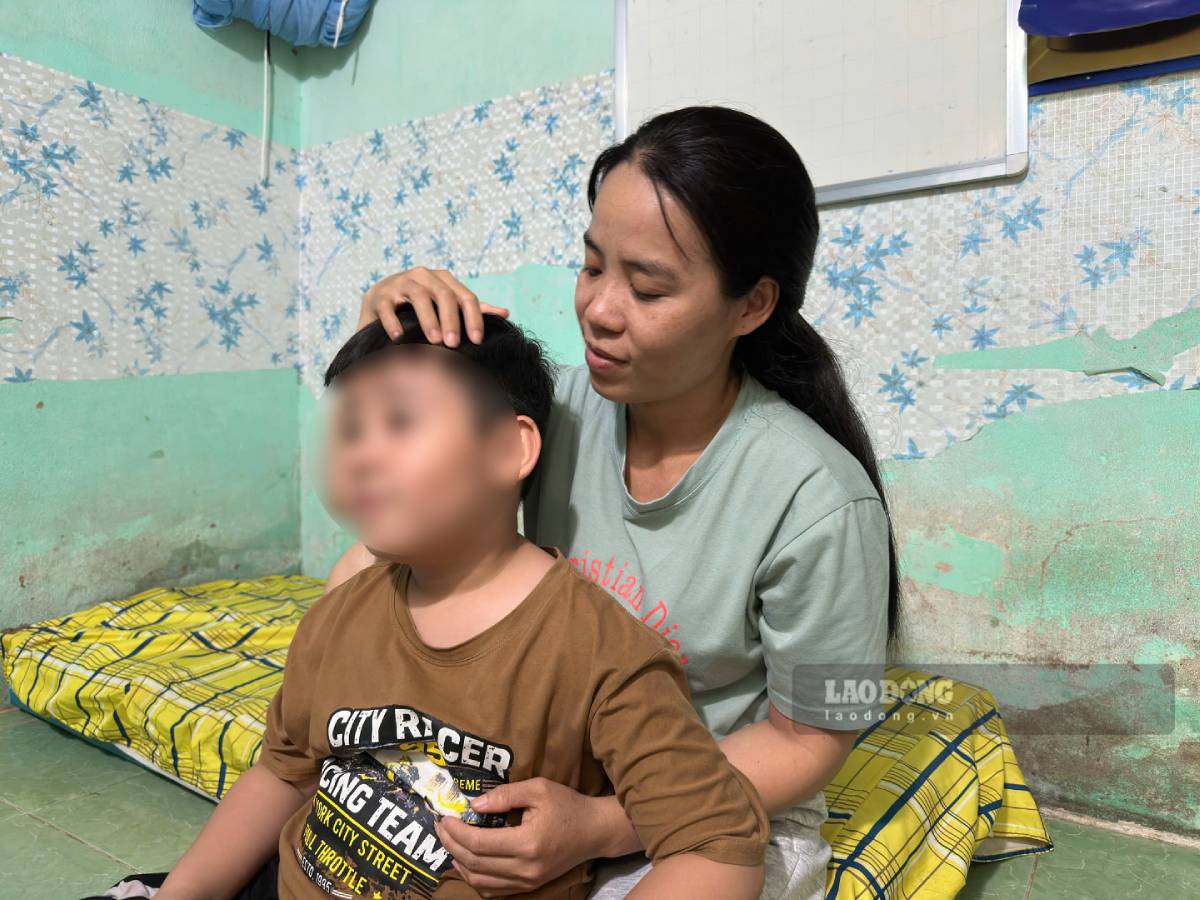
At the beginning of the school year, the continuous collection of money forced her family to cut adult expenses to the maximum. Ms. Thao shared: "Mentioning first grade is very hard at the beginning of the school year, parents going to work have to take advantage of finding schools, finding semi-boarding classes so that parents can still go to work, because there is no one at home to look after their children half a day. The income that both husband and wife earn is enough to cover everything, in whichever month they spend a lot, adults have to eat a little less, save a little more, but the part of their children cannot be cut.
The concern of Ms. Tuyen Chi and Ms. Thao is also the common concern of many migrant workers who are clinging to industrial parks. Amidst the bustling pace, worries about tuition fees and rent are still a constant burden on the shoulders of fathers and mothers far from home on the journey to find a future for their children.
According to statistics from the Ho Chi Minh City Department of Education and Training, in the 2026-2027 school year, the city is expected to have about 197,000 6-year-old children entering grade 1, of which 51,543 children do not have permanent residence in Ho Chi Minh City. The number of students who have completed the primary school program and are eligible to enter grade 6 is 184,430, of which 47,211 students do not have permanent residence in the city.