
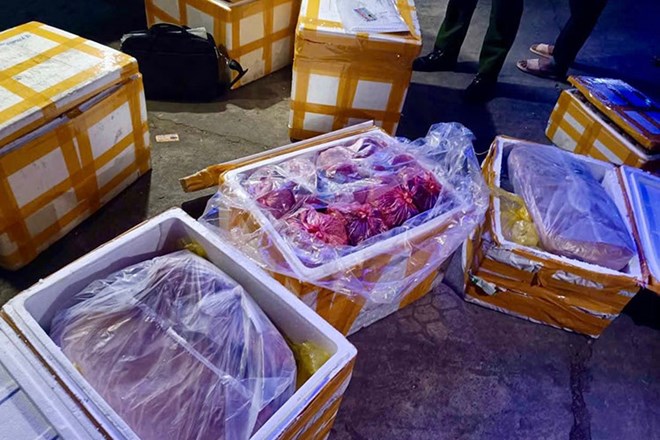
Near Tet, the demand for food and essential goods increases sharply. The bustling market also entails the risk of dirty food, counterfeit goods, and poor quality goods creeping into retail channels and e-commerce.
Successive incidents have caused many people to worry when choosing food for Tet. Ms. Nguyen Thi Hanh (Hanoi) said that her family tends to prioritize buying food at supermarkets or stores with safety certification because of concerns about floating goods on the market.
Meanwhile, Mr. Tran Van Tuan (Hanoi) believes that distinguishing real and fake products with the naked eye is increasingly difficult even when present in supermarkets. Therefore, Mr. Tuan also wants to have more tools to check the origin of goods before buying.
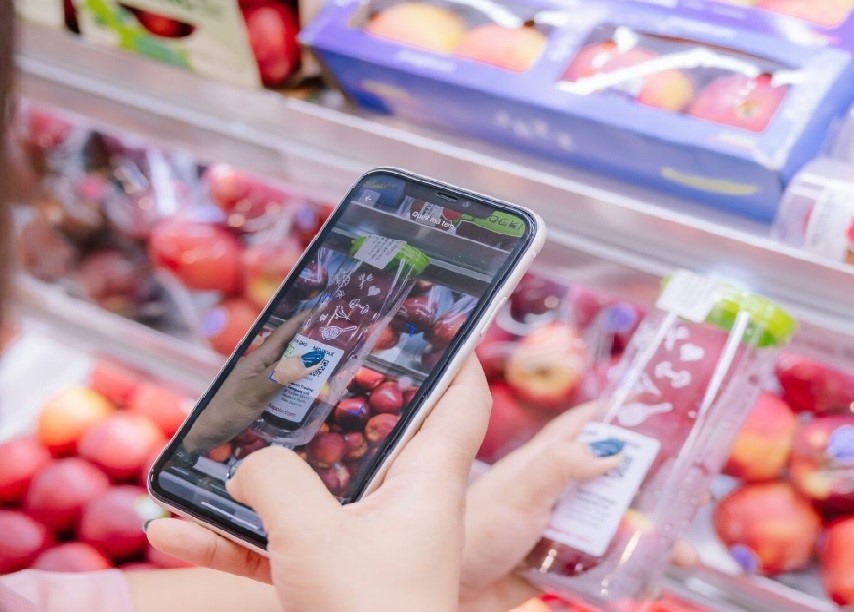
Faced with this reality, many groups of technology solutions have been developed to support people in choosing safe products. In the field of goods traceability, barcode and QR code scanning applications are being widely used such as: iCheck Scanner, Barcode Viet and Scan & Check. These applications allow consumers to look up information about manufacturers, distributors, quality standards, warnings of counterfeit goods or goods violating regulations. People only need to use smartphones to scan codes on product packaging.
In the field of traceability of agricultural products and fresh food, some platforms are being deployed to ensure supply chain transparency such as CheckVN, TE-FOOD and AgriTrace. These systems help consumers check planting area information, farming processes, control pesticide residues and quality inspection results. Data traceability according to the supply chain helps people assess the safety level of products before choosing.
In the field of e-commerce, many platforms have integrated product authentication technology and seller quality control. Consumers can check the origin and credibility of goods through applications such as Shopee, Lazada and Tiki. These platforms deploy seller evaluation systems, electronic authentication stamps and user feedback mechanisms to help people identify genuine goods and limit risks when buying food online.
Talking to Lao Dong Newspaper about this issue, Mr. Tran Hau Ngoc - Vice Chairman of the National Standards, Metrology and Quality Committee (Ministry of Science and Technology) said that the unit is implementing many solutions to strengthen the management of product and goods quality according to the direction of the Government during the 2026 Lunar New Year.
According to Mr. Ngoc, functional agencies are coordinating to implement a plan to ensure food safety during Tet and the spring festival season. Inter-sectoral inspection teams have been sent to many localities to assess food quality management and ensure people celebrate Tet safely.
Mr. Tran Hau Ngoc also said that the two amended laws on standards, technical regulations and quality of products and goods, effective from January 1, 2026, have added many modern management tools. Tools include product classification by risk level, traceability, electronic labels, product number passport and national product and goods quality monitoring system.
The application of barcode, barcode, traceability technology, electronic labels and digital passports helps identify products, clarify production processes and control the quality of goods sold online. When the national product and goods quality monitoring system is operated, functional agencies can quickly detect counterfeit goods, poor quality goods and unsafe food.
According to representatives of the National Standards, Metrology and Quality Commission, the Ministry of Science and Technology has announced more than 1,100 national standards related to food that are still valid. People should choose products with declarations of conformity, regulations, full labels and proactively use traceability tools to check information before buying.
Mr. Ngoc also recommended that measurement activities play an important role in food trading. Consumers should choose pre-packaged products with clear quantitative information and prioritize buying at establishments using inspected measurement equipment to ensure their rights when transacting.


