
According to the Department of Science and Technology of Da Nang City, in the context of the Fourth Industrial Revolution, the technology of unmanned aerial vehicles (UAVs) has gone beyond the scope of serving defense or pure research to open up a new development space called "low-level economy". This is considered a new growth engine for many countries, helping to optimize efficiency and create breakthrough business models in many fields.
At the Conference "UAV Technology - Promoting low-level economic development in Da Nang city" just held on the morning of June 12, Ms. Le Thi Thuc - Deputy Director of Da Nang City Department of Science and Technology - emphasized: "For Da Nang - a dynamic city with strong aspirations to develop based on science and technology, innovation and digital transformation - low-level economy is not only a technology trend but also a strategic opportunity to form new economic sectors, improve competitiveness and create sustainable development momentum for the city in the coming period".
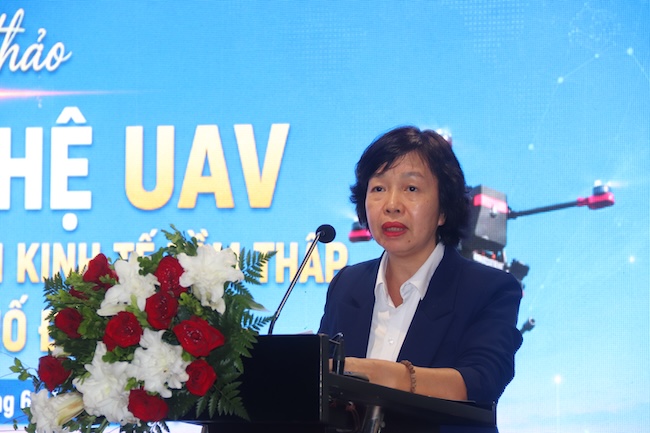
Implementing the spirit of Resolution No. 57-NQ/TW of the Politburo on breakthroughs in science, technology, innovation and national digital transformation, Da Nang is urgently completing the Strategic Technology and Digital Technology Industry Development Program for the period 2026 - 2030, with orientations to 2045.
The Deputy Director of the Department of Science and Technology said: "Da Nang has many favorable conditions to develop this field thanks to the innovation ecosystem that is gradually being completed, the system of high-quality universities and research institutes. The city also has a great need for practical application of UAVs in urban management, environmental monitoring, tourism, logistics, disaster prevention and rescue.
Delegates attending the conference commented that Da Nang is possessing many available advantages to develop UAV technology such as a complete innovation ecosystem, high-quality human resources from universities and infrastructure of the High-Tech Park.
However, this new field also poses many barriers. Experts point out that the lack of a specific legal framework for low-altitude civil aviation activities, unsynchronized specialized testing infrastructure, inconsistent technical standards and thin domestic specialized human resources are major challenges that need to be resolved soon.
To turn potentials into reality, besides the proactive investment from businesses, the policy-making role of state management agencies is extremely important.


