
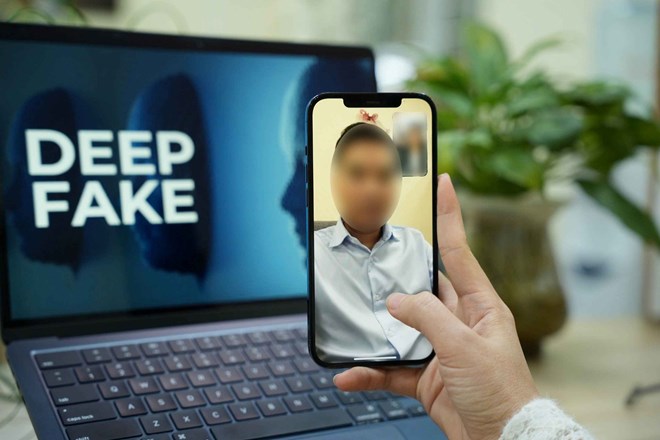
Video calls for help from "relatives", requests for urgent money transfer from "bosses", or clips of celebrities promoting investment appear more and more on social networks. The common point of these contents is that the images and voices are very realistic, causing many people to lose vigilance and fall into the trap.
In the context of AI technology developing strongly, deepfake creation tools are becoming more accessible than ever. With just a few images on Facebook, TikTok videos or public recordings, bad actors can create fake videos and voices with high authenticity.
Talking to Lao Dong about this issue, network security expert Ngo Minh Hieu (Hieu PC) said that the biggest risk today is that many people still believe that "seeing with their eyes and hearing with their ears" is synonymous with the truth. Meanwhile, AI has been able to fake faces, voices, expressions and even contexts in direct calls.
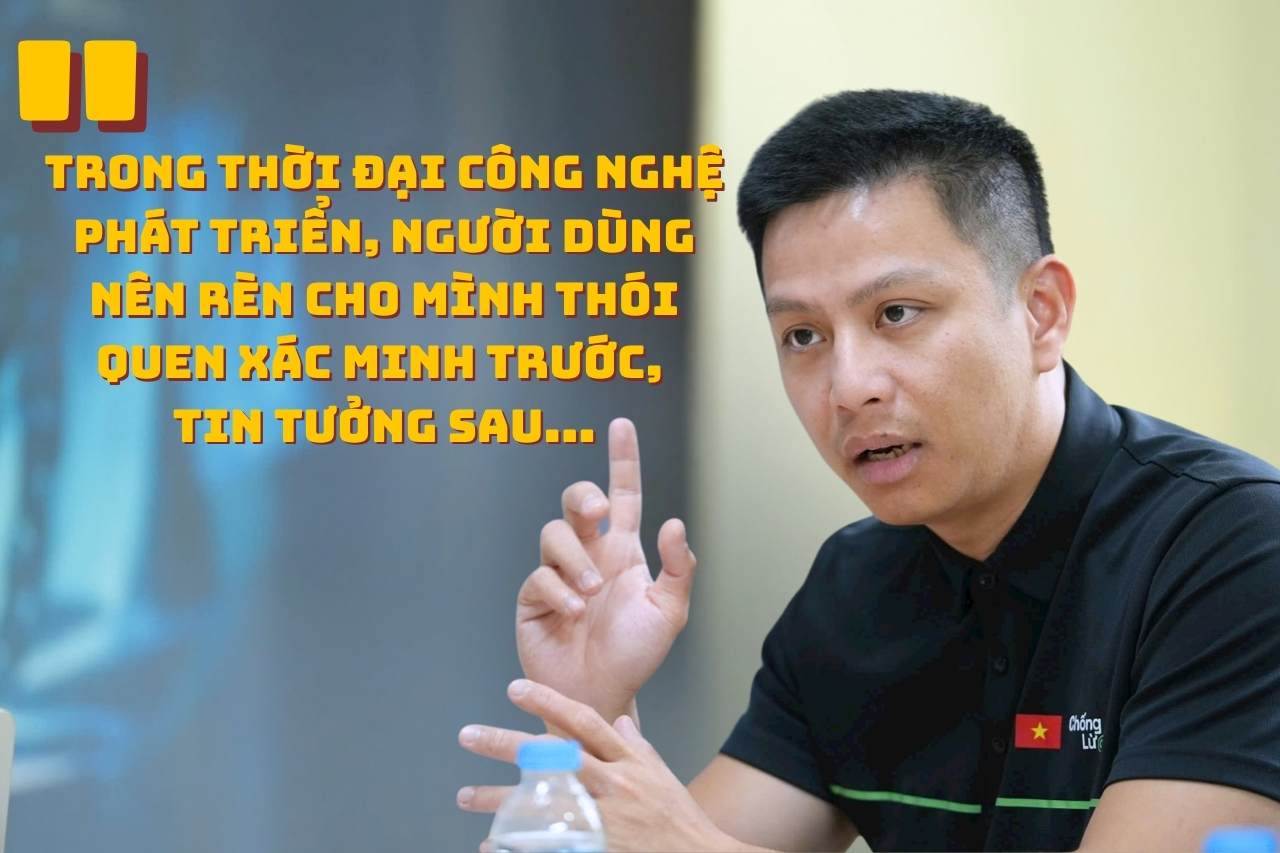
According to this expert, the goal of deepfake scams is not only money, but also hitting on the victim's trust. Deepfake takes advantage of panic in emergency situations such as accidents, emergencies, account locks or OTP authentication requests to cause victims to act without checking information in time.
One of the common scenarios today is to impersonate relatives to borrow money. Scammers collect data from social networks, create fake voices or videos and then create emergency stories to create psychological pressure. Many victims trust because "the right face, the right voice, the right way of speaking".
Not only targeting individuals, deepfake is also starting to become a risk for businesses. Hieu PC warns that many cases of impersonating leaders' voices to request money transfers or sending internal documents have appeared in the world. Some employees even transfer millions of USD after participating in a deepfake video meeting without detecting any abnormalities.
The financial investment sector is also strongly exploited. Many videos using celebrity images, KOLs to promote cryptocurrencies, money-making applications or investment funds are spreading on social networks. According to Hieu PC, the appearance of celebrities in videos does not mean they actually participate or confirm that product.
Although deepfake is increasingly difficult to recognize, experts believe that there are still some abnormal signs such as lip shapes that do not match speech, unnatural eyes, light that is out of context or a monotonous voice, lack of emotion. However, Mr. Hieu emphasized that users should not just rely on their naked eyes to detect fakes.
Shift the focus from seeing if it's fake to seeing if that request is reasonable," Hieu PC recommended.
Accordingly, when receiving a request for money transfer, providing OTP or important information via video call, users need to stop for a few seconds to verify through another channel, call back to a familiar number or contact the related person directly before performing.


