

The situation of unusual radio equipment is silently causing many incidents in urban life, from a series of motorbikes and cars using smartkeys that cannot be unlocked to the risk of disrupting mobile information networks in densely populated areas.
Notably, many sources of noise originate from familiar devices such as fire alarm systems, wireless call buttons or signal boosters that people voluntarily buy for use.
At the end of April 2026, a series of smart lock devices for cars and motorbikes around Trung Yen 14 street (Hanoi) suddenly encountered problems, causing a series of people to be unable to use smartkeys for their vehicles.
After receiving feedback, functional forces determined that the cause originated from a technical faulty fire alarm at a foreign language center, emitting over 434. 0125 MHz, coinciding with the operating frequency of the smartkey device.
A few days earlier, a similar incident also occurred in the Me Tri Thuong area (Hanoi). Many cars and motorbikes using smart locks were also simultaneously affected.
Consecutive incidents show that the risk from substandard radio equipment is increasingly present, especially in large cities where the density of electronic equipment and wireless transmission systems is increasing.
Not only are household appliances technically faulty, but the situation of people arbitrarily buying and installing mobile signal boosters is also causing many consequences.
Not only are household appliances experiencing technical errors causing interference, but the situation of people arbitrarily buying and installing mobile signal boosters is also causing many consequences for telecommunications infrastructure.
At the beginning of April 2026, the Radio Frequency Center Region V (Radio Frequency Department) in coordination with the Department of Science and Technology of Hung Yen province and local authorities discovered and handled 3 mobile Repeater signal boosters operating illegally.
These devices cause harmful interference to many mobile information base stations in the area, reducing the quality of telecommunications services, causing missed calls and reducing data access speed.
Through inspection, functional forces determined that the devices were all arbitrarily purchased by households through e-commerce platforms to increase mobile signals in the house.
According to functional agencies, all equipment was not licensed, did not meet technical standards and emitted in violation of regulations. The individuals involved have been administratively sanctioned, forced to dismantle and destroy the equipment according to regulations.
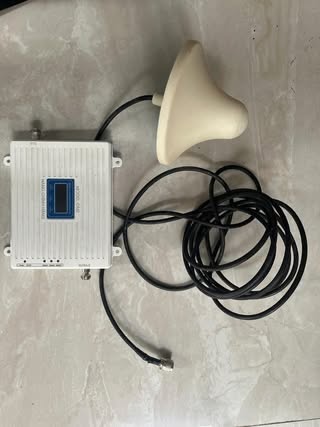
According to Le Van Tuan, Director of the Radio Frequency Department (Ministry of Science and Technology), mobile signal boosters, if arbitrarily installed and used not in accordance with regulations, can cause interference and disrupt the mobile network in the area.
Mr. Tuan said that from 2023 to now, the Radio Frequency Department has detected and handled 532 violating devices. Most cases originate from individuals and households lacking legal knowledge, self-purchasing equipment to improve signals in the basement or areas covered by high-rise buildings.
According to the leader of the Radio Frequency Department, violation control is currently being implemented synchronously by many measures such as regular monitoring using radio frequency control systems, using specialized equipment to identify noise sources and handle administrative violations.
From 2025, the Radio Frequency Authority will also put into operation the iSpectra monitoring platform to increase the ability to detect early sources of interference to each mobile station.
In parallel with that, functional agencies coordinate with market management forces and e-commerce platforms to remove links advertising and selling signal boosters that do not meet standards and do not have conformity certification.
According to Mr. Le Van Tuan, one of the fundamental solutions is to improve the quality of coverage to reduce the demand for people to arbitrarily use signal boosters. In 2025, the Radio Frequency Department licensed the 700 MHz band for mobile networks to increase coverage in densely populated areas, high-rise buildings and wave densities.


