
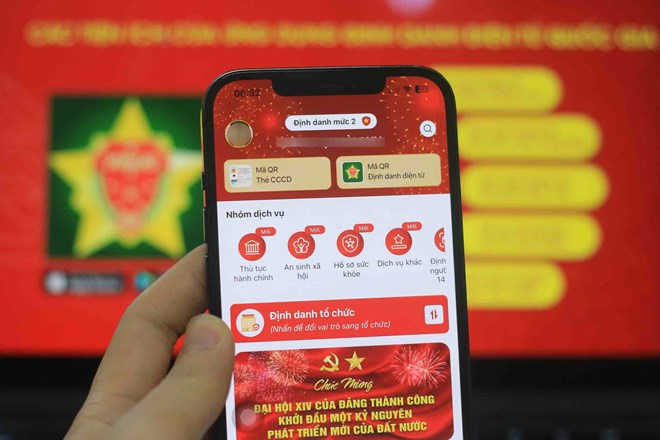
From April 15, according to Circular 08/2026 issued by the Ministry of Science and Technology, subscribers who incur changes in equipment used or newly registered must carry out facial biometric authentication. Data is compared with the national database through electronic platforms, including VNeID.
Unlike the previous way of going to the transaction point, many users can now complete authentication right on their phones. However, in the early days of deployment, many cases still need time to get used to it.
When switching to a new phone, Mr. Nguyen Van Tuan (Hanoi) said that the system requires facial verification to continue using it. Learning more, he knew that it could be done via VNeID, so he proactively operated on the phone instead of going to the store.
At first, I was a little confused because I had never done this style before. The application requires putting my face in the frame, filming according to instructions to compare data. I was not used to doing it for the first time, so I had to try again," Mr. Tuan said.
After completing, he assessed that this method is more convenient than having to go to the store as before. "Just need a phone with network connection to do it, without spending travel time," Mr. Tuan shared.
Meanwhile, Ms. Pham Thu Hang (Hai Phong) had a different experience when performing authentication in the evening. According to her, poor lighting conditions make it difficult for the application to recognize faces.
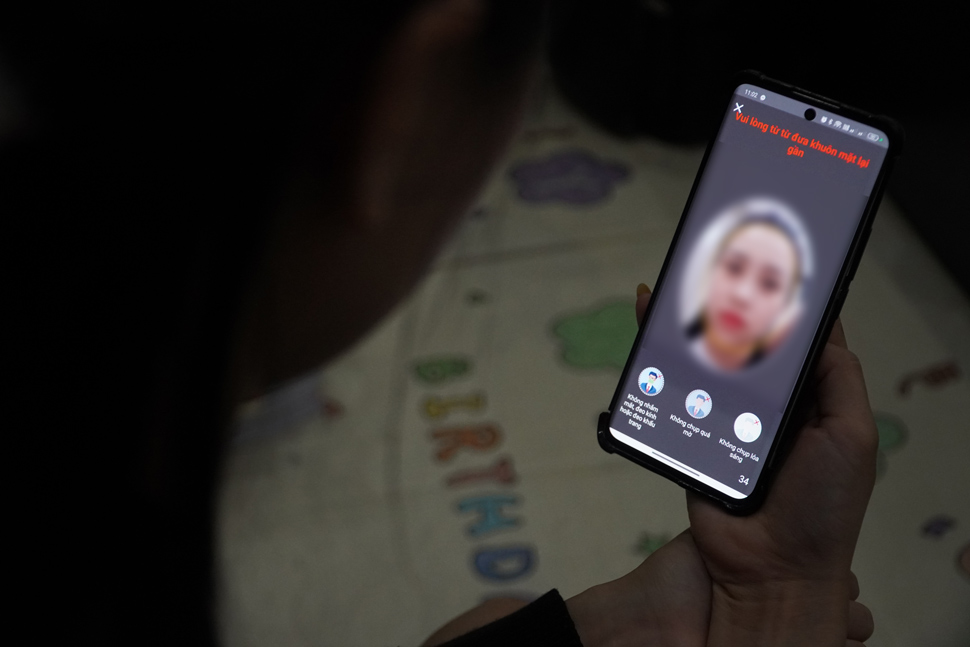
I did it in the evening, so the system reported that it was not up to standard, I had to go to a brighter place to get it. After adjusting, it worked quite quickly," Ms. Hang said.
According to users, authentication via VNeID depends heavily on the quality of the camera and the surrounding environment. However, when you understand how to do it, this process is not too complicated.
In the elderly group, access still requires more time. Mr. Nguyen Minh Hoang (67 years old, Hung Yen) said that only when guided by his son did he know that he could verify immediately on his phone through VNeID.
“Initially, I intended to go to the store to do it, but my son said he could do it himself on his phone, so I tried it. Thanks to his step-by-step guidance, I was able to complete it,” Mr. Hoang said.
According to Mr. Hoang, without support, operating on the application will be quite difficult for people who rarely use technology. However, he assessed that authentication is necessary to ensure the safety of phone numbers.
From before until now, using SIM cards, I didn't think I had to do these steps. But if doing so ensures the safety of my phone number, it's also reasonable, just having clear instructions is enough," he shared.
According to regulations, verification is carried out by taking a photo of the subscriber's face to compare with data in the national population database or ID card data that has been verified before. This process can be carried out through digital platforms such as the VNeID application or the network operator's application.
The actual implementation shows that, although initially some users are still confused in operation or encounter technical obstacles such as lighting, equipment, most can still complete authentication after a few implementations. Many opinions assess that the integration on VNeID is suitable for the digital transformation trend, helping people to perform it right on their phones without needing to go to the transaction point.
In the early stages of application, proactively learning information and getting acquainted with the authentication process is considered an important factor, contributing to helping regulations quickly become practical and limiting service interruptions for users.


