
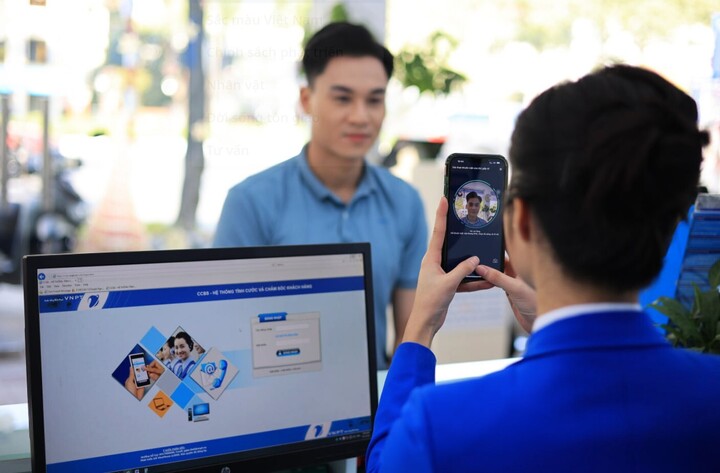
According to Circular 08/2026 issued by the Ministry of Science and Technology, from June 15, when a SIM card is detected to be operating on another device, the telecommunications enterprise must temporarily stop the dial call for a maximum of 2 hours and request the subscriber to verify the face. If not completed according to regulations, the service will be restricted step by step.
In parallel with that, from April 15, all newly developed mobile subscribers must perform facial biometric authentication, compare with the national database on population and identity. The regulation aims to ensure that each phone number is associated with a specific identity.
Real-world records show that many users have started accessing this process when they need to change equipment. Mr. Le Van Minh (Hanoi) said that he encountered an immediate authentication request when installing a SIM card into a new phone.
Initially, he did not know that he could perform operations on platforms such as VNeID or the network operator's application. Therefore, he chose to go directly to the network operator's transaction point for support.
I thought I had to do it directly, so I went to the network operator's store to ask for support. Arriving at the new location, I was informed that I could verify it directly on my phone. Verification does not take much time and the operation is quite simple, so it is completed quickly. However, for older people, they should go to the transaction point for specific instructions," Mr. Minh shared.
Unlike the above case, Ms. Dang Thi Giang (Bac Ninh) actively learned information early and performed verification at home. According to her, the process is not too complicated if you are used to using smartphones.
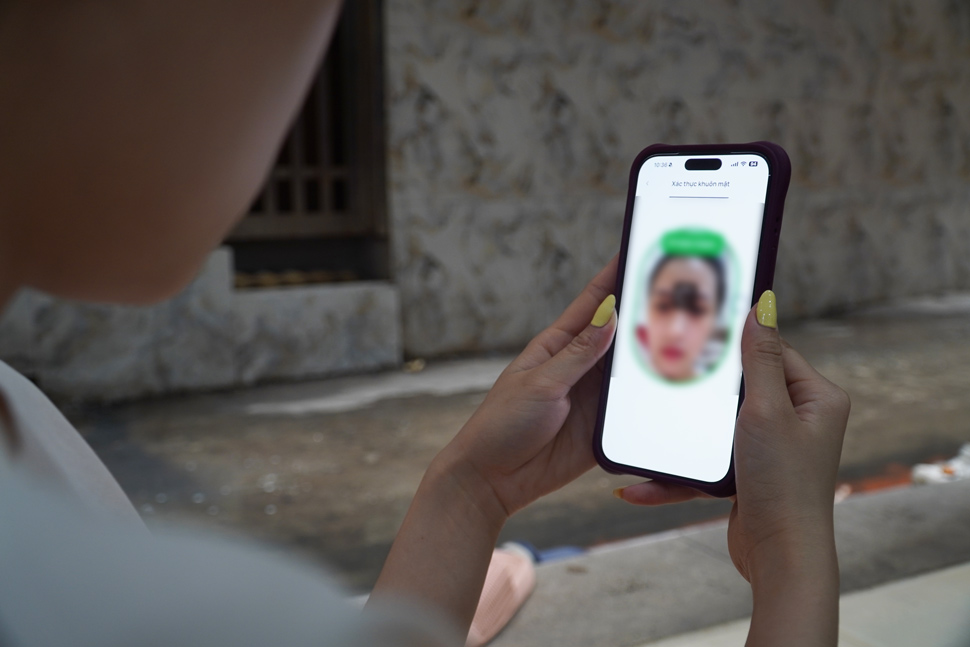
I do it directly on the application, just follow the instructions and it's done. However, the interface and steps should still be simpler so that everyone can do it easily, especially people who use technology less often," Ms. Giang said.
Meanwhile, according to records with the elderly group, access to this regulation is still quite limited. Although intending to change phones, Mr. Pham Van Hanh (67 years old, Hanoi) said that he had not grasped relevant information until reporters mentioned it.
After being explained, Mr. Hanh decided to go to the transaction point near his house to find out. Not used to using smartphones, he thought self-operating on the device was an obstacle.
I still think that just going to the store is enough as before. Now I know that I can do it myself on my phone, but it's not easy for the elderly. If there are no guides, it's also difficult to do it," Mr. Hanh said.
According to him, operations such as taking facial photos, adjusting camera angles, or following instructions on the screen require a certain familiarity with the device. This makes many elderly people feel hesitant to do it at home.
From this experience, Mr. Hanh believes that it is necessary to strengthen propaganda to help people, especially the elderly, grasp information early. Guiding through many channels or direct support at the grassroots level will help the implementation process be more convenient.


