
Sharing every penny to maintain friendship
For the older generation in Korea, meeting friends and alternately paying food bills was once seen as a way to express affection. One person pays today, another pays next time, so that in the long run each person's contribution is relatively balanced. But with Gen Z, this way of behaving is gradually changing.
According to a Hankook Ilbo poll, many young Koreans today prefer the "1/N" splitting method - splitting bills evenly, and it is even more common for each person to only pay the portion they ordered during meals.
There are cases where a group of friends come to the cafe not at the same time, the early ones eat more dishes, and the late ones only participate in part of the meeting. Instead of dividing equally per person, one person in the group used Excel to accurately calculate the food and drink money for each person.
For these young people, a clear calculation does not necessarily show coldness. They believe that it is a way to avoid feeling indebted and reduce hidden calculations in friendship.
People who do not drink alcohol do not have to pay for other people's alcohol, and people who only participate from the third round do not have to share money for previous expenses. Some groups of friends even use the app to calculate the amount each person has to pay.
This change also reflects the increasing financial pressure that young people consider when meeting. Instead of letting one person continuously pay money and then wait for another occasion to "balance", they want to resolve it clearly on the spot. For them, the closer they are, the more they should not let money matters become unspeakable debts.
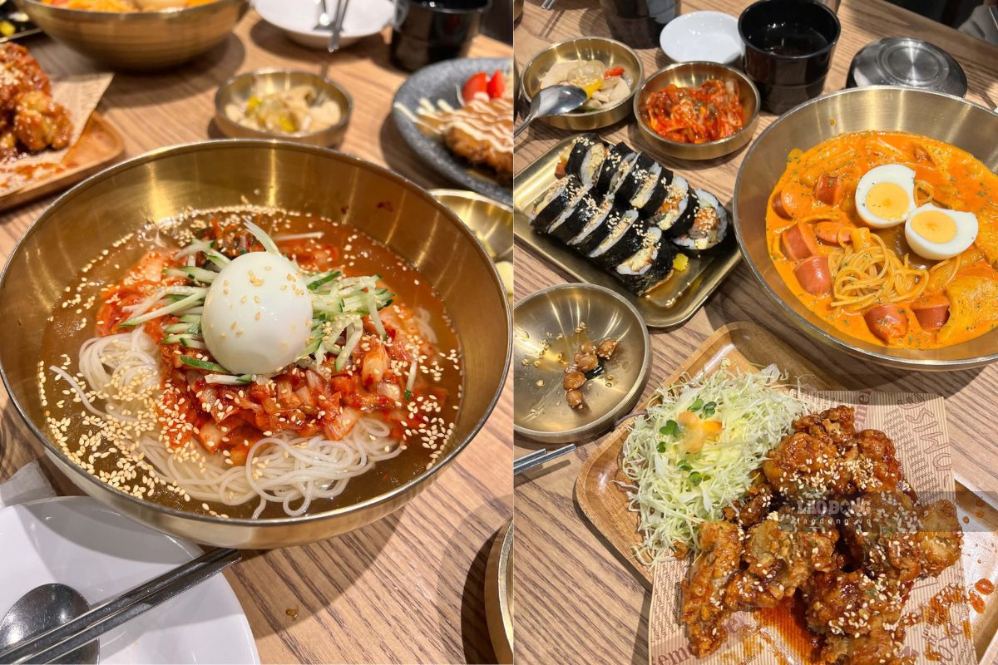
Dating accounts instead of splitting invoices
The way to divide money clearly is also included in romantic relationships. Some couples set up a common "date account", each person paying money to spend on meals, entertainment or travel. This way helps the two people have a specific budget, while reducing the feeling of one side being continuously covered by the other.
However, not every young person wants to split all expenses in half. Some people think that if each date is calculated 50-50, the relationship easily feels like a transaction. They prefer to alternately pay or adjust contributions based on the income and circumstances of both sides.
A survey by marriage brokerage company Gayeon with 506 single Koreans aged 25-39 shows that the average cost for a date is 115,000 won (about 2.2 million VND). Men spend an average of 145,800 won, while women are 84,000 won. The contribution ratio considered appropriate by participants is about 60-40 respectively between men and women.
According to another survey by Enlyze - the operator of the dating app Wippy - with 1,485 people aged 20-30, about 70% of respondents found that dating costs increased in the past one to two years. Notably, only 11.2% of men and 5.4% of women support a rigid 50-50 split.
These figures show that "fairness" in love does not necessarily mean that each person has to pay exactly half. For many young people, more importantly, both are proactive in contributing and the division is appropriate to each person's financial capacity.
A person paying more is not necessarily a problem if it is a voluntary choice. It is easier to create distance than when one's initiative is seen as an obvious responsibility.
Therefore, from "1/N" in friendship to creating "date accounts" in love, young Koreans are looking for ways to set clearer financial boundaries while still maintaining care for each other.
Fair payment is sometimes a way for no one to feel indebted and the relationship to be maintained on voluntariness instead of obligation.


