
In the early days of the third lunar month, when the spring rain is still lingering on the mountainsides, the atmosphere of Thanh Minh Tet is bustling throughout many rural areas in Lang Son.
According to ancient customs, on Thanh Minh Tet, most Tay, Nung, Dao... families go together to clean ancestral graves.
In the subconscious of many people, this is a sacred day to commemorate the merits of giving birth and nurturing of parents, grandparents and the deceased.
Therefore, no matter where they live, study or work, many people still try to return to their hometowns, repair their graves with their families, and offer sacrifices to their ancestors.
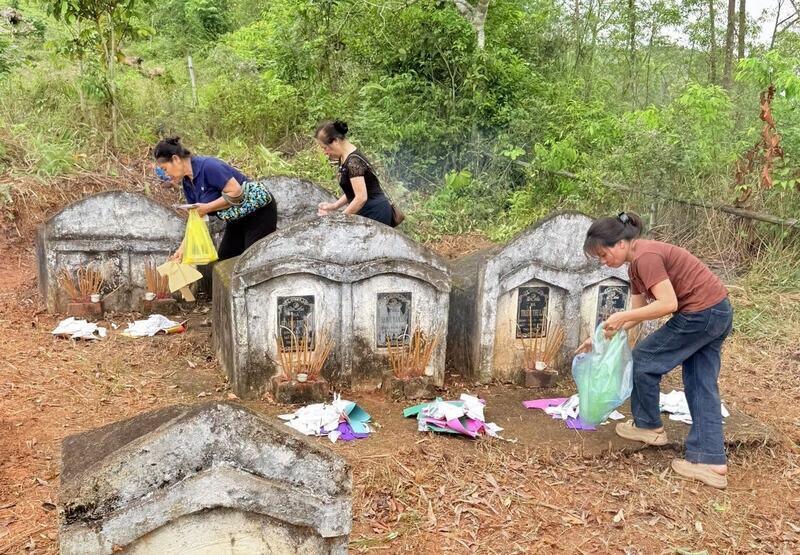
If you are present in Lang Son on this occasion, it is not difficult to see on hillsides, mountain slopes, and landfills with concentrated tomb areas, groups of people carrying offerings in their hands and shoulders following each other to sweep the tomb.
From early morning, many families have "carried" offerings prepared from the previous night to go to the grave. The offering tray usually includes chicken, pork, fried fish, eggs, fruits, wine, votive paper...
Among them, prominent and almost indispensable are colorful sticky rice plates, most common are three-color sticky rice red, yellow, black; some houses even have five-color, seven-color sticky rice that is very eye-catching.
Not only carrying spiritual meaning, Thanh Minh Tet of the people here is also the most complete gathering and reunion occasion of the year.
From the small feasts in the middle of the hill, the atmosphere of reunion spreads warmth, connecting closer to brothers, relatives, and villagers.
Ms. Trieu Hai Yen (Dong Kinh ward) said that for her family, Thanh Minh Tet is not simply a day to visit graves but also an opportunity for children and grandchildren to gather and remember about their roots, about those who gave birth to and nurtured family traditions.
In the increasingly busy pace of life, the fact that the whole family still tries to arrange time to return to each other on this day makes the value of customs even more sacred and profound.
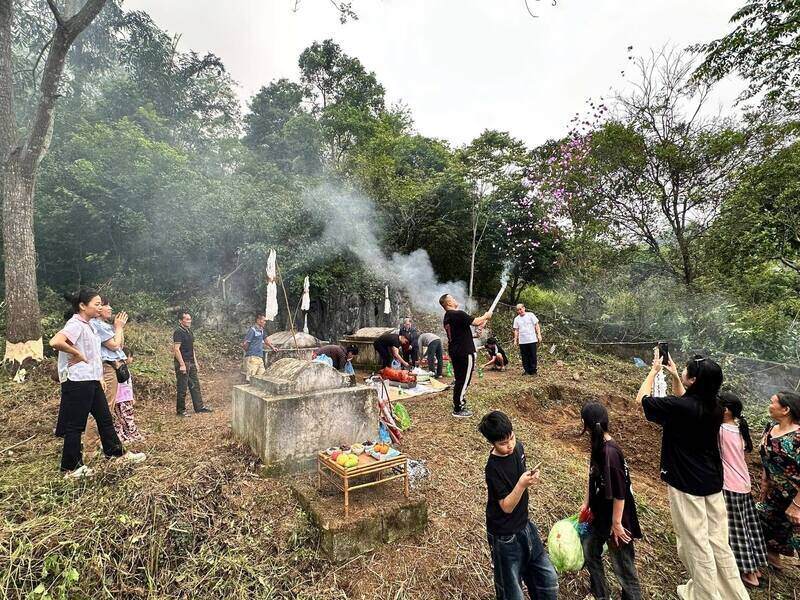
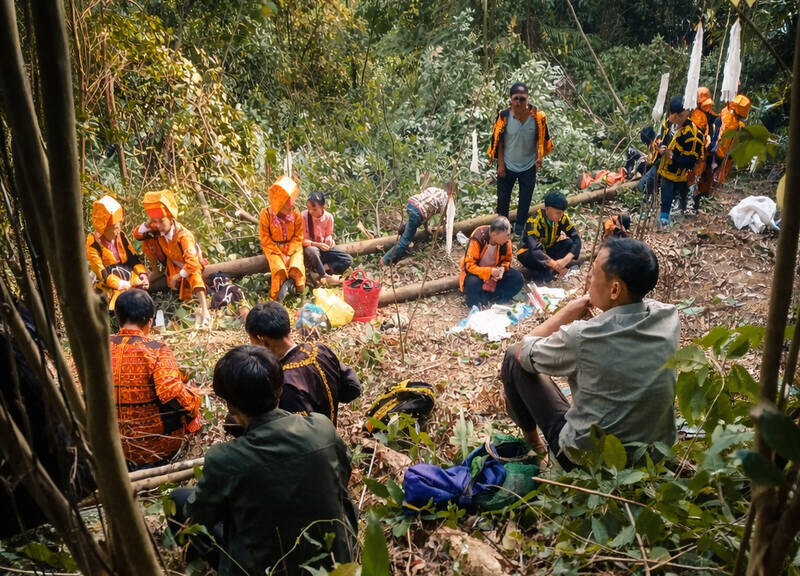
Carrying a unique nuance, Mr. Duong Trung Minh (Dao person in Mau Son commune) shared that for his family, each Thanh Minh season is a return to the roots of ancestors in the high mountains of Mau Son.
His family's ancestral tomb is placed on Father Mountain, Mother Mountain - considered the highest in Lang Son province. Therefore, the journey to sweep the tomb is not only about preparing for the worship ceremony, but also a journey full of respect, reminding children and grandchildren to remember their roots in the sacred land and sky of the mountains and forests.
According to Mr. Minh, the more you live in modern life, the more customs like Thanh Minh Tet need to be preserved, because it is a strong bond connecting generations in the family and reminding each person not to forget where they come from.
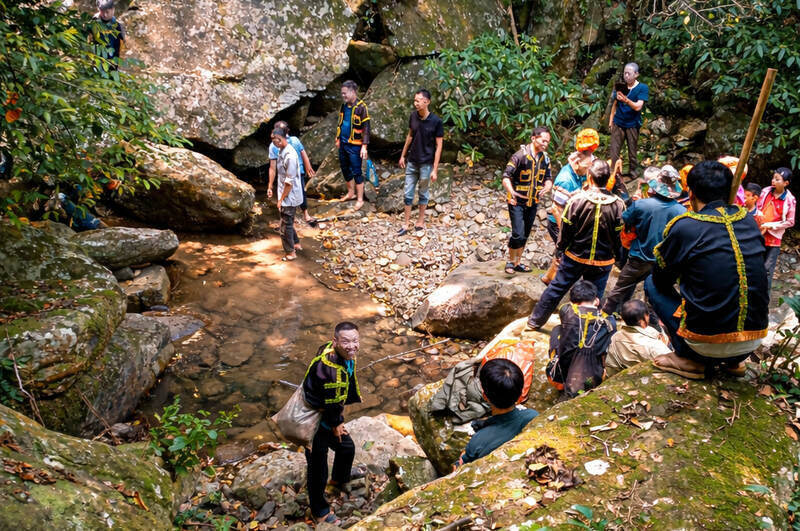
With ownerless graves located near the village's graves, many people when visiting graves also do not forget to light incense sticks and burn some votive paper.
In the midst of modern life, when many traditional customs are facing the risk of fading, the fact that people still maintain tomb sweeping rituals, prepare traditional offerings and reunite with their families shows the sustainable vitality of indigenous culture.
Thanh Minh Tet in Lang Son is therefore not only a spiritual ritual, but also a festival of memories, of family affection and of cultural values that are being silently and persistently preserved on every mountainside and house in Lang land.


