
The tuition exemption policy for public preschool to high school students will be applied from the 2025-2026 school year, marking a major step forward in social security and education policies. However, many parents believe that the joy of "free tuition" is not yet complete, as fees other than tuition are increasing.
Tuition fees decrease but total expenditure on education is not reduced
Every month, Ms. Nguyen Thi Lan, a parent with a child studying in grade 1 at a public primary school in Hanoi, spends about 1.2 million VND on her child's education at school, including: Social care fee is 235,000 VND; food fee is 682,000 VND; drinking fee is 12,000 VND. The family also registered their children for a life skills class with a fee of VND 60,000/month, to join an after-hours STEM club at school with a fee of VND 120,000, and an English program with a fee of VND 150,000/month.
According to Ms. Lan, this is a popular spending level for many primary school students today. The tuition exemption is practical, but the level of financial burden reduction depends on the conditions of each family. When additional service and study expenses become almost specific, tuition exemptions are only a small part of the total cost of education.
Sharing the same view, Ms. Le Thi Van Anh (a parent in Thanh Hoa) said that tuition exemption only helps reduce a very small part. If these items are not reviewed and cut, the total expenditure will not change, or even increase, she said.
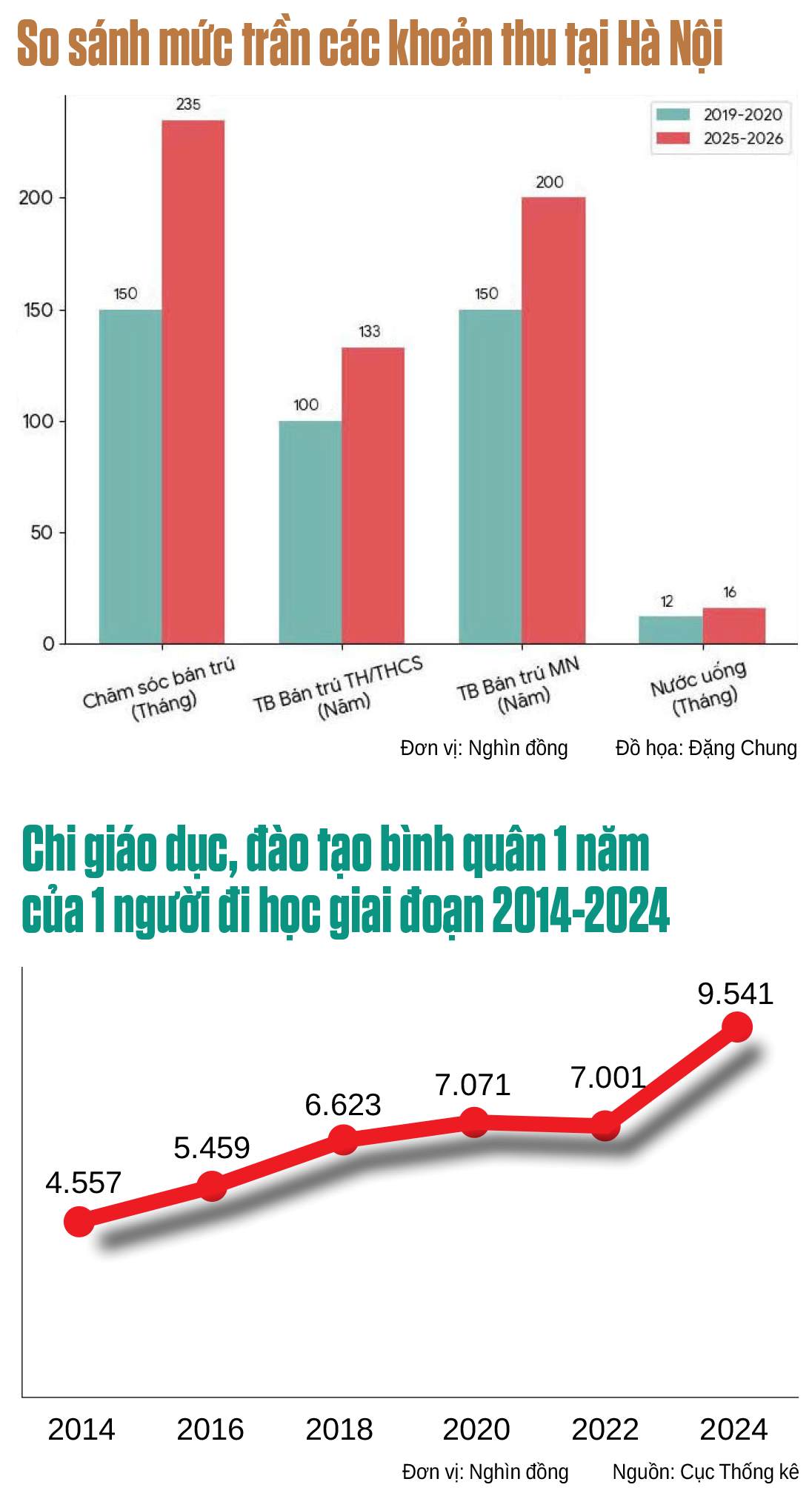
The floating and sinking part of education costs
Dr. Vu Thu Huong - education expert, former lecturer at Hanoi National University of Education - commented that financial pressure on parents does not come from tuition fees, but mainly from the mechanism of socializing education. In the context of relatively adequate learning conditions in many places, continued social interaction can easily lead to a situation of collecting many unnecessary fees.
In reality, many revenues such as air conditioners, equipment, classroom renovation, etc. are associated with the name of socialization, making it difficult for parents to refuse even though their ability to pay is limited. When these revenues lack transparency or exceed essential needs, the tuition exemption policy is unlikely to be truly effective.
"It is time to review the entire investment system for education, from input to output, to build a unified and reasonable system. When the revenues are transparent, reasonable and streamlined, students will be the beneficiaries," Ms. Huong suggested.
Sharing the same view, Prof. Dr. Pham Tat Dong - Former Permanent Vice President of the Vietnam Association for the Promotion of Education - frankly said that many parents are "afraid of surcharges more than tuition fees".

Why are fees other than tuition fees increasing?
Analyzing the cause of the paradox of "less tuition fees but increasing education costs", National Assembly delegate Nguyen Thi Viet Nga - Member of the City Party Committee, Deputy Head of the National Assembly Delegation of Hai Phong City - said that there are three main groups of factors. Firstly, the service system in schools is increasingly expanding, from boarding, studying 2 sessions/day, English is enhanced to experiential activities, life skills. These are essential services for many urban families but are not included in tuition fees.
Second, the mechanism for socializing education is not clear enough, leading to some items under the budget responsibility being transferred to parents. Third, the difference in conditions between regions and the financial autonomy process causes service costs to increase according to market prices. If tuition fees are only exempted without controlling these items, the total educational cost of the family will hardly be reduced.
This situation especially affects low-income families. Expenditures for boarding, food, uniforms, and extracurricular activities have become "mandatory", causing many poor households to pay the same or more than the exempted tuition fees. This creates financial pressure and increases inequality in access to quality education.
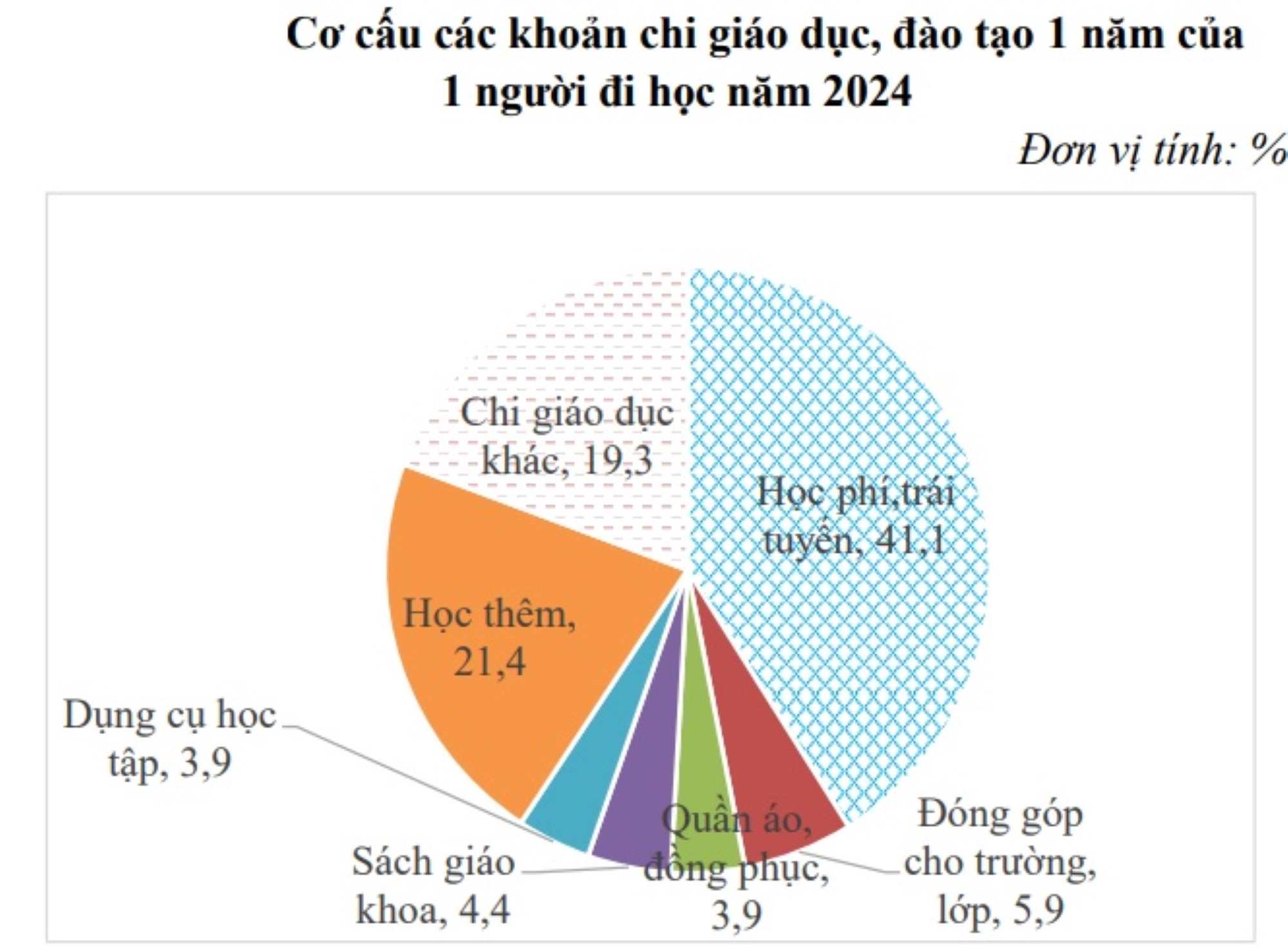
Tuition exemption must be accompanied by anti-overcharging
From the reasons pointed out, Delegate Nguyen Thi Viet Nga said that there are 4 groups of fundamental solutions to reduce education costs for people.
First, it is necessary to perfect the mechanism for controlling revenues other than tuition fees.
Second, the State needs to increase investment in general education, especially investment in boarding facilities, school toilets, subject classrooms, kitchens, minimum equipment, etc.
Third, we must adjust our views on the socialization of education. Socialization does not mean transferring the State's work to parents; nor is it a simultaneous mobilization, following the movement. It is necessary to clearly stipulate the limit of mobilization, the principle of voluntariness, and closely control the implementation process to ensure that socialization does not become a burden.
Fourth, increase price stability for school-related services, especially boarding and school nutrition services.
"To reduce the financial burden on people, we need to shift from the mindset of "free tuition" to the mindset of "reducing school costs".Only when total costs, especially essential services, are effectively controlled, will students' families truly benefit from the tuition exemption policy, and the goal of equity in education will become a reality," said Ms. Nga.
Supplementing the long-term policy perspective, Dr. Hoang Ngoc Vinh, former Director of the Department of Vocational Education (Ministry of Education and Training) said that tuition exemption is a humane policy, with strategic significance for education, social security and the population structure. However, this policy is only really effective when accompanied by reforming the education system and strictly controlling revenues other than tuition fees.
According to Dr. Hoang Ngoc Vinh, if tuition fees are exempted but fees, extra classes are widespread, and uncontrolled socialization still exists, the burden on parents will not only not decrease but also increase. He paid special attention to the situation of extra teaching and learning - a large source of income that causes many families to still have to spend significantly even though they are exempted from tuition fees.
The Ministry of Education and Training said that it has requested localities to continue to review the overall organization of joint teaching in schools, to ensure compliance with regulations, and not to collect money illegally from parents.
Along with that, it will strengthen inspection, supervision, strict handling of violations, and conduct surprise inspections to promptly correct when there are reports. Regarding long-term solutions, the Ministry of Education and Training recommends that the agencies of the National Assembly, the National Assembly Standing Committee and the central and local supervisory agencies strengthen supervision in this field to contribute to correcting the situation of overcharging and collecting in violation of regulations; local authorities, especially at the provincial and commune levels, regularly inspect, inspect and rectify the situation of overcharging at educational institutions in the area in accordance with the management decentralization. The Ministry of Education and Training affirmed that it will seriously and thoroughly implement these solutions in the coming time to ensure fairness and transparency in revenue and expenditure at educational institutions.


