
On January 16, 2026, Mr. Amandeep Singh Gill - Deputy Secretary-General of the United Nations (UN), cum Special Envoy of the UN Secretary-General for Technology - visited and worked at Phenikaa University as part of an official working trip to Vietnam. The visit takes place in the context of the United Nations promoting global agendas on technology governance, digital human resource development and ensuring technology serves the common interests of humanity.
Speaking to welcome the UN working delegation, Prof. Dr. Ho Xuan Nang, Chairman of Phenikaa Group, Chairman of Phenikaa University Council shared: "The rapid development of technology is posing challenges beyond purely technical scope. We are living in a period where technological capacity is developing faster than ethical and social institutions. The responsibility of universities is not only to train and research, but also to contribute to shaping how technology is developed and serves humans.
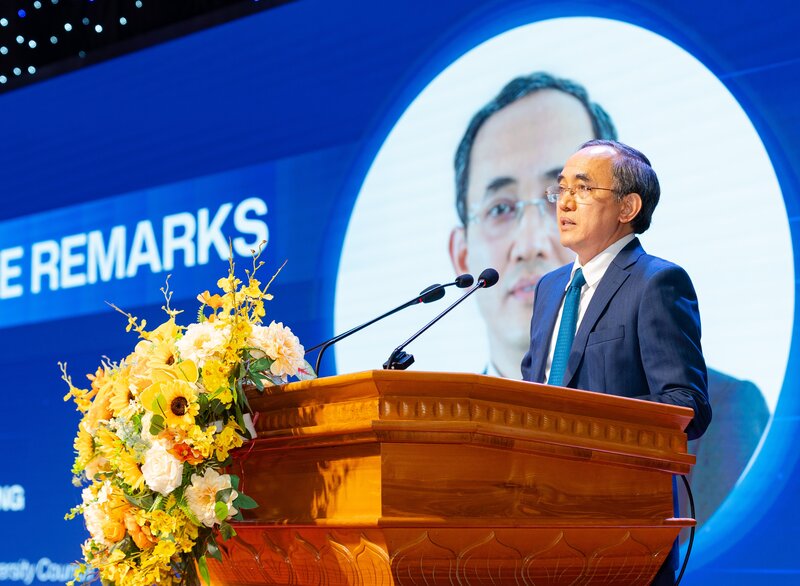
According to the President of the Phenikaa University Council, current technological challenges require the simultaneous participation of many stakeholders – from government, businesses to academia – in which universities play a special role as a dialogue space, where scientific knowledge is placed in relation to long-term policies, ethics and social impacts.
An important highlight of the working session was a direct dialogue between Mr. Amandeep Singh Gill with the faculty and more than 300 typical students of Phenikaa University. The exchange revolved around emerging technology trends, the role of higher education in preparing digital human resources, as well as the responsibility of the young research generation in developing and applying technology for the common good.
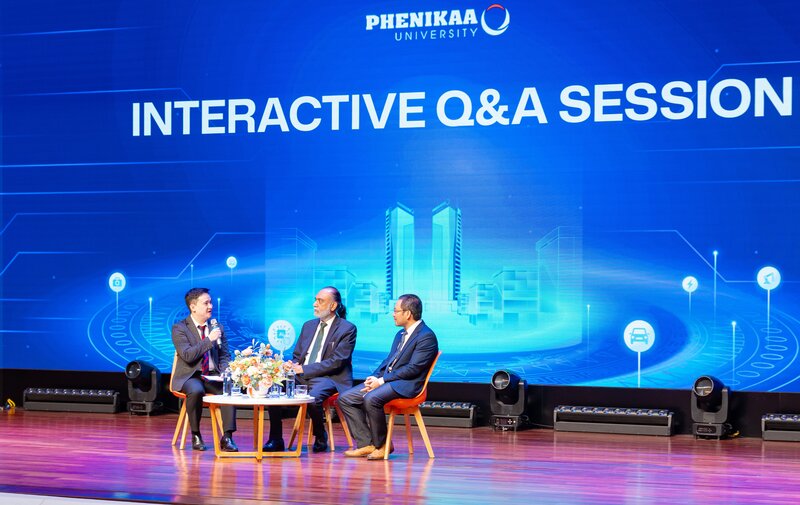
Sharing at the event, Mr. Amandeep Singh Gill emphasized the key role of universities in connecting technology with social values and sustainable development. According to Mr. Amandeep Singh Gill, in the context that 2.7 billion people in the world are still not connected to the Internet, the digital divide is not just an infrastructure or technology issue, but a challenge about human capacity and how technology is designed, deployed and managed. Therefore, higher education plays a special role in narrowing this gap from the root.
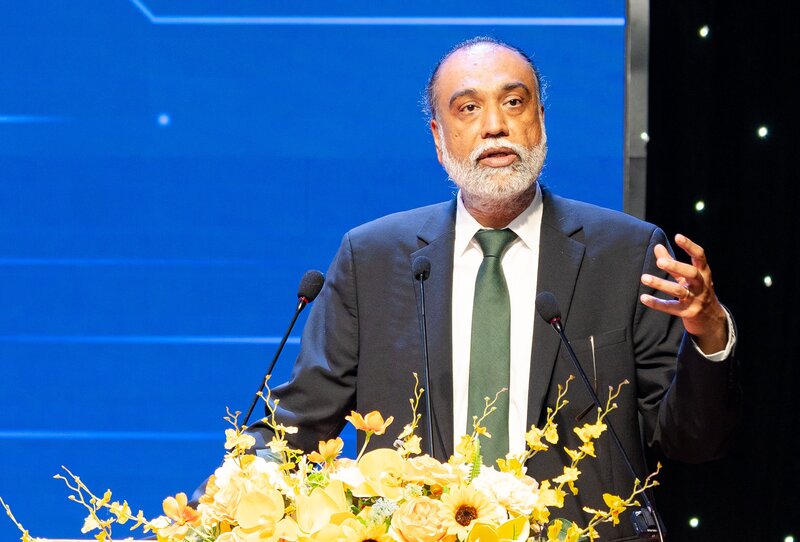
Mr. Gill shared: "Universities not only train skills for the digital economy, but also contribute to forming critical thinking, ethical standards and a sense of social responsibility for future generations of technology workers. These academic dialogue spaces help technology become closer to the goal of inclusive and sustainable development.
In an open academic space, Phenikaa students, many of whom are participating in research projects, technology startups and innovation right from university level, shared their practical concerns about research paths, careers and social contributions in the digital age.
The visit of the UN Deputy Secretary-General takes place in the context that Vietnam is considering science and technology and innovation as one of the key drivers for national development. In that process, universities are expected not only to be places to train human resources, but also to be knowledge institutions participating in policy dialogue and global agendas.


