
Challenges in the new context
In the context of strong digital transformation, technology is not only changing
changing the news production process but also setting new requirements for journalists and press - media training institutions today.
Discussing this issue, Master Doan Duy Anh - lecturer at the Institute of Journalism and Communication Training, University of Social Sciences and Humanities (Vietnam National University, Hanoi) - said that AI is having a profound impact on all areas of social life, in which journalism and communication is one of the most strongly affected areas. In particular, generative AI is developing at a very rapid pace and creating significant changes for the journalism profession. “First of all, AI can replace humans in many stages and professional skills. Previously, tasks such as designing, processing documents, removing tape recordings or even putting headlines required journalists to accumulate experience and go through a long training process. Currently, just mastering some basic AI tools, users can perform those tasks with quite good quality. This is clear evidence that AI is profoundly changing the way journalism is done.

The second impact is that AI sets new, higher requirements for learners and journalists. When simple jobs can be supported or replaced by machines, the question is what journalists in this era need to learn, do, and create products to affirm their value" - M.A. Doan Duy Anh assessed.
In addition, AI also changes the public's habit of receiving information. If in the past the press had to compete with social networks in attracting readers, now AI continues to become a new channel for accessing information. Many studies show that more and more people are using AI to search, synthesize and receive news instead of directly accessing the websites of press agencies. This puts the press under pressure to innovate more strongly to maintain its role as a legitimate and reliable source of information in the digital media environment.
New skill requirements
The strong development of AI and digital technology is changing the recruitment criteria in the press and media sector today. According to media expert Le Quoc Vinh, press agencies and media businesses are currently looking for young candidates, first of all, in the ability to adapt to new technology trends, especially AI, digital platforms, the ability to deploy digital media activities and working skills in a digital environment.
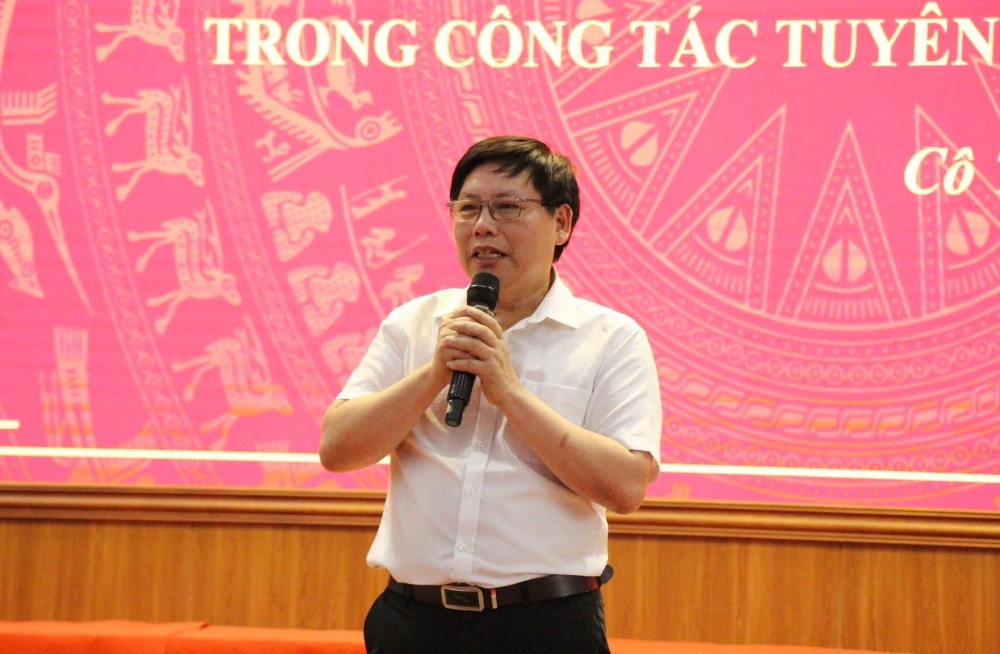
An increasingly important requirement is multi-tasking ability. Previously, journalism training often aimed at relatively clear specialization, but now content creators need to be able to handle many tasks at the same time such as writing, filming, photography, producing digital content and operating on many different platforms. In addition, soft skills such as communication, teamwork, and adapting to the digital working environment are also very necessary factors.
In addition to professional skills, young journalists also need to have in-depth knowledge of the professional fields they pursue. For example, if you do content in the field of medicine and pharmaceuticals, you need to have certain knowledge of medicine and pharmaceuticals; if you work in the fields of agriculture, finance or technology, you need to have corresponding knowledge" - Mr. Le Quoc Vinh shared.
In the context of the press system being restructured in a streamlined direction, focusing on developing key press agencies, the labor market for journalism and media students also has many changes. This requires young people to proactively adapt and reshape their career paths.
However, job opportunities are not narrowing because of this. Conversely, the strong development of content production businesses, media companies and digital media service providers is opening up many new career choices.
Training journalistic and media human resources in the new era
According to M.A. Dinh Ngoc Son - former Deputy Head of the Faculty of Radio and Television, Academy of Journalism and Propaganda, in the context of strong digital transformation, young journalists need to be equipped with at least five core competency groups, including: Foundation journalism nghiệp vụ skills; digital skills and AI use; information verification skills; multi-platform storytelling skills; and data analysis and problem detection skills.
Besides professional competence, press agencies today also highly appreciate soft skills such as quick adaptability, teamwork, communication with information sources, critical thinking, pressure management, creativity and lifelong learning spirit. According to him, a good journalist is not only a good writer but also must know how to cooperate, know how to listen, know how to ask the right questions and maintain alertness to the increasingly fast and complex flow of information.
From that reality, Master Dinh Ngoc Son believes that the journalism training program needs to shift from a training model based on individual skills to integrated competency training. Students must be firmly equipped with basic knowledge and skills such as discovering topics, interviewing, writing, editing and professional ethics. However, training institutions also need to add new modules such as data journalism, multi-platform content production, digital verification, information security, social media and AI application in journalism work.
According to M.A. Dinh Ngoc Son, journalism training should not only focus on guiding the use of tools because technology changes very quickly. More importantly, it helps students form professional thinking in the digital environment, know how to use technology to serve the truth, serve the public and improve the quality of journalistic works. Digital transformation in training, therefore, should not only stop at equipping software or equipment but also change teaching methods, learning methods and learning ability assessment methods.


