
Provincial Road 624 (Quang Ngai - Ba Dong) is 54 km long, a key road connecting east - west Quang Ngai, with a large traffic volume of people and vehicles. However, more than 7 km at the beginning of the route - the driving traffic axis, contributing to raising the level of Nghia Hanh satellite city (old Cho Chua town) - currently has a "bottleneck" about 350 m long, belonging to the Km5+550 - Km5+900 route (from Phu Binh intersection to Ben Da bridge). This section has a narrow foundation, road surface and bridge; at the same time, there are no sidewalks, roadsides, and limited visibility.
This bottleneck makes vehicles struggle to circulate, often congested during rush hours and poses a potential risk of traffic accidents. People living on both sides of the road said that many accidents and collisions have occurred on this route section.
To prevent local congestion, functional forces prohibit vehicles from parking on both sides of the road during peak hours. However, the situation of two-way vehicles following each other, moving slowly through this road section still occurs daily, especially during rush hours in the morning and evening.
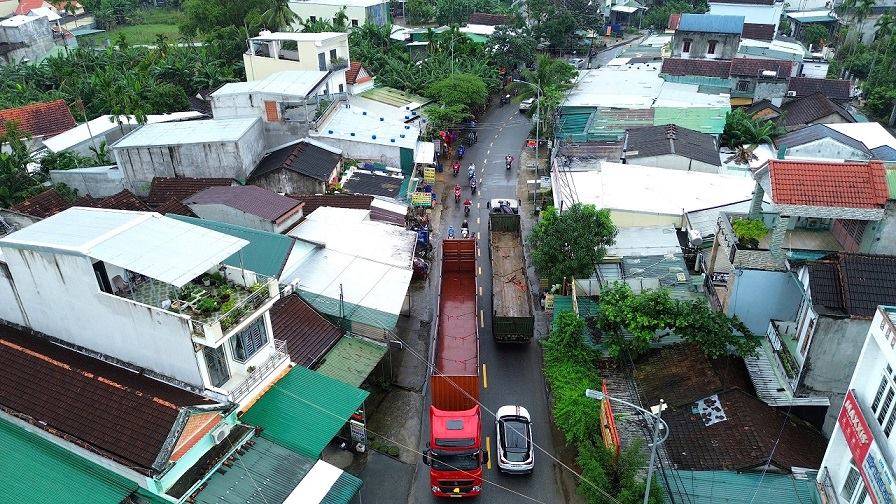
On the route, there is Ben Da bridge across the Phuoc Giang River, with a bridge width of only 8 m, no longer meeting the traffic needs of people in the context of rapidly increasing traffic volume and vehicle load. Every day, this 54 m long bridge has to "carry" tens of thousands of vehicles passing by, including many large tonnage trucks carrying raw wood materials and construction materials for key projects of the province and the country being deployed in the area.
Since Quang Ngai - Kon Tum merged, the already crowded road has become even more cramped due to the sudden increase in traffic volume. Vehicles often choose routes from Quang Ngai administrative center according to DT.624 - National Highway 24 to go to western communes and wards (old Kon Tum) and vice versa.
According to leaders of the Department of Construction, Ben Da bridge was built in 1984, after many years of exploitation, it has now deteriorated. In which, the bridge abutment is built of split stone, the mortar part is aging, losing its linkage; the bars, railings, and armrests on both sides of the bridge are peeling concrete.
This narrow bridge not only causes difficulties for people's travel but also becomes an obstacle to the socio-economic development of the western communes of the province. Therefore, investing in upgrading and expanding the route will help people travel safely and conveniently, while contributing to renovating and completing local infrastructure.
Mr. Nguyen Phuc Nhan - Director of the Department of Construction said that to overcome the above situation, the Department of Construction has sent a document to the Department of Finance proposing to add the project list to the medium-term public investment plan for the period 2026 - 2030, as a basis for allocating resources for implementation in the coming time. In which, the plan to build a new Ben Da bridge and expand roads at both ends of the bridge to connect with existing roads will be implemented.


