
High logistics costs - pressure for businesses
The Can Tho seaport system is expected to play an important cargo transshipment hub role in the development of the marine economy and import and export in the Mekong Delta (Mekong Delta). However, reality shows that the competitiveness of Can Tho seaport is still being restrained by many prolonged "bottleneck points". Prominent among them are high transportation costs.
In a recent field survey at Can Tho Port, Vice Chairman of Can Tho City People's Committee Vuong Quoc Nam and the working delegation directly recorded the difficulties that logistics and export businesses are facing.
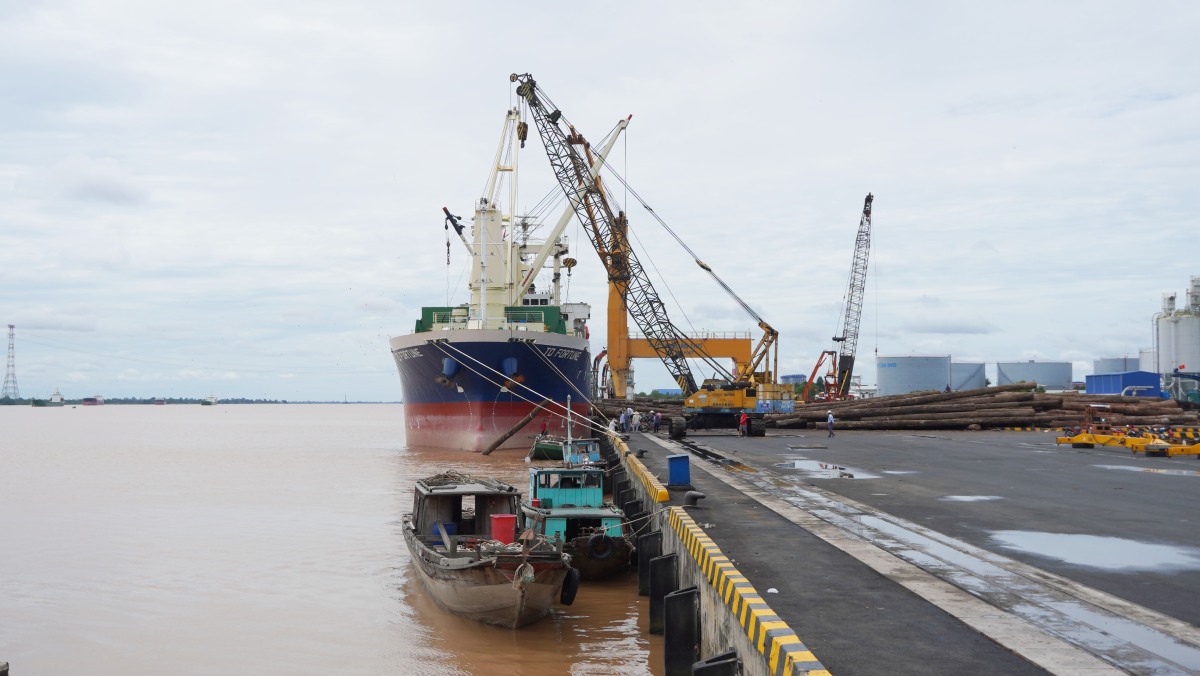
According to the assessment of city leaders, logistics costs currently account for 30 - 40% of the value of goods, which is too high. This puts great pressure on businesses and reduces competitiveness, especially key agricultural products of the Mekong Delta.
In that context, the completion of the seaport ecosystem associated with logistics logistics services is identified as an urgent task, of important significance for marine economic growth and import and export activities of Can Tho City in the new period.
Major barriers to limited maritime flow
Mr. Le Duc Cong - Deputy General Director of Can Tho Port Joint Stock Company - said that despite facing many objective barriers, the enterprise has made efforts to complete production and business targets in 2025, an increase of about 10% compared to 2024. The port has invested about 64 billion VND in infrastructure in 2025 and is expected to continue investing about 50 billion VND in 2026, towards a double-digit growth scenario.
However, according to Mr. Le Duc Cong, these results still do not reflect the true potential of the port due to many "bottleneck points" beyond the self-removing capacity of businesses.
One of the biggest difficulties currently is that the maritime channel into Cai Cui port is still limited. According to the leader of Can Tho Port, ships with a tonnage of over 10,000 DWT full load or container ships over 600 TEU currently cannot enter the Hau River channel. This significantly reduces the ability to connect directly with international transport routes.
From the perspective of planning and infrastructure technology, Mr. Le Tien Dung - Standing Deputy Director of Can Tho City Department of Construction - said that although the bridge system of Can Tho Port belongs to the best group in the region, with a total existing length and is expected to expand to nearly 1,500 meters, the exploitation efficiency is still not commensurate. The core reason lies in the Quan Chanh Bo channel - which has a very fast sedimentation rate.
According to Mr. Dung, each year the State has to spend about 500 billion VND to dredge the channel, but large tonnage ships can only circulate seasonally or for short periods of time, reducing stability and long-term exploitation capacity.

Besides maritime channels, post-port logistics infrastructure is also a serious "bottleneck". According to Mr. Le Duc Cong, currently, the system of warehouses, preliminary processing areas, disinfection and irradiation centers in the port area is still largely lacking, not meeting the demand for collection, processing and connection of goods in the supply chain.
Notably, road traffic connections from industrial parks to the port also reveal many inadequacies. Moving by container truck from Tra Noc Industrial Park to Cai Cui port is difficult. Main roads such as Cach Mang Thang Tam, Vo Van Kiet are limited, while Nguyen Van Linh road is narrow in some sections, increasing transportation time and costs.
Procedural problems, increased costs
Another issue reflected by export businesses, especially the rice industry, is customs procedures at the pontoon wharf in the Thot Not area. Because this area has not been recognized for customs codes and lacks an online surveillance camera system according to standards, businesses are forced to transfer goods to Cai Cui or Hoang Dieu ports for procedures.
The consequence is that the transportation cost increases by about 30,000 VND/ton of rice. Specifically, if carrying out procedures directly at Thot Not floating dock, the cost is only about 70,000 VND/ton, but when it has to be transferred to Hoang Dieu port, the cost increases to 100,000 VND/ton, reducing the profit of export businesses.
Faced with the above situation, leaders of Can Tho Port proposed that the city soon promote the development of transport transaction floors to connect goods smoothly between Can Tho and Ho Chi Minh City, Cai Mep - Vung Tau and Cambodia. At the same time, it is necessary to review and adjust industries at the regional level II logistics center in Hung Phu. The goal is to attract logistics enterprises to integrate and effectively exploit centralized wastewater treatment infrastructure.
According to Mr. Le Duc Cong, focusing on training in-depth human resources and promoting cooperation in transferring smart transportation technology, "greening" the supply chain is a key factor for Can Tho seaport to improve the value of goods and effectively penetrate demanding international markets.


