
On December 22, a reporter from Lao Dong Newspaper said that on the road leading to IC2 intersection (Cai Rang ward, Can Tho city) - the starting point of the Can Tho - Hau Giang expressway, the number of vehicles moving into the expressway was quite large.
The extended line of vehicles shows the great interest of people and drivers in key national transport projects, which is expected to create momentum to promote socio-economic development in the Mekong Delta region.
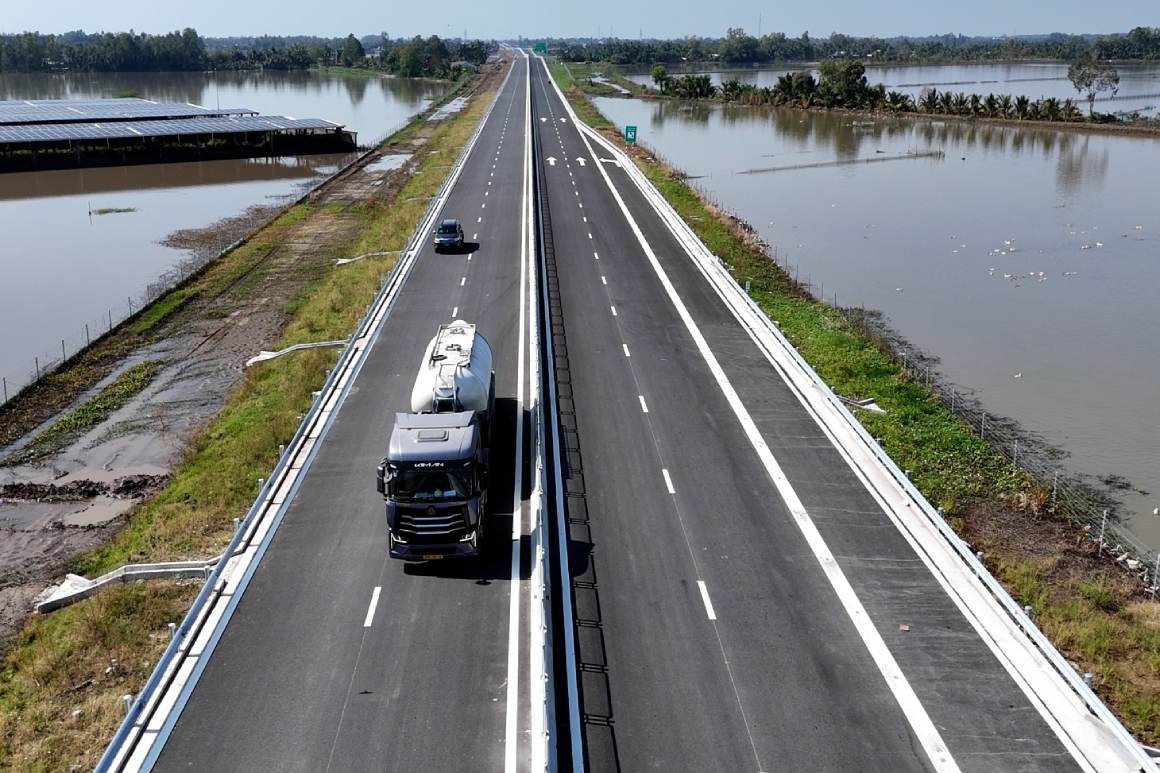
Mr. Phong Huy (Hung Phu ward, Can Tho city) said that he often drives for work in Ca Mau province, so he is especially interested in the Can Tho - Ca Mau expressway. According to Mr. Phong Huy, before the highway was available, each trip from Can Tho city to Ca Mau province usually took about 3 hours because it had to travel on a busy national highway.
"Today, the Can Tho - Hau Giang section has just been opened to traffic, while the Hau Giang - Ca Mau section has not been exploited, but I am very excited. I hope that when the entire route is completed and put into use, travel time will be reduced to about 1 hour and 30 minutes, making travel much more convenient, safer and less tiring, Mr. Phong Huy shared.
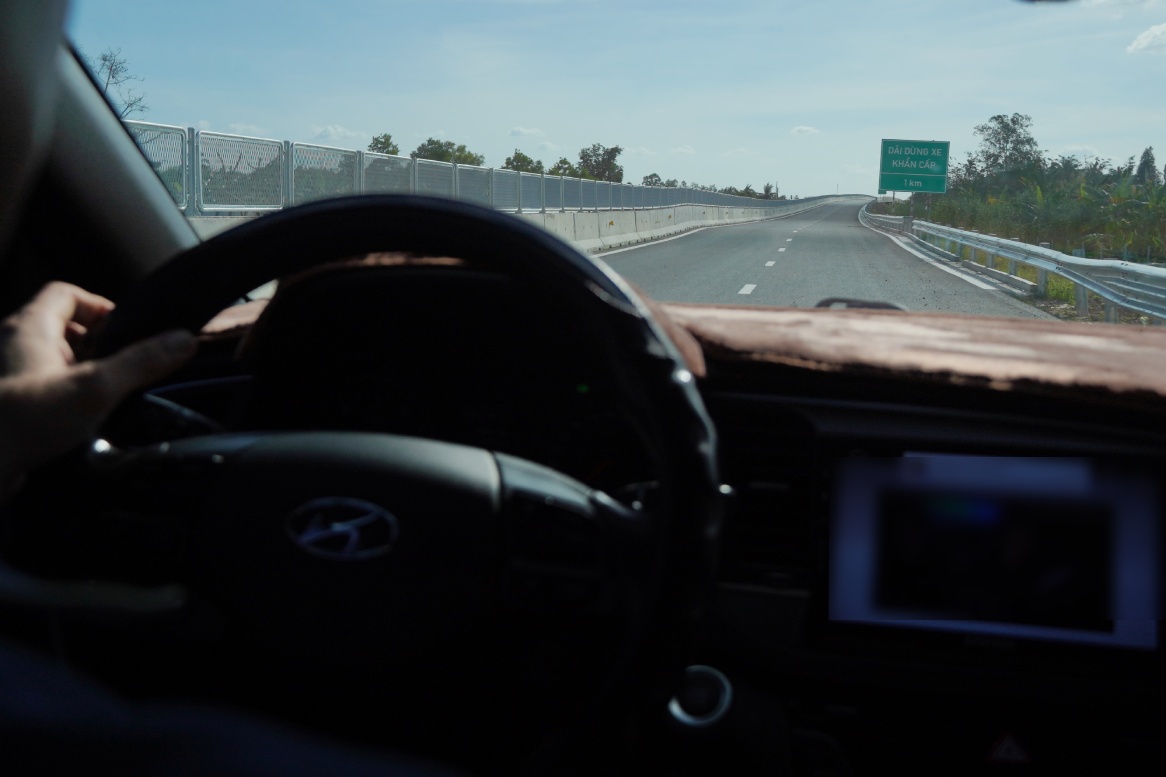
Mr. Tran Van Thi - Director of My Thuan Project Management Board (PMB) - said that after the Can Tho - Hau Giang expressway section was opened to traffic, the Hau Giang - Ca Mau section is being accelerated and is expected to be put into operation before the 2026 New Year, in order to meet the increased travel needs of people during the Lunar New Year.
The Can Tho - Ca Mau expressway has been basically completed, meeting the expectations of the people of the Mekong Delta. People in Ca Mau will no longer feel far away from the rest of the Fatherland, said Mr. Tran Van Thi.
According to Mr. Tran Van Thi, with a length of about 110 km, the expressway shortens travel time from Can Tho city to Ca Mau province, saving nearly half of travel time.
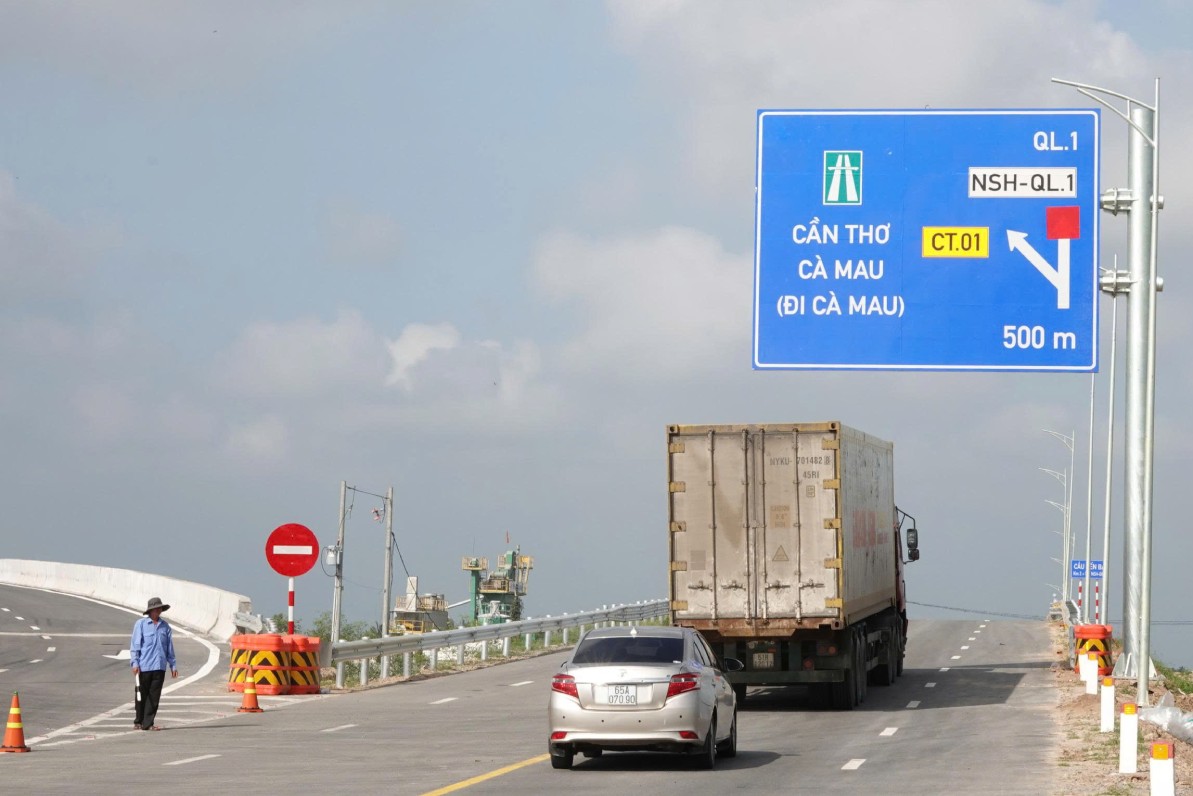
Dr. Tran Khac Tam - Chairman of Soc Trang Business Association - said that the Mekong Delta has long encountered a major traffic "bottleneck" due to its dependence on National Highway 1 and the narrow provincial road system. The operation of expressways will help shorten the connection time between economic centers in the region, especially from Can Tho city to localities and Can Tho International Airport. Thereby, logistics, import-export and agricultural and aquatic product processing enterprises will reduce transportation costs, enhance the competitiveness of Mekong Delta goods in domestic and foreign markets.
Previously, on December 19, in Can Tho City, the inauguration and opening ceremony of the main route of the Can Tho - Hau Giang component project and the technical opening of the Hau Giang - Ca Mau section, part of the North - South expressway project in the East took place.
With the Can Tho - Hau Giang expressway section opened to traffic, the maximum speed limit on the route for vehicles is 80km/h, minimum 60km/h. The speed at the branches at the intersection is 40km/h.
According to the My Thuan Project Management Board, vehicles participating in traffic go in the following directions and directions:
From the center of Can Tho city, travel along National Highway 91B (Nam Song Hau road) towards Cai Cui Port (Cai Rang ward, Can Tho city).
When reaching the roundabout (road to Cai Cui Port), vehicles turn onto the connecting route to the expressway at IC2 intersection, travel to IC5 intersection (Vi Thuy commune) to National Highway 61B through the branch routes at the intersection.
On the other afternoon, vehicles traveling on National Highway 61B follow the branch road at IC5 intersection onto the expressway, to IC2 intersection, onto the expressway connection route to National Highway 91B.
The My Thuan Project Management Board said that the following vehicles are not allowed to participate in traffic on the expressway: Specialized motorbikes with a design speed smaller than the prescribed minimum speed, motorbikes, similar vehicles to motorbikes, motorbikes, rudimentary vehicles, pedestrians are not allowed to travel on the expressway.


