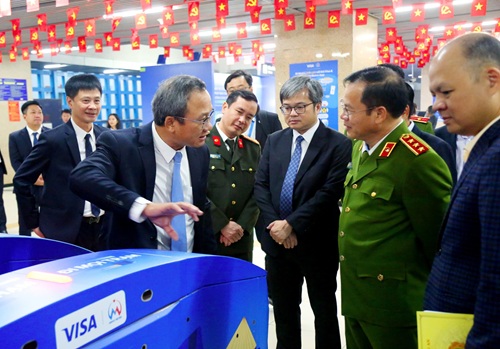
According to Dr. Khuat Viet Hung - Chairman of the Board of Members of Hanoi Railway Company Limited, digital transformation is not only a global trend but also an important foundation and driving force to promote socio-economic development. In the urban railway sector, digital transformation brings opportunities to shorten the technology gap, while creating conditions for businesses to increase productivity and reduce dependence on manual management models.
However, Dr. Khuat Viet Hung emphasized that opportunities always come with challenges. The biggest problems today include a shortage of high-quality human resources, cooperation problems - technology transfer, the ability to master equipment and systems in urban and large-scale urban areas.
How can the digital transformation process both meet immediate requirements and ensure a long-term vision? Which areas need to be prioritized when resources are limited? Can we take a shortcut in technology?", Mr. Hung asked.
In the context of Hanoi having two new urban railway lines put into operation with a still modest scale compared to the network plan in the future, determining the priority direction for digital transformation becomes even more urgent. Many questions are raised: should we focus on managing - operating, maintaining trains and equipment, exploiting infrastructure or improving customer experience? And what roadmap will the level of technological autonomy be built according to?
These contents were discussed in depth at the International Workshop "Digital transformation in urban railway operation and maintenance" held on the afternoon of December 5, in Hanoi, with the participation of representatives of major Metro systems in the world.
Sharing experience from Tokyo Metro, Mr. Atsushi Sato - Manager of the International Business Department - said that the enterprise is operating 9 metro lines, 180 stations with a total network length of 195 km, connecting with other railway companies up to 556.6 km. There are an average of 6.84 million passengers per day. Our on-time rate is 99.2% if counting trains arriving within 5 minutes, said Mr. Atsushi Sato.
According to Mr. Atsushi Sato, Tokyo Metro is promoting the application of digital in management and operation, especially passenger information systems. The Tokyo Metro My! application integrates train information, schedules, service interruption notifications, route diagrams and transit options such as taxis and bicycles. This helps passengers personalize their routes, reduce waiting time and limit risks in unusual situations.
Representative of Metro Tham Quyen Mr. Doan Vinh Khoi - Deputy General Director of the Center for Maintenance and Operation - said that Metro Tham Quyen is operating 18 routes with a total length of 595 km, 417 stations. On average, the system serves 8.38 million passengers per day, with peak times reaching 11.88 million.
The special feature of Metro Shenzhen is that the enterprise has achieved a completely financially autonomous operating mechanism, not dependent on State subsidies. This is achieved through the synchronous application of operational optimization solutions, high automation and large data analysis for maintenance management.
At the same time, representative of Metro Taipei (Taiwan, China) - Mr. Julian Tu - Senior Director of TRTC Taipei - also shared his experience in applying AI to improve operational reliability. According to Mr. Julian Tu, AI is helping the system reduce train delays, predict errors before they occur and improve labor safety.
The Taipei Metro currently has 5 lines, serving 2.2 million passengers per year. To limit incidents, the system often uses smart technology to identify dangerous behavior such as passengers climbing over fences, trapped objects, trapped shoes, etc. The AI system acts as an additional monitoring layer, helping to reduce pressure on the operator, while supporting proactive maintenance decisions.
AI analysis allows proactive maintenance, improving the reliability of trains. The consolidated internal technological level helps us constantly innovate" - Mr. Julian Tu emphasized.