
In the countryside of Nghia Son parish, Ninh Binh province, when the church bell rings every morning, people not only hear the rhythm of life of a large Catholic community, but also feel a peaceful space, where faith and life blend together. There, more than 87% of the population are parishioners, stories about religious freedom are not on paper, but present in every house, every street, every relationship between people.
Mr. Nguyen Van Dan - Chairman of the Vietnam Fatherland Front Committee of Nghia Son commune - recounted that right from the first Commune Party Congress, the locality has identified religion as one of the pillars in socio-economic development. With more than 28,500 people, 21 churches, 8 priests and a large number of monks, Nghia Son is one of the areas with the highest Catholic density in the country.
To develop, first of all, we must maintain solidarity. Here, solidarity is not a slogan, but must start from very specific, very ordinary things. We proactively connect with priests, have phone numbers, have Zalo, regularly exchange work, not only in meetings but also in intimate conversations. When we understand each other, everything will be much smoother, from the government to the church can all accompany each other," Mr. Dan shared.
From those connections, when the parish has needs, the government proactively removes them; conversely, when the locality implements the policy, the priests become a bridge for parishioners to understand and agree. Looking back at the past journey, Mr. Dan said that to have the trust as today, it was a process of persistent construction.
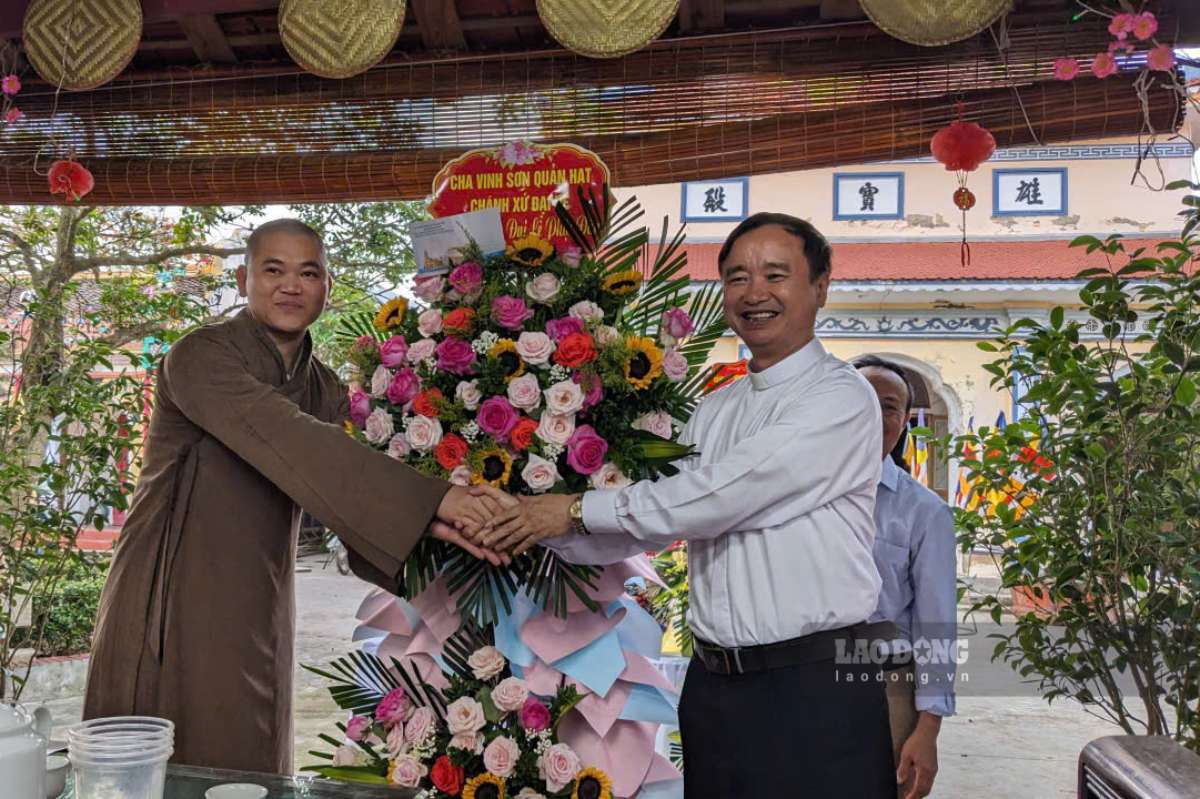
Attached to the area for many years, Vinh Son priest Lai Van Quynh, Dai De parish - said that the companionship between the government and religions in the locality is not something far-fetched, but is formed from the daily interactions in community life. Recalling the spirit of "living in the heart of the nation" of the Vietnam Bishops' Conference since 1981, he said that it is also a way for religious people to be attached to their homeland and share responsibility with society.
During Quan Thay festivals, we always invite the government and other religions to attend. Such occasions are not just rituals, but an opportunity for people to meet, exchange, and understand each other better. When there is sympathy, coordination in work or in life is also much more convenient," priest Quynh shared.
Not only expressed through the connection between the government and religions, the spirit of openness and respect for differences in religious life in Nghia Son is also present in many young families, where faith is nurtured by companionship and voluntary choice.
Before getting married, Mr. Mai Viet Hoang's wife (27 years old, in Nghia Son commune) did not follow Catholicism. However, during the time of learning and studying marital doctrine with her husband, she actively chose to follow religion.
To this day, that small family still maintains the habit of going to temples every weekend. For them, the change does not come from imposition, but from understanding and voluntary choice - a simple but clear manifestation of free religious life.


