
Improving policies and orientations for strategic technology development
Speaking at the working session, Ms. Nguyen Thi Lam Giang - Director of the Department of Innovation, Green Transformation and Industrial Promotion said that the Ministry of Industry and Trade has been and is actively implementing the assigned tasks in the spirit of Resolution No. 57; organizing a review of the implementation situation at units in the industry; deploying strategic technology and strategic technology products to solve major problems related to key areas of the Industry and Trade sector.
Reporting at the working session, Mr. Le Xuan Huyen - Deputy General Director of Vietnam National Oil and Gas Group (Petrovietnam) said that to implement Resolution No. 57 of the Politburo, the Group has implemented many urgent tasks, such as: Promulgating a Resolution on breakthroughs in science and technology development, innovation and digital transformation; establishing a specialized Steering Committee.
At the same time, build a Development Strategy to 2030, vision to 2050, in which science, technology, innovation and digital transformation are identified as strategic breakthrough driving forces to improve labor productivity, competitiveness and create new growth drivers.
On that basis, the Group has built a list of 34 strategic technology products by 2030; and at the same time reviewed and updated the strategic technology system with 10 key technology groups, including many fields such as artificial intelligence, digital copies, big data, cloud computing, robotics and automation, advanced energy and material technology, ocean and underground technology, clean fuel production, carbon reduction technology, Internet of Things (IoT) and many other platform technologies.
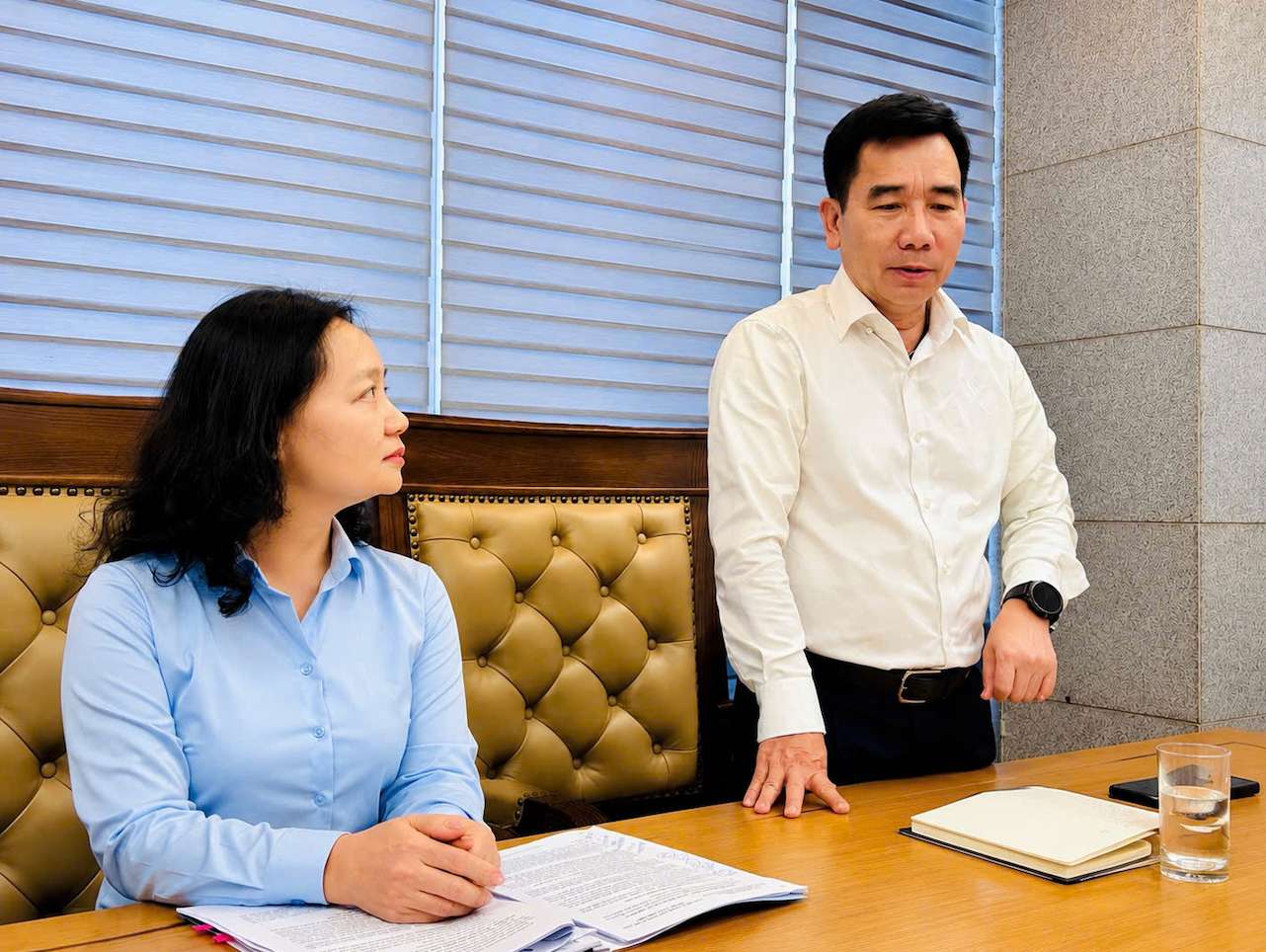
One of the contents discussed in depth at the working session was the difficulties and obstacles arising in the process of implementing science, technology, innovation and digital transformation tasks at enterprises.
According to a representative of Petrovietnam, the lack of controlled testing mechanisms for new technologies and new business models; the lack of a suitable legal corridor for experimental and risk-taking research activities; along with inadequacies in the mechanism for commercializing research results, valuing intellectual property, purchasing research equipment and developing high-quality human resources are issues that need to be further researched and improved.
Based on the exchanged opinions, Ms. Nguyen Thi Lam Giang affirmed that the Department will continue to fully summarize the recommendations from businesses to serve the process of building and perfecting mechanisms and policies; and at the same time closely coordinate with relevant ministries and sectors in researching and proposing solutions to remove difficulties for science, technology, innovation and digital transformation activities.
In particular, the Ministry is researching the development of a controlled testing mechanism (sandbox) in areas under its management, and at the same time actively coordinating with relevant agencies in perfecting the financial mechanism, creating more favorable conditions for the implementation of science, technology and innovation tasks based on closely following practical requirements.
Completing the overall picture of strategic technology of the Industry and Trade sector
The Ministry of Industry and Trade requests Petrovietnam to continue to review and fully update the science, technology and innovation tasks being implemented, including the tasks of using enterprise resources, in order to create a unified database to serve state management, avoid duplication in the investment process, and at the same time support the development of strategic technology development orientations of the industry to 2030.
After more than a year and a half of implementing Resolution No. 57-NQ/TW, the initial results at Petrovietnam show that science, technology, innovation and digital transformation are gradually becoming important driving forces in improving productivity, operational efficiency and competitiveness of enterprises.
At the same time, issues identified from practical implementation are also an important basis to continue to improve institutions, innovate management mechanisms and create a more favorable environment for research, development and application of science and technology in the entire industry.


