
Giving up the prosperous lights of the city, she returned to the remote Lam Thuong valley (Lao Cai) to sow seeds for a startup project. Not only is it a personal startup story, Xoi's journey also carries the aspiration to awaken the potential of hometown tourism, create sustainable livelihoods for people and fully preserve national cultural identity.
The days of starting a business empty-handed
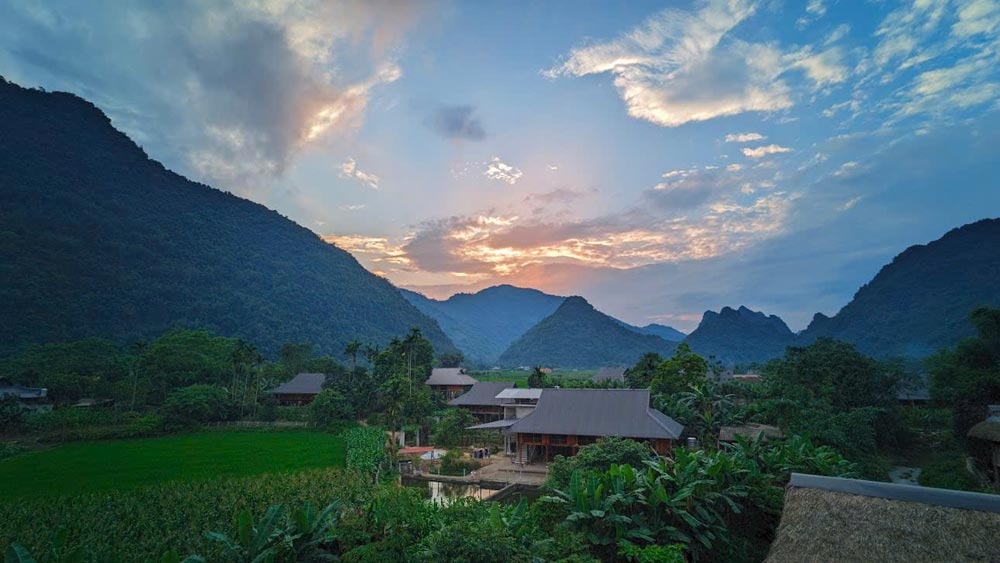
Graduating from the tourism industry, instead of staying in bustling and strongly developed centers like Sa Pa or Hanoi, Hoang Thi Xoi brought her diploma and enthusiasm, deciding to return to her hometown. Sharing about this decision, she confided: "The thing that motivates me is the desire to start a business from where I was born. Here there are pristine valley scenery, rare peace and kind and hospitable Tay people.
Realizing that tourists come not only because of the beautiful scenery but also because of the unique culture and the way people live in harmony with nature, she set a clear mission for herself: To develop Farmstay Village into a bridge to bring the beauty of Lam Thuong to tourists, create jobs for people and contribute to preserving the traditional cultural identity of the Tay people here.
However, the journey to turn a dream into reality in a remote valley has never been easy. In 2018, when Xoi Farmstay officially opened to welcome guests, it was also when she had to face the most crisis and pressure period. She recalled the challenging days: "At that time, there were almost no guests because no one knew about homestays in a remote valley like Lam Thuong. Roads were very difficult to travel, facilities were still rudimentary, there were no private rooms and I did not have money to continue investing.
Many times the pressure surrounded her, causing the young girl to hesitate many times, even thinking about going to another city to experience first and then returning to invest further if possible. In those precarious moments when she seemed to want to give up, family was the most solid support for her to cling to.
Creating livelihoods and developing indigenous tourism
Overcoming the initial storm, Xoi Farmstay gradually affirmed the right direction when it is not simply a personal business model but has become a driving force contributing to the local economy in a practical and sustainable way. To directly support ethnic minorities, the farm always prioritizes purchasing and using clean food ingredients from local people such as vegetables, chicken, and pond fish to serve tourists.
In addition, the project also creates direct jobs for about 8-10 local workers working part-time or full-time in positions of cleaning rooms, cooking, tour guides and gardening. Not hiding the secret, Ms. Xoi enthusiastically spread this model to the community: "I share with everyone about tourist reception skills, designing and renovating landscapes to make homestays... Thanks to that, some households have started to open their own homestays, organizing experiential services such as weaving, making hats, performing arts, and singing folk songs".
She hopes that through tourism, villagers will be proud, understand more about the cultural values of their homeland and see that tourism can bring stable income while still maintaining identity and a lifestyle in harmony with nature.
Standing at a fragile line between economic development and cultural commercialization, Xoi chose to go slowly but surely. She decided to limit the number of visitors in each reception to protect the peaceful and authentic space, and at the same time say no to opening karaoke speakers every day. She shared: "Tourists coming here will experience the real family and village space, not museum visits or performance tourism. My goal is for tourists to come to live slowly and feel Tay culture in a close and respectful way. Only when this originality is maintained can the national identity not be mixed and can it be sustainable for a long time".
Besides preserving culture, environmental protection is also considered a vital imperative to help retain tourists. Ms. Xoi has thoroughly applied green and circular criteria in daily operation, including sorting waste at source right at home and converting organic waste into fertilizer for the garden.
Visitors here must order food in advance so that the farm only buys just enough fresh food to avoid waste. The wastewater system is also treated, flowing through a layer of soil and sand before being discharged into the stream; at the same time, the farm prioritizes using local materials such as wood, bamboo, stone and minimizes single-use plastic items. Not stopping at the farmstay area, her family also donates green trees to plant to create landscapes, donates trash cans to collect garbage in the Nam Chan stream area and regularly talks with people about the importance of a green and clean natural environment for tourists.
It is this sincerity, hospitality, not stained with commercial colors, and a lifestyle in harmony with nature that has touched the hearts of a large number of international tourists. Ms. Xoi observed that foreign tourists come here because they desire the values that modern life hardly brings: From fresh air, stream sounds, wind sounds to stories and traditional dishes cooked on the fire of the original Tay culture.
Many foreign tourists shared that the typical traditional stilt house architecture combined with green spaces and clean village roads has brought them "healing" and true connection with nature and people. Looking towards the future, Ms. Xoi plans to renovate the farmstay landscape to be greener and more beautiful but still maintain the warm spirit of a family. She affirmed that she will continue to focus on sharing more tourism skills to help the community connect, build more cultural experience tours and sell local agricultural products with a burning desire to bring the image of peaceful and original Vietnamese mountainous countryside to more international tourists.


