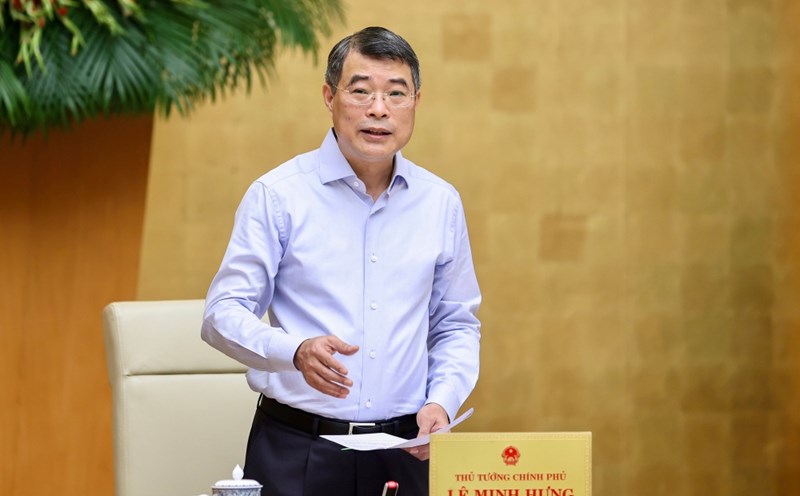
Voters in Ho Chi Minh City reflect that the taxable revenue threshold for individual business households is not really suitable for reality.
Voters proposed considering raising the taxable revenue threshold to about 3 billion VND/year to create conditions for business households to accumulate, develop production and stabilize their lives.
Responding to this content, the Ministry of Finance said that this agency has advised and submitted to competent authorities to promulgate relevant laws and decrees.
According to the latest regulations, the annual revenue level that is not subject to personal income tax for business individuals has been increased to 1 billion VND.
At the same time, goods and services of households and individuals engaged in production and business with revenue of 1 billion VND or less are also not subject to value-added tax.
The management agency has supplemented a flexible tax calculation method based on income or a ratio to revenue for individual businesses with revenue from 1 billion VND to 3 billion VND.
According to tax industry data, the number of households and individuals with revenue below 1 billion VND is currently about over 2.5 million households.
This regulation is expected to reduce state budget revenue by about 16,650 billion VND compared to 2025.
With the newly issued policies, the number of business households and individual businesses that still have to pay taxes currently accounts for only a small proportion.
The Ministry of Finance said that the determination of the non-taxable revenue threshold must be consistent with the actual conditions and management requirements of Vietnam.
Applying a uniform revenue level, without distinguishing between special urban areas and other areas, is to ensure fairness.
Because policies for households and individual businesses have just been issued by the National Assembly and the Government in 2025 and 2026, it takes time to apply them in practice.
In the coming time, the Ministry of Finance will conduct a summary, evaluate the effectiveness and comprehensively review inadequacies to report to competent authorities for consideration and decision. This is to ensure the unity, comprehensiveness and long-term stability of the national tax policy.