
Input costs escalate
Increasing input cost pressure creates great pressure on both agricultural production and import and export activities. In the context of strong price fluctuations in the world, businesses are forced to "balance their brains" between maintaining selling prices, maintaining the market and ensuring business efficiency.
At a working session with the Ministry of Industry and Trade in Ho Chi Minh City recently, Mr. Vu Khanh Thien - Business Department of Phu My Fertilizer and Chemicals Corporation (Phu My Fertilizer), said that the domestic urea supply is basically guaranteed with a total capacity of about 2.8 million tons per year, even surplus for export. However, due to the large market openness, domestic fertilizer prices are still directly affected by international trends. Currently, world urea prices have increased by 40-50%, while domestic prices have only increased by about 20% thanks to efforts to curb prices.
However, cost pressure has not stopped as input gas prices - an important factor in fertilizer production - continue to fluctuate according to the global market. This puts businesses in a difficult position, both having to control selling prices to support farmers and ensuring stable production maintenance.
Not only facing increased material costs, the agricultural sector also faces additional pressure from harvesting and transportation. Mr. Nguyen Van Nghiem - General Secretary of the Vietnam Food Association, said that the Mekong Delta region is entering the peak harvest season of the winter-spring crop, and is expected to enter the peak harvest period in the next 7-10 days.
Rice prices tend to decrease from 8-10%, currently only about 5,600-5,800 VND/kg, causing farmers' profits to shrink significantly. Input costs have increased sharply, especially waterway logistics increased by 20-30%, which has increased production costs by about 30 VND/kg of rice.
Not only the domestic market, rice exports are also facing escalating logistics costs. Cargo costs to the Middle East have increased 3-4 times, to 3,000-4,000 USD/container, significantly reducing the competitiveness of Vietnamese businesses.
Businesses "thinning" profits
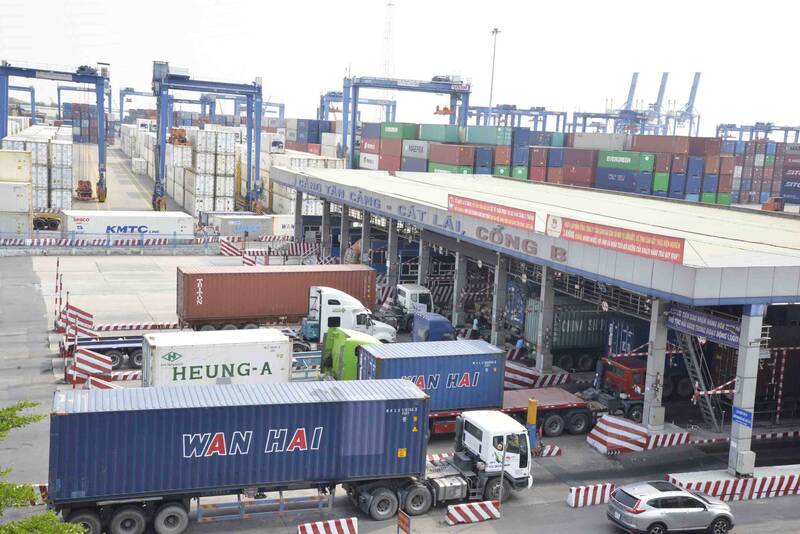
From a business perspective, Mr. Nguyen Ngoc Hoa - Chairman of the Ho Chi Minh City Business Association, said that international transportation costs are currently increasing commonly from 50-100% compared to before, while the delivery time is extended by about 10-15 days due to many maritime routes having to adjust routes.
These fluctuations not only increase transportation costs but also lead to warehousing costs, insurance and a series of other arising costs, causing total input costs to increase rapidly. Meanwhile, selling prices cannot be adjusted accordingly, pushing many businesses into a difficult position.
For signed contracts, not all partners agree to share the increased costs, forcing businesses to maintain prices and agree to reduce profit margins. Some businesses are renegotiating prices with partners, but progress is quite slow due to market instability.
Notably, cautious sentiment from international customers is also slowing down order flows. Many importers are extending confirmation times or requesting extensions of delivery schedules to further monitor market developments. Therefore, most businesses are currently only focusing on completing signed orders, while the signing of new contracts is almost stalled.
Not only exports, import activities are also similarly affected when logistics costs and raw material prices increase rapidly. Meanwhile, domestic purchasing power has not recovered strongly, making it difficult for businesses to increase selling prices accordingly. Faced with this situation, many businesses choose the solution of "thinning" profits, and at the same time build a roadmap to adjust prices step by step to avoid shocking the market.
The effective use of the price stabilization fund, combined with adjusting taxes and fees appropriately, is expected to contribute to reducing logistics cost pressure, thereby supporting businesses to maintain production and stabilize the market in the context of many fluctuations.


