
Meanwhile, Vietnam, one of the fertilizer exporting countries, is maintaining an export tax rate of 5% on urea and superphosphate fertilizers. This makes the cost of domestic enterprises' products higher than international competitors, thereby significantly reducing competitiveness in the global market.
Fertilizer export tax adjustment policy is not really flexible
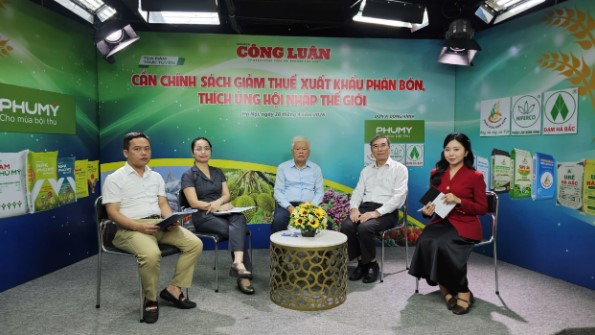
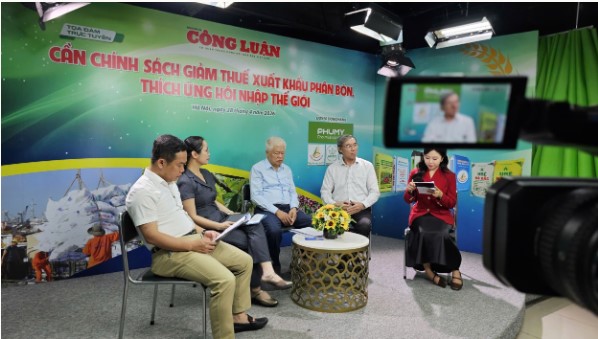
At the online seminar "Need a policy to reduce fertilizer export taxes, adapt to world integration" organized by Nha bao va Cong luan Newspaper on April 28, Mr. Nguyen Van Phung, Senior Tax Expert, Member of the Executive Committee of the Vietnam Enterprise Law Association, said: Vietnam's fertilizer import and export tax policy is not really flexible.
Analyzing this issue more clearly, Mr. Phung said: The domestic fertilizer market has a very clear seasonality. During the peak season, demand increases, even at times supply is not enough to meet demand, forcing imports to increase to meet domestic demand.
Conversely, in the low season, domestic supply is surplus, causing businesses to find outlets through exports. This creates a "two-way" reality: both importing during peak season and exporting when there is surplus supply.
However, the management of export taxes in the past time has not been really timely with market fluctuations. At many times, when supply increased sharply, the slow policy adjustment and continued application of the 5% tax rate have caused businesses to miss export opportunities.
Therefore, Mr. Phung emphasized: Vietnam needs to establish a faster and more flexible policy response mechanism to support businesses, while ensuring supply and demand balance in the domestic market.
Taxes not only create revenue for the state budget but are also an important tool to regulate and intervene in the market. When the domestic market lacks supply, export taxes can be used to limit exports, prioritizing domestic consumption. Conversely, when domestic supply is abundant or surplus, tax reduction adjustments will help promote exports, release goods and balance the market," Mr. Phung said.
Agreeing with this assessment, Mr. Nguyen Tri Ngoc, Vice Chairman cum General Secretary of the Vietnam Fertilizer Association, assessed: With the specific characteristics of fertilizer production, especially products such as urea fertilizer, requiring high technology and continuous operation, the larger the output, the more optimal the economic efficiency. However, along with that is the pressure to consume products, forcing businesses to find stable output markets.
In this context, the regulatory role of the State through tax policies becomes particularly important. When domestic supply is surplus, there needs to be a flexible mechanism to promote exports, release goods and improve production efficiency. Conversely, when the domestic market is in shortage, tax policies need to be adjusted promptly to prioritize domestic agriculture supply.
However, reality shows that policy management has not reached the necessary level of flexibility. The approach is still not truly flexible, not keeping up with the rapid fluctuations of market supply and demand.
This poses an urgent requirement to innovate management thinking, towards a more flexible and adaptable policy mechanism, thereby optimizing economic efficiency and ensuring harmony of interests between production, export and domestic demand," Mr. Ngoc emphasized.
Reducing taxes to 0% is necessary
From a business perspective, Ms. Bui Thi Thanh Giang, Deputy Head of the Business Planning Department of Hoa Chat Group, shared: At the present time, the domestic fertilizer market is in the peak season, so inventory is relatively low. However, according to the annual cycle, from about June to November, fertilizer demand decreases sharply, causing inventory to increase.
At that time, production capital is not circulated, loan interest costs increase, while long-standing inventory may reduce quality (increased humidity, reduced efficiency of use).
In this context, businesses are forced to reduce capacity or produce sparingly, leading to increased maintenance and repair costs. These costs will eventually be allocated to the product cost throughout the year, reducing production and business efficiency.
Conversely, if businesses find export outlets in the low season, inventory will be released, helping to maintain continuous production and reduce average costs. At that time, the cost of each product unit will decrease, creating conditions to lower domestic selling prices, thereby directly supporting farmers.
Notably, the Asian regional market, especially India, has a very large demand for fertilizers, estimated at 18-20 million tons per year, with a seasonal difference compared to Vietnam. Specifically, the summer crop in India starts from June to July, and the winter crop from October to November.
This "mismatch" creates opportunities for domestic businesses to boost exports at a time when domestic demand is decreasing, thereby maintaining capacity and optimizing production costs," Ms. Giang said.
However, the current tax policy is creating more barriers to export activities. When exporting one ton of fertilizer, businesses not only face price risks (due to dependence on world prices and import markets), but also have to bear 5% export tax on some items such as urea and phosphate fertilizer. Meanwhile, many competing countries have reduced this tax to 0% to encourage exports.
Therefore, many experts agree that Vietnam needs to soon review and adjust fertilizer export tax policies in a flexible direction, closely following the supply and demand developments of the market. At the same time, it is necessary to consider bringing the export tax rate to 0% to create a competitive advantage for businesses, promote exports and improve the efficiency of production throughout the industry.
Dr. Ha Huy Ngoc, Director of the Center for Strategy and Policy - Vietnam Institute of Economics and World, assessed that besides adjusting tax policies, Vietnam's fertilizer industry is currently facing three major problems that need to be solved synchronously to improve export competitiveness.
The first is the logistics problem. Transportation costs and infrastructure for export are still high, reducing the competitive price advantage of enterprises. Therefore, it is necessary to invest in developing specialized logistics infrastructure, associated with large production zones, to reduce costs and create conditions for enterprises to export with higher value.
The second is the issue of trade barriers. Fertilizer export activities are being affected by different quarantine regulations and technical standards in each market. In addition, the risk of being investigated for trade remedies, especially anti-dumping, is increasing. Therefore, ministries and sectors need to strengthen early warning mechanisms, support businesses to respond and minimize risks when participating in the international market.
The third is the requirement for green transformation. The fertilizer industry, which belongs to the chemical sector, is under great pressure to reduce emissions and comply with increasingly strict environmental standards. Therefore, there needs to be policies to support credit, technology and production innovation so that businesses can gradually transform towards green and sustainable development.
According to Dr. Ngoc, only when these three problems are solved simultaneously, along with perfecting tax policies in a flexible direction, can the Vietnamese fertilizer industry improve its competitiveness and effectively take advantage of opportunities from the international market.


