
Exciting with the flow of international visitors
Traditional markets in Ho Chi Minh City are recording clear changes as many ancient markets are being renovated and upgraded, and at the same time become attractive destinations for domestic and foreign tourists. The most prominent are Ben Thanh market, Binh Tay market and Tan Dinh market - symbols associated with the history, culture and urban rhythm of the city.
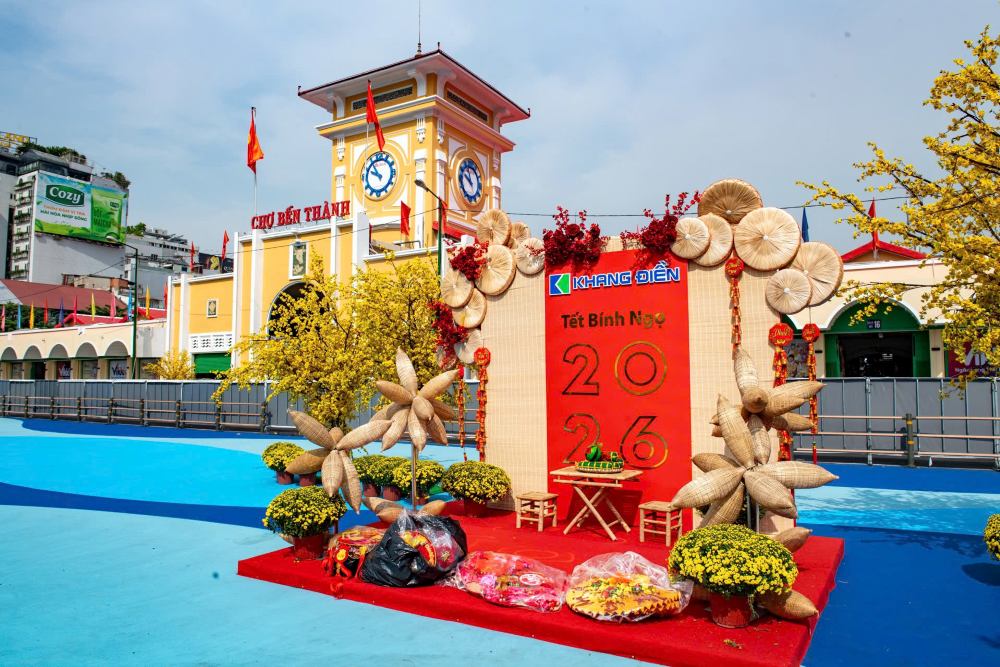
After the renovation process, Ben Thanh market has a more spacious appearance when it is newly painted, the walkways are clear, and the stalls are neatly arranged according to each industry. Not only serving the consumption needs of the people, the market is increasingly attracting a large number of international tourists to visit, shop for specialties and experience cuisine.
Ms. Truong Thi Tuyet Trinh, a small trader doing food business at Ben Thanh market, said: "Since the market has been renovated, the number of foreign customers has increased significantly. On peak days, my booth welcomes hundreds of customers, hoping Ben Thanh market will develop more and more, and go upwards more and more".
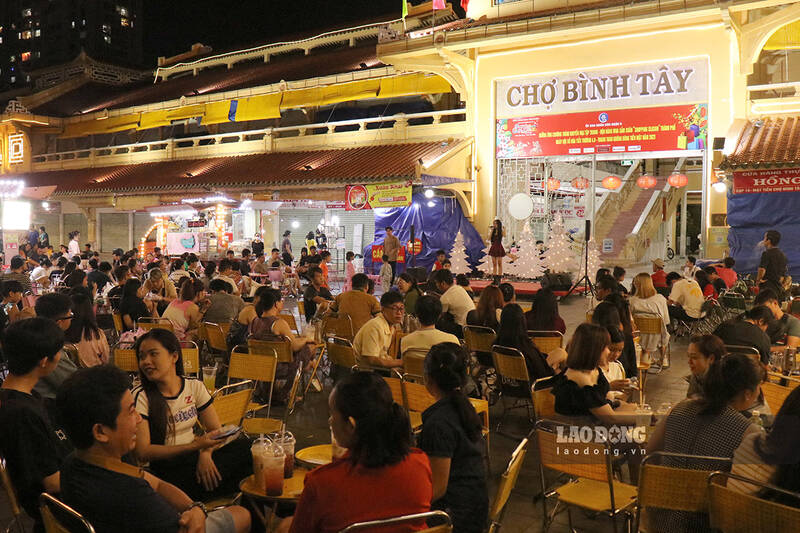
At Binh Tay market, the atmosphere is also more vibrant as the market with its long-standing architectural imprint continuously welcomes tourist groups.
Mr. Ly Thanh, a small trader at Binh Tay market, shared: "Many tourists come, making the market more vibrant. Many tours now include traditional markets in their itineraries, because this is where tourists feel the most clearly about local life and culture. They visit, talk, and occasionally buy a few items, making the market more bustling and joyful than before.
The embellishment associated with tourism development is helping traditional markets in Ho Chi Minh City not only maintain their role as shopping centers but also become a vibrant cultural space, contributing to promoting the city's image in the eyes of international friends.
However, besides these bright spots, many traditional markets in Ho Chi Minh City are still slow to transform, infrastructure is degraded, business organization is still fragmented, not keeping up with consumption trends and new requirements, posing the problem of needing to continue to innovate to not fall behind in the modern distribution system.
Putting the right role in the distribution system
Currently, Ho Chi Minh City has 405 markets (including 3 wholesale markets and 402 people's markets), besides 300 supermarkets, 66 shopping centers and more than 3,800 modern retail stores. Although the number of customers coming to traditional markets tends to decrease, essential industries such as food, beverages, flowers... still maintain relatively stable consumption levels.
According to the Ho Chi Minh City Department of Industry and Trade, the city will continue to develop a multi-channel distribution system, in which traditional markets still play an important role in the circulation of essential goods, especially fresh food. However, before the impact of technology and changes in consumer behavior, markets need to be reorganized to adapt better. On that basis, the project "Market model adapting to epidemics and digital transformation" is built with a vision to 2030, 2035.
Mr. Nguyen Nguyen Phuong - Deputy Director of Ho Chi Minh City Department of Industry and Trade, said that in the past time, the People's Committees of 168 wards, communes, and special zones have sent many documents related to market operations, mainly requesting guidance, showing that grassroots levels are still confused in management, operation and development orientation. Therefore, in 2026, the Department of Industry and Trade will conduct a review and assessment of the entire market system, clearly classifying groups of markets that can be maintained and groups of markets that no longer meet operating conditions.
The project sets out a framework of solutions and a roadmap for appropriate implementation, avoiding doing it simultaneously or imposing it. Each market needs to be placed in the right role in the overall distribution system of the city" - Mr. Nguyen Nguyen Phuong emphasized.
For markets that can be maintained, upgrading will be carried out selectively, focusing on environmental sanitation, food safety, fire prevention and fighting, rearranging industries and strengthening management and traceability. For inefficient markets, degraded infrastructure, and fragmented industries, the Department will consider plans to convert functions or apply new management and business models. For markets with advantages in location, history and identity, the city will continue to invest to promote values not only in commerce but also in tourism and culture.


