
Recorded on December 22, at many traditional markets in Ho Chi Minh City, business activities were sluggish, many stalls closed or traded at a low rate. Some markets are deserted, as shopping habits are gradually shifting to e-commerce channels, creating increasing pressure on traditional business activities.
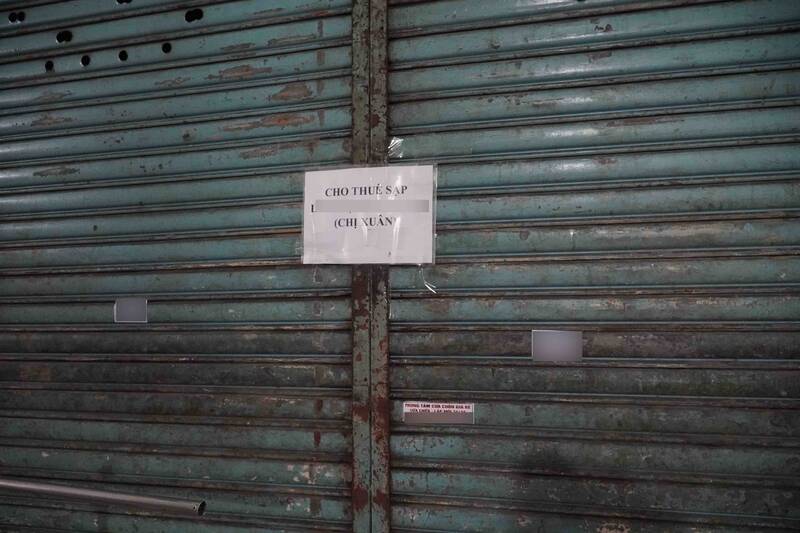
At Tan Dinh market, the days near the end of the year are still quite quiet. Ms. Pham Thi Van - a long-time trader at the market said that purchasing power has decreased significantly, the number of customers is smaller than at the same time in previous years. Her family's business has until now mainly relied on traditional methods, but to retain customers in the context of stagnation, she has been forced to flexibly change.
In the past half year, Ms. Van has started adding transfer payment methods and scanning QR codes in addition to cash. "At first, I followed because I saw many customers asking. Young customers now have less money, and if there is a scan code, they buy faster. Moving to a new form of payment is not too complicated, but it will take time to get used to. At first, I was afraid of making a mistake, I had to check if the money had been in my account. Now it is more familiar, convenient, especially when there are many customers" - Ms. Van shared.
However, according to Ms. Van, the application of technology is currently only at the payment stage, not creating a significant change in revenue in the context of weakening purchasing power at the end of the year. Other stages such as revenue management, book keeping or issuing invoices are still done manually, somewhat making it more difficult to track cash flow and calculate costs when trading slows down.
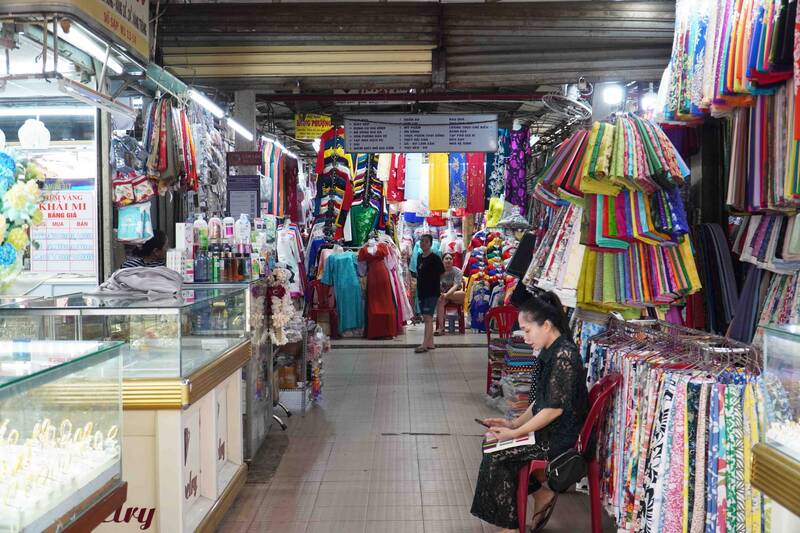
In reality, before digital transformation was implemented synchronously, the majority of business households and traders in Ho Chi Minh City were still in a state of observation and exploration. Some have started to get used to transferring and selling goods via social networks, but most are still reserved, waiting for clear instructions from the management agency.
Ms. Bui Thuy Ngan - a clothing trader at Hanh Thong Tay market, said that before the COVID-19 pandemic, her store was always crowded with customers, even having to hire 2-3 additional sales staff. However, currently, goods are displayed and then stored because the number of customers is sparse.
"Consumers now have the habit of comparing prices in stores and online platforms, so doing business is much more difficult. Not that I don't want to change, but I have to have someone specific and slow to guide me to dare" - Ms. Ngan shared.
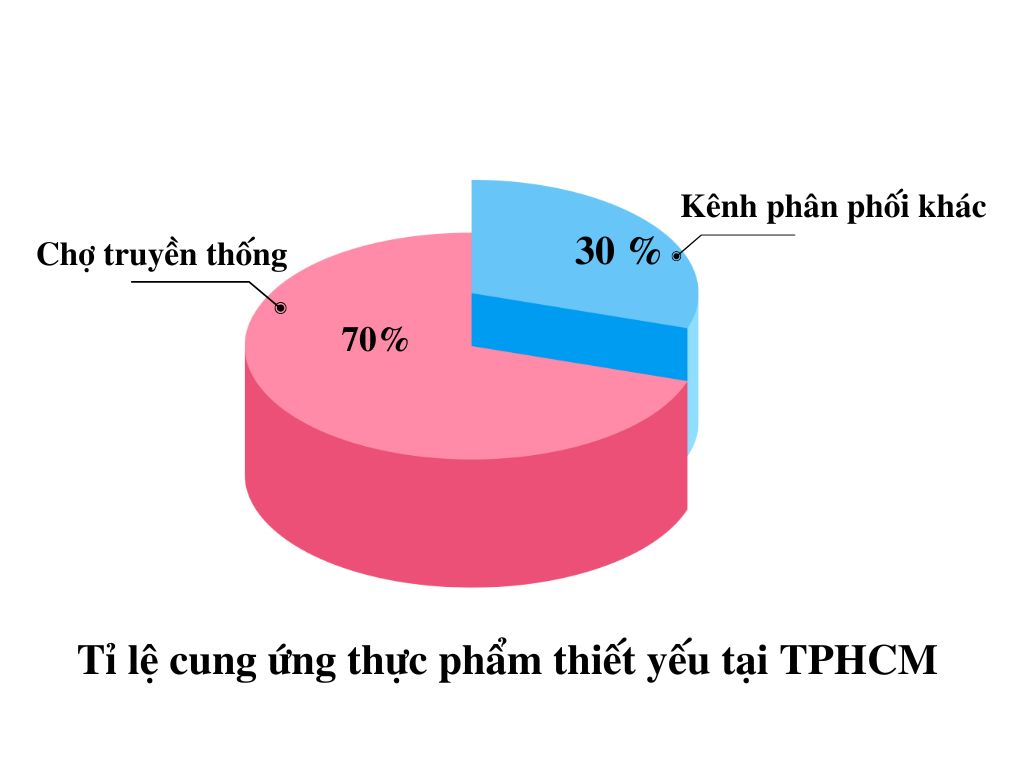
The Ho Chi Minh City Department of Industry and Trade has coordinated with the University of Economics and Law (VNU-HCM) to conduct a scientific report "Developing the market system in Ho Chi Minh City to adapt to the context of disease arising and transformation". The report affirms that despite sharing market share from many new types of trade, traditional markets still play an important role in the distribution system. In Ho Chi Minh City - the economic locomotive of the country, traditional markets still provide about 70% of the essential food needs of the city's people.
However, the report also shows that consumer shopping behavior at traditional markets has changed a lot. People are increasingly interested in clean, well-ordered, and quality-assured food. Meanwhile, the strong development of supermarkets, shopping malls and convenience stores with advantages in utilities, traceability, promotions... is creating great competitive pressure for traditional markets.
In addition, increasingly diverse online shopping platforms are also attracting a large number of consumers.
According to experts, the appropriate direction for traditional markets is to renovate - digitize - re-position. This helps both preserve cultural identity and meet modern consumption trends, focusing on modernizing infrastructure, upgrading facilities, from environmental sanitation, fire prevention and fighting, food safety to a more friendly and convenient shopping space for people.


