
In recent years, the continuous increase in coffee prices has created motivation for people in many communes in Dien Bien province to promote crop restructuring and expand coffee area.
However, besides developing coffee trees on agricultural land, some localities have seen households arbitrarily planting coffee on forest land, clearing vegetation under the forest canopy for cultivation.
In September 2025, some households in Giang village and Huoi Sua village (Muong Ang commune) arbitrarily cleared vegetation under the forest canopy with the aim of planting coffee. The total affected area is 1.87ha.
At the time of detection, the households had just cleared bushes, and no acts of deforestation had occurred. Immediately after that, the inter-sectoral task force of Muong Ang commune promptly suspended operations, requesting the households to stop all impacts and not continue planting coffee on the cleared area.
At the same time, promote propaganda on regulations on forest management and protection, orient coffee development in accordance with planning and organize for households to sign commitments not to re-offend.
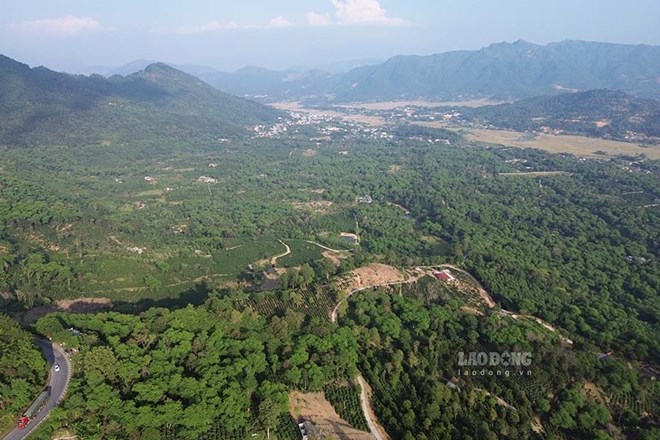
In 2026, Dien Bien strives to dig more than 21.6 million planting holes, equivalent to about 12,000 hectares, including 5,930 hectares of coffee and 6,070 hectares of macadamia (including intercropping and pure planting).
As of the beginning of June 2026, the whole province has dug more than 33.1 million coffee and macadamia growing holes. Of which, coffee growing holes reached over 32.2 million; macadamia growing holes reached nearly 880 thousand.
According to the leader of Dien Bien Department of Agriculture and Environment, localities must strictly implement the provisions of Vietnamese law in the field of forestry and the regulations of the European Union (EUDR) on combating forest loss and deforestation when organizing the planting of coffee trees and macadamia trees in forestry planning land, ensuring sustainable development.
EUDR is a mandatory regulation for some export items to the European market such as coffee, wood, rubber... Accordingly, these products must meet the requirement of not causing deforestation or forest degradation from after December 31, 2020.
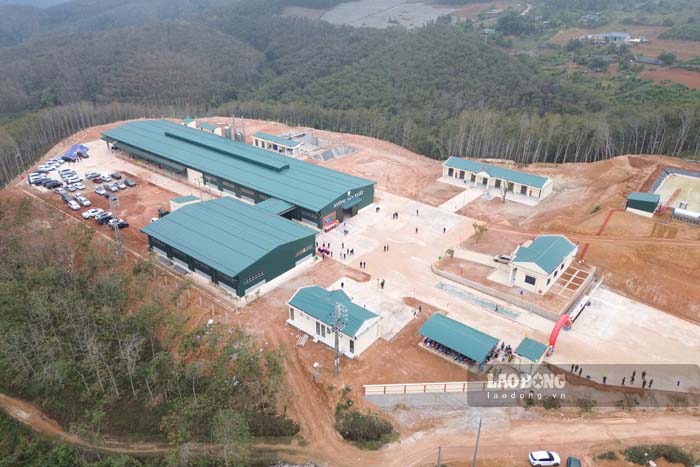
According to Mr. Lo Van Cuong - Standing Vice Chairman of Dien Bien Provincial People's Committee, implementing the requirements of EUDR, the Provincial People's Committee has issued a plan on implementing adaptation to the European Union's Regulations on combating forest loss and degradation in the province.
Departments, branches, and localities have promoted propaganda and guidance for businesses, cooperatives, and people to implement requirements on traceability, developing raw material areas that do not cause forest loss and forest degradation.
To date, Dien Bien has collected data for 347 planned planting lots and has planted coffee and macadamia with a total area of more than 132ha, creating a foundation for building a raw material area management system to meet the requirements of the export market.
To remove difficulties, Dien Bien province also proposed that the Ministry of Agriculture and Environment support the construction of a database of coffee and rubber raw material areas; complete the origin tracing system; support satellite image data, GIS maps; train and improve capacity for officials, businesses and people on EUDR.
At the same time, supporting the connection of international programs and projects on sustainable coffee development, regenerative agriculture and building non-deforestation coffee production models, meeting the requirements of the European Union market.
Coffee is currently one of the key crops of Dien Bien, with an area of about 8,368ha, the output of green coffee beans in 2025 is estimated to reach more than 6,200 tons. Currently, the whole province has 7 coffee purchasing and processing facilities; over 95% of the output is consumed outside the province and serves exports.
For rubber trees, the whole province has more than 5,018ha, latex production in 2025 is estimated to reach nearly 5,974 tons. In 2025, the province put into operation the first rubber latex processing plant in Thanh Nua commune with a designed capacity of about 5,000 tons/year.


