
Opening up new development space for economic regions
On May 6, at the Ministry of Finance headquarters, a conference was held to announce the adjustment of the national master plan and regional plans for the period 2021-2030, with a vision to 2050. According to the Ministry of Finance, the adjustment of the national master plan and regional plans is of great significance in the context that the whole country is implementing the arrangement of administrative units at all levels, deploying the two-level local government model and requiring opening up new development spaces for the next period.
The adjusted plan aims to concretize the major guidelines and orientations of the Party and the Central Government; maximize the potential and advantages of the country, each region and locality to achieve double-digit growth targets in the 2026-2030 period, while improving adaptability to rapid and unpredictable fluctuations of the international context.
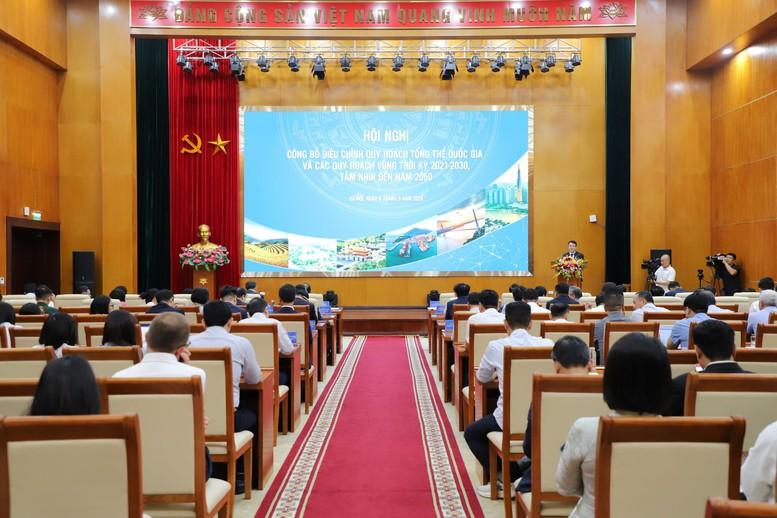
According to the content announced at the conference, the National Master Plan has identified development goals: Striving to 2030 for Vietnam to become a developed country with modern industry and high average income; forming a new growth model taking science, technology, innovation and digital transformation as the main driving forces. Average GDP growth rate in the period 2026-2030 reaches 10%/year or more. By 2030, GDP per capita at current prices will reach about 8,500 USD. Average social labor productivity growth rate will reach over 8.5%/year; contribution of total factor productivity (TFP) to growth will reach over 55%.
The adjustment of the national master plan also adds many new growth drivers associated with the development orientation of strategic and high-tech industries such as electronics industry, digital technology industry, automobile industry, railway industry, shipbuilding, processing and manufacturing industry serving agriculture.
At the same time, prioritize the development of emerging industries such as semiconductor chips, robots and automation, artificial intelligence, advanced materials, biotechnology, environmental industry, renewable energy and new energy.
In the field of services, planning orients the construction of regional and world-class service, commercial, financial, and banking centers in major cities; developing large logistics centers associated with seaports, airports and international border gates.
For agriculture, planning identifies sustainable and modern agricultural development according to the value chain; promoting digital agriculture, smart agriculture, green agriculture and circular agriculture.
Regarding the organization of development space, the planning adjusts and expands 4 national driving zones including the Northern, Southern, Central and Mekong Delta driving zones; and at the same time supplements the North Central region driving zone to more effectively exploit the potential and advantages of each region.
The North-South, East-West economic corridors, and coastal economic belts continue to be prioritized for development. In which, focus on economic corridors such as Lao Cai - Hanoi - Hai Phong - Quang Ninh and Moc Bai - Ho Chi Minh City - Bien Hoa - Vung Tau.
The plan also clearly defines the development orientation for 6 regions. In which, the Red River Delta region strives for GRDP growth of about 11%/year in the 2026-2030 period; the Southeast region about 10-11%/year; the North Central region about 10-10.5%/year; the South Central Coast and Central Highlands region about 9.5-10%/year; the Northern Midlands and Mountains region about 9-10%/year; the Mekong Delta region about 9-9.5%/year.
Persistently aim for double-digit growth associated with innovation and digital transformation
At the conference, representatives of the Ministry of Construction, the Ministry of Science and Technology, Hanoi City People's Committee and Dong Nai City People's Committee presented presentations related to traffic infrastructure development, science and technology, innovation, digital transformation and local development orientations in the overall national and regional development.
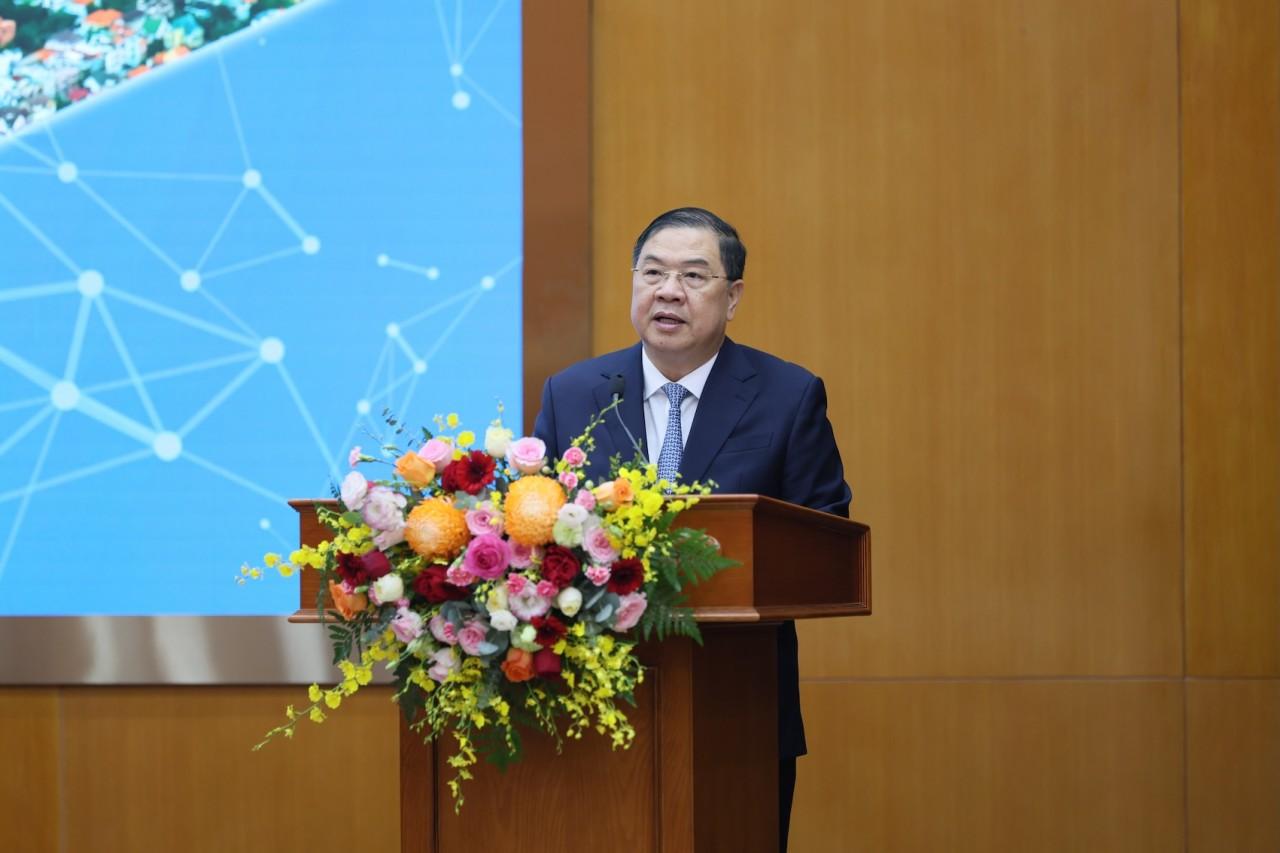
Speaking at the conclusion of the conference, Standing Deputy Prime Minister Pham Gia Tuc emphasized the requirement to firmly aim for double-digit growth associated with innovation in the growth model, taking science, technology, innovation and digital transformation as the main driving forces.
The Deputy Prime Minister requested ministries, branches, and localities to synchronously implement solutions to mobilize resources for development; effectively use public investment capital, focus on dynamic projects with spillover effects; continue administrative reform, improve the investment and business environment, develop the private economy and selectively attract foreign investment capital associated with technology transfer.
In addition, the planning implementation process must ensure harmony between economic development and cultural and social development, environmental protection, national defense, security and improve the efficiency of international integration.


