
Da Nang opens up a breakthrough space
According to Decision 628/QD-TTg dated April 6, 2026 of the Government on approving the task of General Planning of Da Nang City to 2050, vision to 2075, Da Nang is identified as a national and regional center for logistics, marine economy, finance, and free trade. At the same time, it aims for an eco-friendly, modern, smart, rich in identity and internationally attractive city model. The planning space covers the entire administrative boundaries of the new city along with the eastern sea space, with a scale of about 11,859.59km2.
One of the most notable changes is the way Da Nang is positioned in the national development space. The city is not only identified as the major socio-economic center of the country, but also as the northern growth pole of the South Central Coast and Central Highlands region; a connecting point with Laos, Cambodia, Central Highlands and ASEAN countries through the East-West economic corridor. By 2050, Da Nang's population is forecast to be about 6 million people, of which the urban population is about 4 million people.
Da Nang is facing a great opportunity, but is also facing an unprecedentedly great pressure. At the planning task appraisal conference, Deputy Minister of Construction Nguyen Tuong Van emphasized the requirement to clarify the potential, advantages, and existing bottlenecks to propose breakthrough solutions, ensuring planning is truly a tool to lead development. The appraisal council also noted that Da Nang needs to avoid spreading development, avoid excessive dependence on one central area, and at the same time clarify the role of each area in the multi-polar, multi-center urban structure after the merger.
Open to the South, reach out to the sea, connect to the West
The highlight of the new plan is that Da Nang does not develop in a way that compresses into the core of the existing urban area. The city is oriented towards a multi-polar, multi-center model. In that structure, the old central area continues to play a core role, but the South, West and sea - island space will become new functional areas with clear role distribution.
Da Nang urban space will connect with Dien Ban, Hoi An, Nam Hoi An, Tam Ky, Nui Thanh and Chu Lai (belonging to the old Quang Nam province) to form a continuous, multi-center coastal urban chain. This is not a mechanical addition between localities, but a way to reorganize regional space to share functions with existing centers, reduce cumulative pressure, and open up more room for land, population, industry, logistics, tourism and services development.
In the West, mountainous and ecological regions are no longer seen as "remote areas" standing outside the pace of urban development, but can become strategic complementary spaces for green development orientation, ecological conservation, tourism and environmental balance. Meanwhile, the sea and islands are seen as an independent functional area, associated with marine economy, ecological conservation and national defense - security.
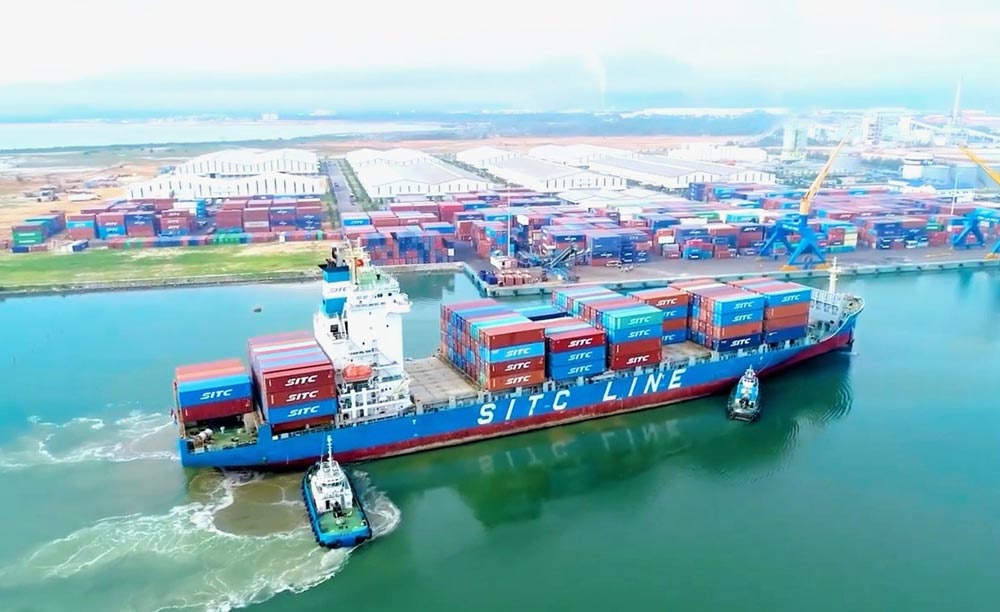
Da Nang currently owns an infrastructure hub system that not many localities have at the same time: Lien Chieu, Tien Sa, Tho Quang ports; Da Nang International Airport and the Southern space associated with Chu Lai airport, Tam Hiep port, Ky Ha port. When these hubs are placed in a unified planning structure, the opportunity to form a national, even regional logistics and cargo transshipment center is created.
Assoc. Prof. Dr. Nguyen Dinh Cung pointed out a core issue: Da Nang wants to grow high, it must establish a new growth model, based on improving the productivity of integrated factors, innovation, science and technology; and at the same time prioritize industries with high added value, large spillover and associated with exports to exploit the international market.
The city has gone through a large-scale development phase. Beautiful land funds are no longer an absolute advantage. Tourism, services or real estate cannot always be the only pillar. If the right spearhead industry is not chosen, the right breakthrough, and the right operating mechanism, a large-scale plan can still fall into half-hearted development.
Don't trade identity
A noteworthy point of this plan is that the goal of growth is inseparable from the requirements of green, sustainable development, harmony with nature and preserving identity. This is the right choice, because the more Da Nang expands, the more it faces the risk of hot development, space conflict and environmental pressure.
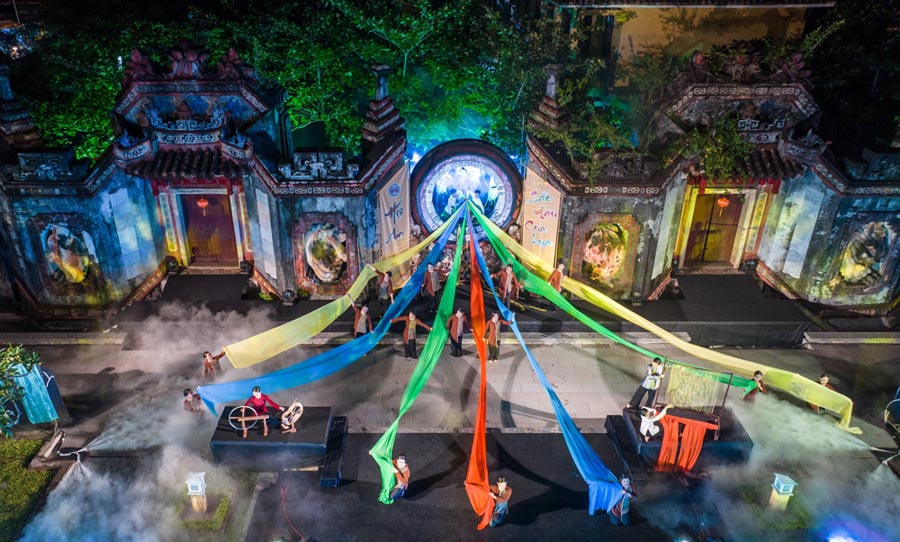
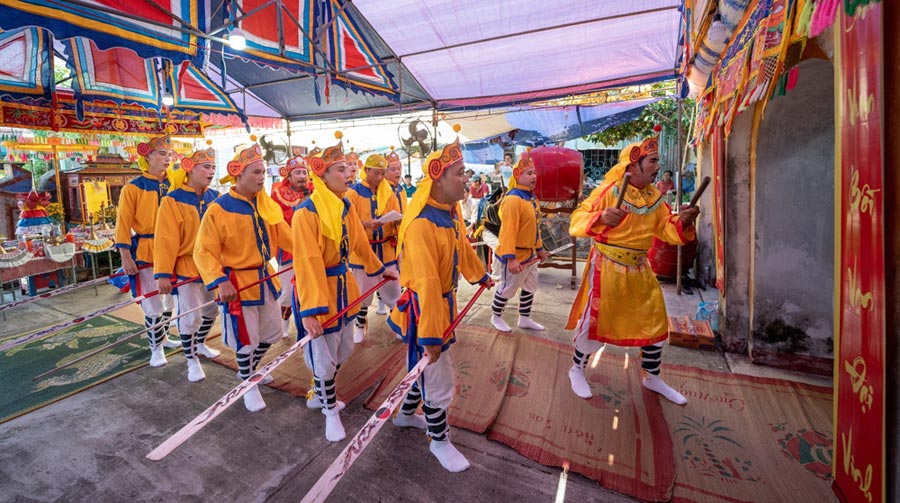
Researcher Bui Van Tieng, Chairman of the Da Nang City Historical Science Association, said that if the city wants to develop strongly, it must head towards the sea, but it is necessary to carefully consider sea encroachment projects associated with international financial centers, because the development space is already very large, while Da Nang Bay is not large.
Da Nang needs to make a breakthrough, but not at all costs. The more ambitious the city is, the more sober it must be in the face of decisions that may trade off the environment, landscape and long-term identity.
Overall, the general plan of Da Nang to 2050, with a vision to 2075, is opening up a rare opportunity. However, the wider the plan, the greater the goals, the higher the requirements for management quality, synchronicity in implementation and regional linkage mechanisms. Vice Chairman of the City People's Committee Tran Chi Cuong proposed that it is necessary to adjust the regional linkage mechanism, ensure unity between plans, strengthen symbiosis between localities and study a stronger decentralization and delegation of power to localities in planning and implementing development policies.


