
International capital flow accelerates
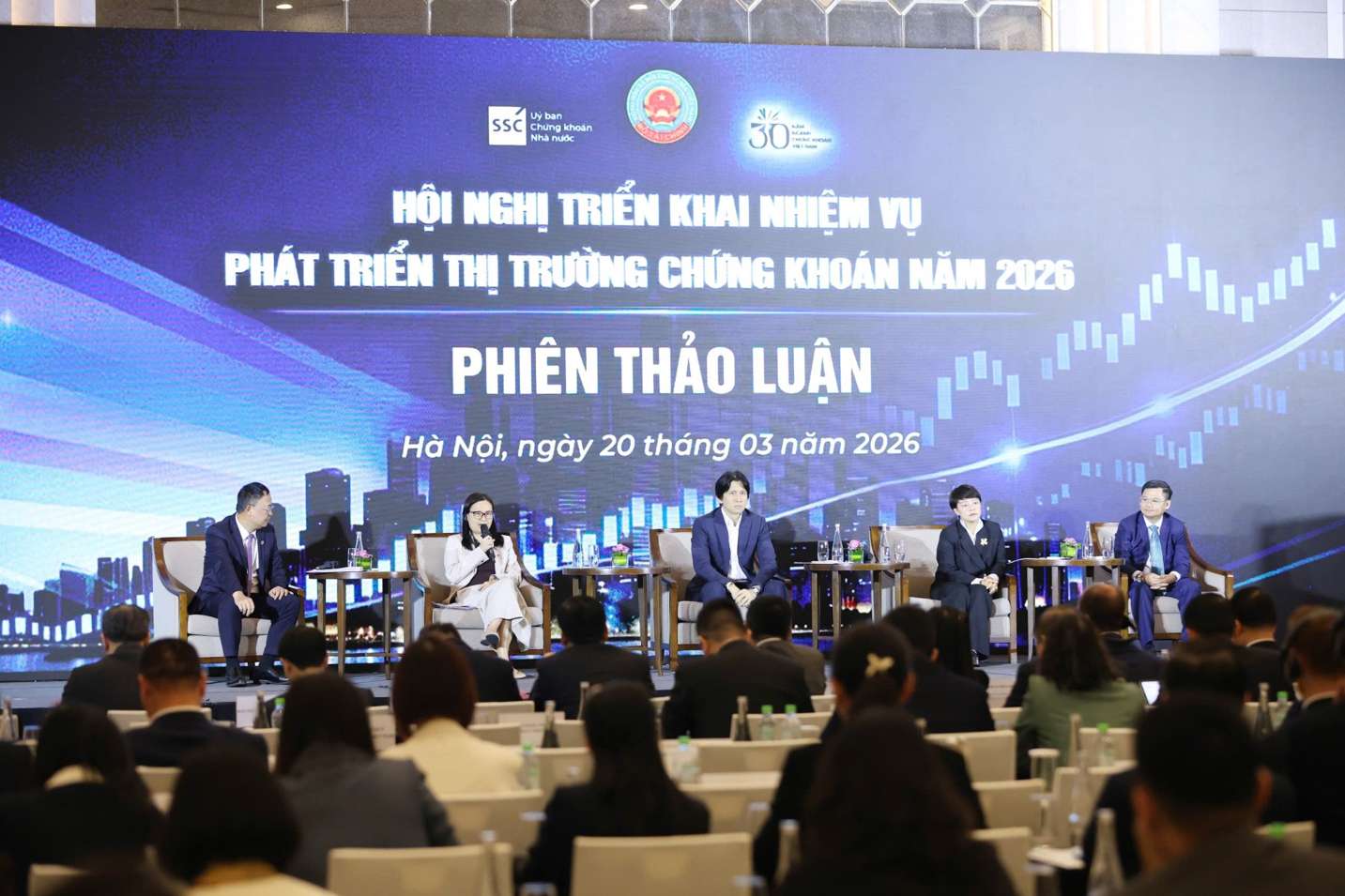
Speaking at the Conference to deploy the tasks of developing the stock market in 2026 organized by the Ministry of Finance on March 20, 2026, Mr. Thomas Nguyen - Director of Foreign Markets, SSI Securities Company - said that from the perspective of global investors, Vietnam is entering the "breakthrough point" of the capital market. Mr. Thomas Nguyen said that SSI has worked with many investors and large financial institutions in centers such as New York, London, Singapore and Hong Kong (China). Institutions such as Morgan Stanley, UBS, Barclays are increasing their interest and preparing to participate more deeply in the Vietnamese market.
Market data also clearly reflects this trend when foreign investors' transactions increased by about 50%. The proportion of institutional investors' transactions has increased from 8% in 2023 to about 13% and may reach at least 20% in the next 24 months.
At SSI, the number of newly opened institutional accounts increased by 52%, of which most came from foreign institutions, especially organizations headquartered in the US. This trend is driven not only by market upgrade expectations, but also by policy improvements such as electronic trading codes and simplification of procedures for foreign investors," a SSI representative shared.
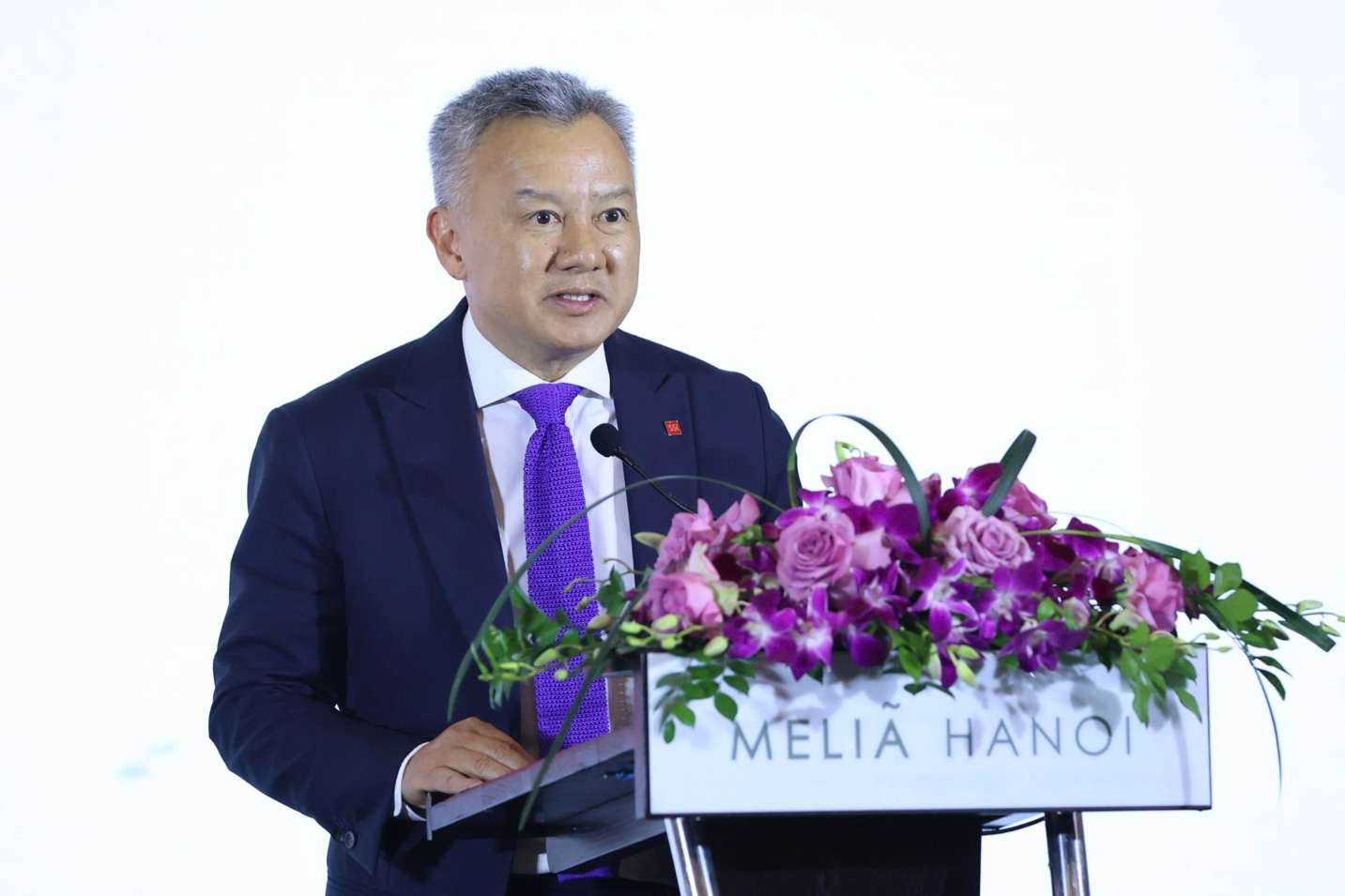
According to Mr. Thomas Nguyen, the upgrade can bring about 1.5 billion USD of passive capital, along with 2-5 billion USD from global active funds. This is a large-scale capital flow that can create significant changes for the market. The "investment universe" scale of emerging markets is about 25 times larger than the frontier market. Therefore, the question of international investors today is no longer whether Vietnam is attractive or not, but whether the market has enough scale, liquidity and goods supply to absorb large capital flows or not.
In that context, the deployment of the KRX trading system is considered an important foundation to improve market operation capacity, towards a central clearing partner mechanism and the development of new products.
Expanding goods, diversifying supply sources for the market
Mr. Thomas Nguyen said that to welcome international capital flows, the market not only needs to improve accessibility but also needs to expand the supply of goods, especially through IPO activities. At the same time, it is necessary to expand and deepen the IPO pipeline, not only in terms of quantity but also in terms of industry diversity and business models.
Three groups of businesses are assessed to have potential to attract international investors, including FDI enterprises, technology enterprises and equitized state-owned enterprises.
For the FDI sector, many businesses have a need to access the domestic capital market. Recent guidance from management agencies has opened up a clearer roadmap, but it is necessary to continue to support businesses to improve investor relations capacity and meet listing standards.
For technology businesses, Mr. Thomas Nguyen said that the current listing conditions, especially the requirement to be profitable, are creating barriers. Vietnam may consider building a separate exchange for businesses to grow, similar to the model in some countries, to support technology businesses to access capital sooner.
Meanwhile, accelerating the equitization of state-owned enterprises and listing large-scale enterprises will help improve the quality of goods, improve liquidity and raise management standards.
In addition, considering easing foreign ownership limits in non-sensitive industries is also considered an important solution to attract long-term institutional investors.
Strengthen dialogue with credit rating organizations
While international capital flows are tending to increase strongly, Mr. Nguyen Quang Thuan - Chairman of FiinGroup - said that one of the important points today lies in the way the international market assesses risks and values Vietnam.
According to him, many foreign investors still do not fully recognize Vietnam's economic foundation, level of macroeconomic stability as well as growth potential. This leads to the fact that the cost of capital mobilization of Vietnamese businesses in the international market is still higher than in countries with similar conditions.
Mr. Thuan said that the problem is not only in the economy itself, but also in the level of information transparency, data standardization and ways of transmitting information to the international market. While credit rating organizations assess based on a set of global criteria, Vietnam's lack of proactive dialogue, provision of complete and timely information has made many positive factors not reflected correctly.
According to Mr. Thuan, to improve this situation, it is necessary to strengthen dialogue with credit rating organizations, standardize information disclosure and build a more synchronous and transparent market data system. These are key factors to help the international market understand and evaluate Vietnam more accurately.
He also emphasized that when the views of international investors are improved, capital costs will decrease, thereby creating more favorable conditions for foreign capital to participate deeply and sustainably in the market.


