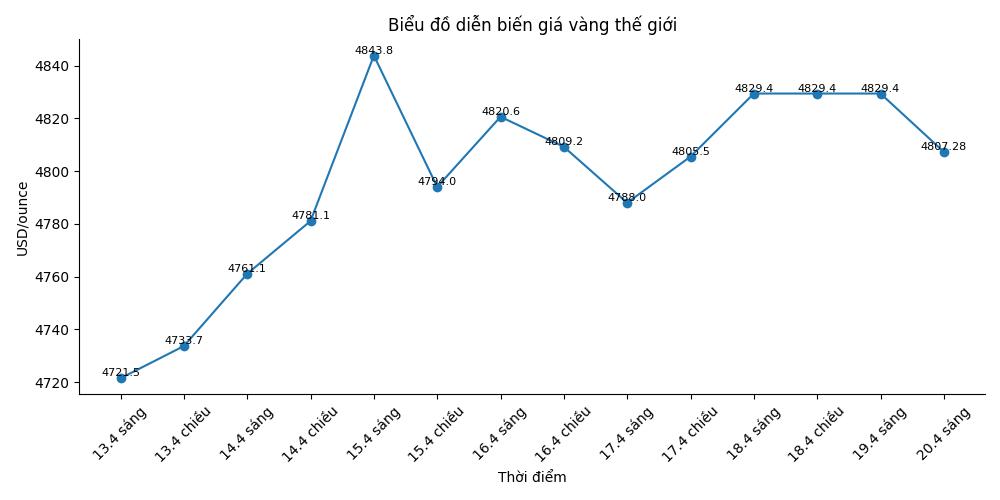
Gold prices turned down after ships were attacked in the Strait of Hormuz at the weekend, raising new concerns about energy supply disruptions – a factor that has continuously increased inflationary pressure in more than seven weeks of conflict in the Middle East.
The precious metal at one point fell by 1.9% to below the 4,740 USD/ounce mark, wiping out the entire increase of last week. US President Donald Trump said the US Navy fired and arrested an Iranian-flagged cargo ship, while Tehran warned that ships approaching this strategic waterway route would be considered to have violated the ceasefire. Many ships were forced to cancel their routes just hours after Iran announced on Friday that the strait had been "fully opened".
The latest developments have weakened the prospects for peace talks scheduled to take place in Islamabad this week. Mr. Trump said he still sees an opportunity to reach an agreement, but at the same time continues to issue tough warnings, including the possibility of destroying Iranian power plants and bridges. Tehran affirmed that there is currently "no clear prospect" for effective talks.
“War scenario trading has returned, and that means gold is being sold,” said Kyle Rodda, an analyst at Capital. com. “Today's developments will depend greatly on news. That means the market may fluctuate strongly in both directions.”
Oil and natural gas prices surged on Monday, after falling sharply in the previous session. US stock futures weakened, while the USD index rose by 0.3%, putting pressure on gold – an asset valued in the greenback. The failure to reach a long-term diplomatic agreement to end the conflict has caused the market to fluctuate sharply in recent weeks, and new developments continue to show the fragility of the ceasefire, which is expected to expire on Tuesday.
The prolonged conflict has caused an unprecedented energy supply shock, increasing inflationary pressure and forcing central banks to tend to maintain high or even higher interest rates – a disadvantage to gold, which is a non-performing asset. Since the conflict broke out at the end of February, gold prices have fallen by about 10%.
Investors will watch the Senate approval hearing for Mr. Kevin Warsh – the candidate nominated by Mr. Trump as Chairman of the US Federal Reserve (Fed) scheduled for Tuesday. If signs show that Mr. Warsh supports monetary policy easing this year, gold prices may be supported. Conversely, cautious views on inflation and a reluctance to cut interest rates will put pressure on the precious metal.
The inflationary boost from the energy shock is likely only temporary rather than prolonged," said Lorenzo Portelli – Head of Multi-Active Strategy at Amundi in a report. He said that core inflation is still better controlled than the energy crisis period in 2022, thereby "reducing demand for central banks to pursue a tighter stance.
Spot gold prices fell 1.06% to 4,807.28 USD/ounce at 9:05 am Vietnam time. Silver prices fell 1.7% to 79.50 USD/ounce, while platinum and palladium also simultaneously went down. The Bloomberg Dollar Spot Index increased by 0.2%.